
In modern meat processing facilities, food safety, product quality, and operational efficiency are inseparable. Among all infrastructure systems within a slaughterhouse, the cold room plays a decisive role in determining whether meat products meet regulatory standards, retain market value, and remain safe for consumption.
From the moment an animal is slaughtered, temperature control becomes critical. Without rapid and controlled chilling, meat quality deteriorates quickly due to microbial growth, enzymatic activity, and biochemical spoilage.
Why Temperature Control Is Critical After Slaughter
Once an animal is slaughtered, its natural immune defenses stop functioning. Moist, nutrient-dense muscle tissue provides favorable conditions for bacterial growth. At temperatures between 5°C and 60°C, microbial activity accelerates rapidly, leading to spoilage, food safety risks, and economic loss.
Cold rooms intervene at this critical stage by:
- Rapidly lowering carcass temperature
- Slowing microbial growth
- Controlling enzymatic reactions
- Preserving texture, color, and moisture
International food safety authorities consistently emphasize time–temperature control as one of the most important factors in meat safety. Cold rooms enable slaughterhouses to comply with these requirements consistently and reliably.
Core Functions of Cold Rooms in Slaughterhouses
Carcass Chilling
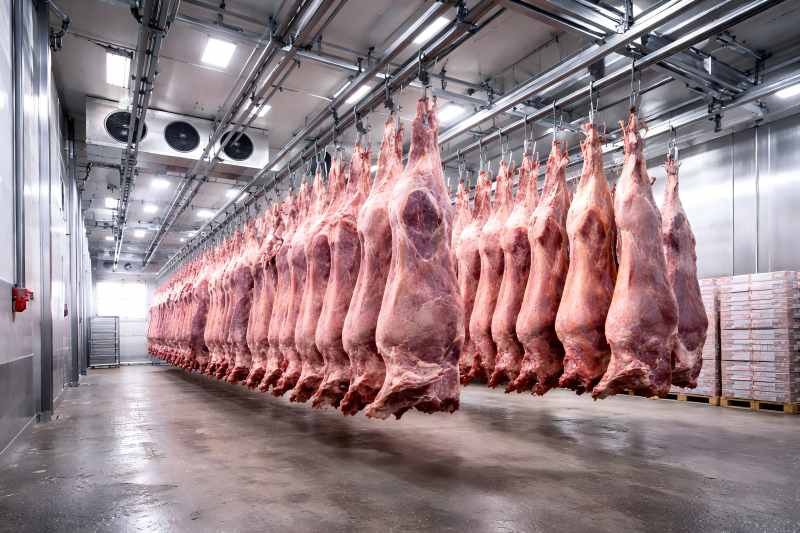
A slaughterhouse cold room’s core role is cooling carcasses after slaughter. After dressing and evisceration, carcasses must be cooled from body temperature (approximately 37°C) to a safe storage temperature, usually below 4°C.
Proper chilling:
- Prevents bacterial multiplication
- Reduces moisture loss (weight shrinkage)
- Prevents cold shortening when correctly controlled
- Prepares meat for further processing
Carcass chilling may be conducted in stages, starting with rapid chilling and followed by stabilization chilling to ensure uniform temperature throughout the muscle.
Meat Quality Preservation
Cold rooms directly influence meat quality attributes such as:
- Color – preventing discoloration and oxidation
- Texture – maintaining muscle integrity
- Water-holding capacity – reducing drip loss
- Shelf life – extending marketability
Poor temperature management may cause PSE or DFD meat defects, significantly lowering product quality and market value. Well-designed cold rooms help avoid these problems.
Hygienic Control and Food Safety
Cold rooms serve as a key control measure within HACCP systems to ensure food safety in slaughterhouses. Temperature is considered a critical control point because it directly affects pathogen growth.
Cold rooms contribute to food safety by:
- Maintaining bacteria growth below dangerous levels
- Preventing cross-contamination through controlled airflow
- Supporting sanitation and cleaning schedules
- Ensuring compliance with veterinary inspection requirements
Without reliable cold room operation, even well-designed slaughter lines can fail food safety audits.
Meat Aging and Conditioning
In many slaughterhouses, cold rooms are also used for meat aging or conditioning. Controlled aging conditions enable enzymes to soften muscle, enhancing meat tenderness and taste.
Two common aging approaches include:
- Wet aging – meat aged under vacuum packaging
- Dry aging – meat aged in controlled cold rooms with airflow and humidity control
Both processes require stable cold room conditions to prevent spoilage while enhancing quality.
Production Flow and Process Buffering
Cold rooms function as buffers between slaughter, cutting, packaging, and dispatch operations. They allow slaughterhouses to:
- Balance daily production fluctuations
- Separate slaughter schedules from downstream processing
- Store carcasses or cuts temporarily without quality loss
- Improve labor and equipment utilization
This buffering role becomes especially important during peak seasons or export-oriented operations.
Types of Cold Rooms Used in Slaughterhouses
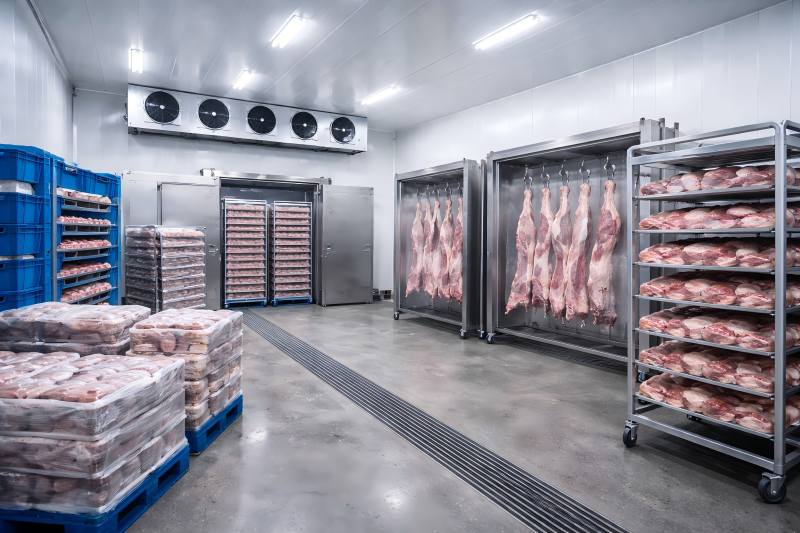
Different processing stages require different cold room designs. The table below summarizes common cold room types and their functions.
Types of Cold Rooms in Slaughterhouses
| Cold Room Type | Typical Temperature | Main Function |
| Carcass Chilling Room | 0°C to 4°C | Rapid cooling of freshly slaughtered carcasses |
| Holding / Equalization Room | 0°C to 2°C | Temperature stabilization before cutting |
| Cutting Room Cold Storage | 0°C to 4°C | Temporary storage of primal cuts |
| Aging / Conditioning Room | 0°C to 2°C | Controlled enzymatic tenderization |
| Freezing Room | −18°C to −35°C | Long-term storage and export preparation |
| Dispatch Cold Room | 0°C to 4°C | Pre-shipment storage and logistics coordination |
Key Technical Requirements of Slaughterhouse Cold Rooms
Temperature Uniformity
Cold rooms must maintain uniform temperature throughout the space. Uneven cooling can result in:
- Localized spoilage
- Unequal meat aging
- Condensation and hygiene issues
This requires proper air circulation design, evaporator placement, and insulation quality.
Humidity Control
Relative humidity is as important as temperature. If humidity is too low, meat dries out and loses weight. If too high, condensation forms, increasing contamination risk.
Typical humidity requirements:
- Carcass chilling: 85–95% RH
- Aging rooms: 75–85% RH
Today’s cold rooms apply intelligent controls and sensors for humidity management.
Airflow Management
Airflow ensures heat removal but must be carefully controlled. Excessive airflow can cause dehydration, while insufficient airflow leads to uneven cooling.
Slaughterhouse cold rooms typically use:
- Low-velocity airflow for carcass chilling
- Directed airflow for uniform cooling
- Hygienic fan designs for easy cleaning
Structural and Hygienic Design
Cold rooms must comply with strict hygiene standards, including:
- Smooth, washable wall and ceiling panels
- Food-grade insulation materials
- Stainless steel doors and fittings
- Easy drainage and cleaning access
Poor structural design increases contamination risk and maintenance costs.
Cold Rooms and Regulatory Compliance
Slaughterhouses operate under strict national and international regulations governing meat safety and cold-chain integrity. Cold rooms form a core element of regulatory compliance systems:
- Veterinary inspection standards
- Food safety regulations
- Export certification requirements
- Traceability and documentation systems
Cold room temperature logs are commonly required for audit compliance.
Energy Efficiency and Sustainability Considerations
Cold rooms are energy-intensive in slaughterhouses; improving their design and operation can lower costs and reduce environmental impact.
Key efficiency strategies include:
- High-performance insulation panels
- Energy-efficient refrigeration systems
- Heat recovery from refrigeration units
- Smart temperature control systems
- Proper door sealing and access management
Sustainable cold room design is increasingly important as processors seek to reduce carbon footprints while maintaining food safety.
Impact of Cold Room Performance on Slaughterhouse Operations
| Performance Factor | Poor Cold Room Control | Optimized Cold Room Control |
| Meat Shelf Life | Shortened | Extended |
| Bacterial Growth | High risk | Controlled |
| Weight Loss | Excessive | Minimal |
| Product Quality | Inconsistent | Stable and uniform |
| Regulatory Compliance | Risk of non-compliance | Reliable compliance |
| Operating Cost | Higher losses and waste | Lower total cost |
Integration with the Cold Chain
The slaughterhouse cold room is the first link in the cold chain, which continues through processing, storage, transportation, and retail. Any failure at this initial stage compromises the entire supply chain.
Effective cold room control guarantees:
Seamless shift to refrigerated shipping
Stable temperatures during loading and dispatch
Reduced rejection rates at distribution centers
Stronger brand reputation and customer trust
Common Challenges in Slaughterhouse Cold Rooms
Despite their importance, cold rooms often face operational challenges such as:
- Overloading beyond design capacity
- Inadequate maintenance of refrigeration systems
- Insufficient airflow caused by improper stacking
- Temperature variations due to door access
- Insufficient monitoring and alarm systems
Addressing these issues requires both technical design improvements and disciplined operational management.
Future Trends in Slaughterhouse Cold Rooms
As meat processing becomes more automated and data-driven, cold rooms are evolving with new technologies, including:
- IoT-based temperature and humidity monitoring
- Automated data logging for compliance
- AI-assisted energy optimization
- Modular cold room construction for scalability
- Integration with automated handling systems
These advancements further strengthen the role of cold rooms as intelligent processing assets rather than passive storage spaces.
Conclusion
The cold room is one of the most critical components in a slaughterhouse, directly influencing food safety, meat quality, regulatory compliance, and economic performance. From carcass chilling and meat aging to production buffering and cold-chain integration, cold rooms serve multiple essential functions throughout the meat processing workflow.
A well-designed and properly managed cold room system reduces waste, extends shelf life, enhances product consistency, and supports sustainable operations. As consumer expectations and regulatory standards continue to rise, the role of cold rooms in slaughterhouses will only become more central, making investment in high-quality cold room design and operation a strategic necessity rather than an optional upgrade.