
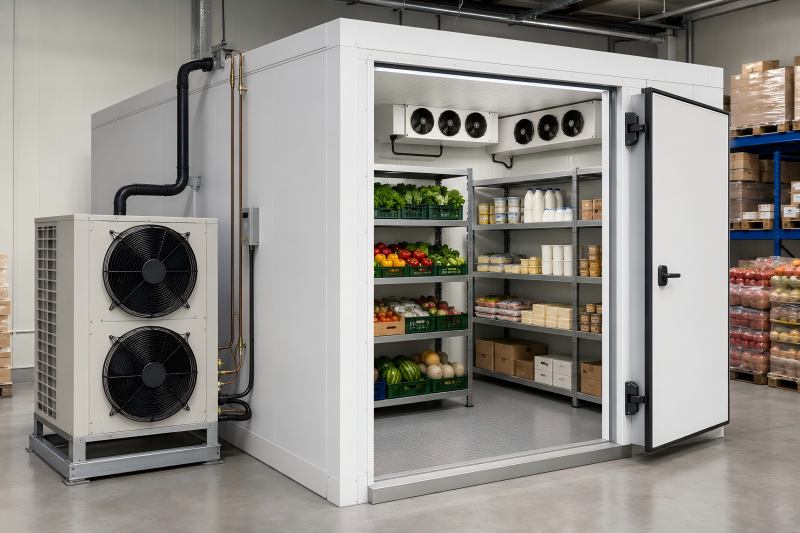
Cold room condensing unit size is not decided by room volume alone. It depends on temperature requirements, product load, insulation, ambient temperature, door opening frequency, and installation conditions.
For a small chiller room, a 1 HP to 3 HP condensing unit may be enough. For a larger freezer room, the system may require 5 HP, 10 HP, or even higher capacity. The right size should be selected according to the actual cooling load.
Why Correct Condensing Unit Size Matters
Correct sizing directly affects cooling performance, energy efficiency, and system life.
A properly sized condensing unit can:
- Maintain stable cold room temperature
- Reduce compressor running time
- Lower electricity consumption
- Protect stored products
- Extend equipment service life
- Reduce maintenance problems
- Improve overall refrigeration efficiency
Wrong sizing can lead to many issues. An undersized unit may fail to cool the room during hot weather or heavy loading. Oversizing may cause short cycling, unstable temperatures, and reduced humidity control.
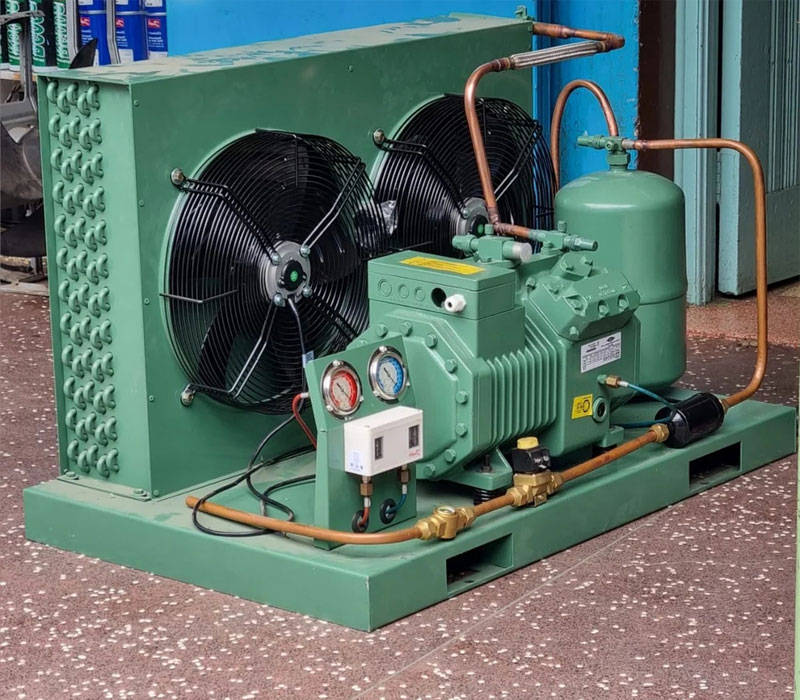
Key Factors That Affect Condensing Unit Size
There is no single fixed size for every cold room. The required capacity depends on several important factors.
Cold Room Size
The larger the cold room, the more cooling capacity is required. Room size is usually calculated by internal volume:
Length × Width × Height = Cold Room Volume
For example:
4 m × 3 m × 2.5 m = 30 m³
A larger room has more air volume and more surface area, so the refrigeration system must remove more heat.
Storage Temperature
Different goods need specific storage temperatures.
Common cold room temperature ranges include:
| Application | Common Temperature Range |
| Fruits and vegetables | 2°C to 8°C |
| Dairy products | 2°C to 6°C |
| Fresh meat | 0°C to 4°C |
| Beverages | 2°C to 8°C |
| Frozen food | -18°C to -25°C |
| Ice cream | -22°C to -30°C |
| Pharmaceuticals | 2°C to 8°C |
Lower temperatures require more refrigeration capacity. A freezer room needs a larger condensing unit than a chiller room of the same size.
Product Load
Product load means how much product is placed into the cold room and at what temperature. If warm products are loaded frequently, the condensing unit must remove more heat.
For example, storing already chilled drinks requires less capacity than cooling fresh vegetables brought in from outdoor temperature.
Important product load factors include:
- Product type
- Product weight
- Initial product temperature
- Required storage temperature
- Daily loading quantity
- Cooling time requirement
A cold room used only for storage usually needs less capacity than a room used for fast product cooling.
Door Opening Frequency
Each door opening lets warm air enter and cold air escape. This increases the cooling load.
A cold room in a supermarket, restaurant, or food processing plant may have frequent door openings. In this case, the condensing unit may need extra capacity to maintain stable temperature.
For high-traffic cold rooms, strip curtains, air curtains, automatic doors, and good operation management can help reduce cooling loss.
Insulation Panel Thickness
Cold room insulation panels limit external heat entering the storage space. With better insulation, the condensing unit has a lower cooling load and operates more efficiently.
Common panel thickness options include:
| Cold Room Type | Suggested Panel Thickness |
| Chiller room, 0°C to 10°C | 75 mm to 100 mm |
| Freezer room, -18°C to -25°C | 100 mm to 150 mm |
| Low-temperature freezer | 150 mm or thicker |
PU and PIR panels help minimize heat transfer and improve cold room efficiency.
Ambient Temperature
The outdoor or machine room temperature affects condensing unit performance. High ambient temperatures reduce heat rejection and increase the unit’s operating load.
For example, a condensing unit installed in a tropical area or poorly ventilated machine room may need a higher capacity design or better condenser ventilation.
Installation Location
Air-cooled condensing units require good airflow around the condenser. If the installation space is too narrow or poorly ventilated, heat rejection becomes difficult.
Good installation practice includes:
- Keeping enough space around the unit
- Avoiding direct hot air recirculation
- Keeping the condenser clean
- Installing the unit away from strong heat sources
- Ensuring stable power supply
Poor installation can reduce actual cooling performance even if the unit size is correct.
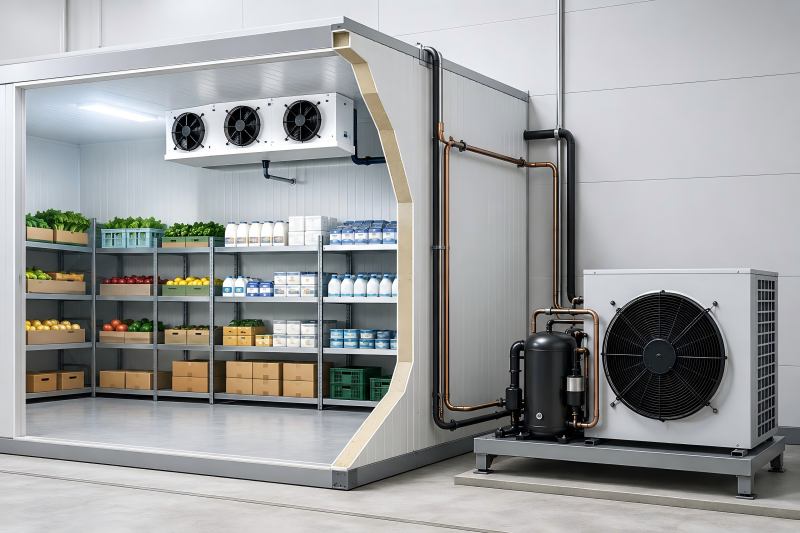
Common Cold Room Condensing Unit Size Reference
The following table gives a general reference for chiller rooms and freezer rooms. Actual sizing should still be calculated according to project conditions.
Chiller Room Reference
| Cold Room Volume | Temperature Range | Approx. Condensing Unit Capacity |
| 5–10 m³ | 0°C to 10°C | 1 HP to 1.5 HP |
| 10–20 m³ | 0°C to 10°C | 1.5 HP to 2 HP |
| 20–40 m³ | 0°C to 10°C | 2 HP to 3 HP |
| 40–70 m³ | 0°C to 10°C | 3 HP to 5 HP |
| 70–120 m³ | 0°C to 10°C | 5 HP to 8 HP |
| 120–200 m³ | 0°C to 10°C | 8 HP to 12 HP |
Freezer Room Reference
| Cold Room Volume | Temperature Range | Approx. Condensing Unit Capacity |
| 5–10 m³ | -18°C to -25°C | 1.5 HP to 2 HP |
| 10–20 m³ | -18°C to -25°C | 2 HP to 3 HP |
| 20–40 m³ | -18°C to -25°C | 3 HP to 5 HP |
| 40–70 m³ | -18°C to -25°C | 5 HP to 8 HP |
| 70–120 m³ | -18°C to -25°C | 8 HP to 15 HP |
| 120–200 m³ | -18°C to -25°C | 15 HP to 25 HP |
These values are only for preliminary selection. For accurate design, the heat load calculation should include wall heat gain, product load, air infiltration, lighting, workers, fan motors, and defrost heat.
Basic Cooling Load Components
A professional cold room condensing unit size calculation usually includes several types of heat load.
Transmission Load
Heat transfers into the cold room through walls, ceilings, and floors. It depends on insulation quality, room size, temperature difference, and ambient conditions.
Product Load
This is the heat removed from stored goods. It matters most when warm products are placed in the cold room.
Air Infiltration Load
This comes from warm air entering through doors, gaps, or frequent operation. Door opening frequency can greatly increase this load.
Internal Load
This includes heat from lights, workers, evaporator fans, forklifts, and other equipment inside the cold room.
Defrost Load
For freezer rooms, evaporators need defrosting. Electric defrost adds heat to the system, so it should be considered in the design.
How to Choose the Right Condensing Unit Size
To choose the right size, follow these steps.
Step 1: Confirm Cold Room Dimensions
Check the cold room’s internal length, width, and height. Calculate the total volume in cubic meters.
Step 2: Confirm Required Temperature
Decide whether the room is a chiller, freezer, or low-temperature storage room. Lower storage temperatures demand higher refrigeration capacity.
Step 3: Identify Stored Products
Different products have different cooling requirements. Fresh produce, meat, seafood, dairy, beverages, and frozen food all need different design conditions.
Step 4: Estimate Daily Product Loading
Check how much product enters the cold room each day and whether it is already cooled or still warm. High daily loading requires more capacity.
Step 5: Check Door Usage
A cold room with frequent door opening needs a stronger refrigeration design than a room opened only a few times per day.
Step 6: Consider Local Climate
High ambient temperature increases the pressure on the condensing unit. In hot regions, the unit should be selected carefully with enough safety margin.
Step 7: Choose a Reliable Brand and Configuration
The compressor, condenser, fan motor, refrigerant, and control system all affect performance. A high-quality condensing unit can provide more stable operation and lower long-term maintenance cost.
Air-Cooled vs Water-Cooled Condensing Units
Most small and medium cold rooms use air-cooled condensing units because they are easy to install and maintain. Water-cooled systems are often used for larger refrigeration projects or special industrial applications.
| Type | Advantages | Common Applications |
| Air-cooled condensing unit | Easy installation, simple maintenance, no cooling water required | Small and medium cold rooms |
| Water-cooled condensing unit | Higher efficiency in some conditions, suitable for large systems | Large cold storage, industrial refrigeration |
| Evaporative condensing unit | Energy-saving for large capacity systems | Large warehouses and food processing plants |
For most commercial cold rooms, an air-cooled condensing unit is the most practical choice.
Common Sizing Mistakes to Avoid
Choosing Only by Room Volume
Room volume is important, but it is not the only factor. Product load, door opening, insulation, and ambient temperature must also be considered.
Ignoring Product Temperature
If products enter the cold room warm, the system must remove a large amount of heat. This can require a much larger condensing unit.
Oversizing Too Much
Some people choose a much larger unit to “be safe.” However, oversizing can cause short cycling, poor humidity control, and higher cost.
Poor Condenser Ventilation
Even a correctly sized unit may fail if the condenser has poor airflow. Installation space is very important.
Not Considering Future Expansion
If the cold room may store more products in the future, it is better to discuss expansion requirements during the design stage.
Example: Condensing Unit Selection
Suppose a customer needs a cold room for fruit storage.
Cold room size: 5 m × 4 m × 2.5 m
Volume: 50 m³
Temperature: 2°C to 8°C
Product: fruits
Door opening: medium frequency
Ambient temperature: 35°C
For this project, a 3 HP to 5 HP condensing unit may be considered as a preliminary option. If large quantities of warm fruit are loaded every day, the capacity may need to be increased. If the fruit is already pre-cooled and the door is not opened frequently, a smaller option may be enough.
This example shows why final sizing should be based on actual project details.
Tips for Better Cold Room Efficiency
A properly sized condensing unit should also work with good cold room design. To improve energy efficiency:
- Use high-quality insulation panels
- Reduce unnecessary door opening
- Install strip curtains or air curtains
- Keep condenser coils clean
- Maintain good airflow around the unit
- Use LED lighting inside the room
- Choose efficient evaporator fans
- Check refrigerant charge regularly
- Maintain door seals in good condition
- Use smart temperature controllers
These measures help reduce cooling load and keep the refrigeration system stable.
A correctly sized condensing unit helps the cold room maintain stable temperature, reduce energy cost, protect stored products, and extend equipment service life. For commercial and industrial cold storage projects, working with an experienced cold room manufacturer or refrigeration supplier is the safest way to select the right system.