
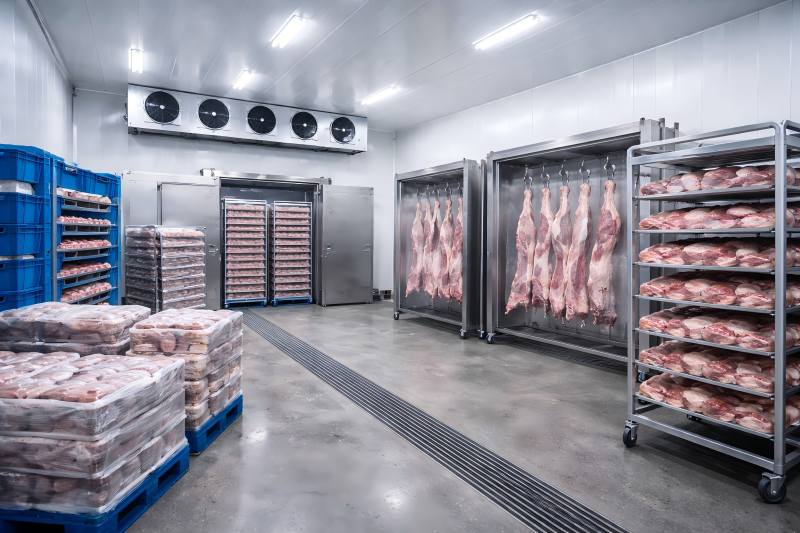
In the meat processing industry, maintaining the freshness, texture, and safety of products is of utmost importance. Blast freezers play a vital role in this process by rapidly freezing meat, preventing bacterial growth, and preserving product quality. As the demand for high-quality, ready-to-eat, and frozen meat products continues to rise, the use of blast freezer rooms has become a crucial component in food safety, product longevity, and operational efficiency.
Key Benefits of Blast Freezer Rooms in Meat Processing
Preservation of Product Quality
Rapid freezing is essential in preserving the quality of meat. These ice crystals rupture the cell walls, which can lead to a loss of moisture and a decrease in the meat’s texture and flavor. A blast freezer prevents this by rapidly lowering the temperature and forming smaller ice crystals, ensuring that the meat retains its original texture, color, and nutritional value when thawed.
- Fast freezing time: Blast freezers typically freeze meat to the core in 1–4 hours, as opposed to traditional freezing methods that can take up to 24 hours.
- Preserved texture: Smaller ice crystals form during rapid freezing, which prevents damage to muscle fibers and reduces drip loss upon thawing.
Improved Food Safety
Blast freezing rapidly lowers meat temperatures, halting bacterial growth and preventing pathogens like Salmonella, E. coli, and Listeria, crucial for ensuring food safety in meat processing.
In addition, blast freezers ensure that the meat is frozen uniformly, preventing the formation of uneven temperatures that could allow bacteria to survive in certain areas.
Extended Shelf Life
Blast freezers extend meat shelf life by preventing spoilage, allowing longer storage without compromising safety or quality.
Extended storage: Blast-freezing allows meat to be safely stored for several months (depending on the type of meat and storage conditions), which helps reduce waste and ensures product availability year-round.
Energy Efficiency
Despite the high-powered cooling systems used in blast freezers, they are often more energy-efficient than traditional refrigeration methods. The reason for this is that blast freezers are designed to operate efficiently in short cycles, ensuring that they only consume energy when needed. By freezing meat rapidly, blast freezers minimize the need for continuous, long-term cooling, resulting in lower overall energy consumption.
Best Practices for Using Blast Freezer Rooms in Meat Processing
While blast freezers are essential to the meat processing industry, their proper use is key to maximizing their benefits. Here are several recommended practices to guarantee peak performance and efficiency:
Efficiently Organizing the Freezer Room
How meat is loaded into the blast freezer can significantly impact its freezing time and quality. Overloading the freezer with too many products can restrict airflow, which will reduce the effectiveness of the freezing process.
Best practices:
- Air circulation: Allow sufficient space between products to ensure that air can circulate freely around them.
- Avoid stacking: Place meat products on racks or pallets that allow for even spacing and prevent overcrowding.
- Product labeling: Label products for easy identification, ensuring that the freezer does not become overcrowded and that older items are rotated for faster processing.
Set Optimal Temperature and Airflow Parameters
To achieve the best freezing results, it’s important to set the right temperature and airflow parameters. The air circulation and temperature must be optimized to ensure that the meat is frozen evenly and quickly.
- Air velocity: A blast freezer should maintain an airspeed of 3–6 meters per second to effectively remove heat from the product.
- Temperature settings: For most meat products, the blast freezer should operate at a temperature of -35°C to -40°C for rapid freezing.
Regular Maintenance and Cleaning
Like any refrigeration equipment, regular maintenance is essential to ensure that a blast freezer continues to operate efficiently and safely. Accumulated dirt and ice buildup can block airflow, reducing the freezer’s ability to cool the product effectively.
Best practices:
- Clean regularly: Schedule routine cleaning to remove any debris, grease, or ice buildup that may hinder airflow.
- Check gaskets: Inspect door gaskets regularly to ensure they are sealed tightly. Leaky doors can cause energy inefficiency and increase freezing time.
Monitoring and Data Logging
Continuous monitoring of freezer performance is essential for maintaining consistent results. Many modern blast freezers come with built-in data logging systems that track temperatures, airflow, and freezer cycles.
- Data logging: Use temperature sensors and data loggers to track performance, ensuring that the freezer is operating within the optimal temperature range.
- Monitor for efficiency: Check the performance regularly to ensure that the system is not overworking, and that temperatures remain consistent throughout the room.
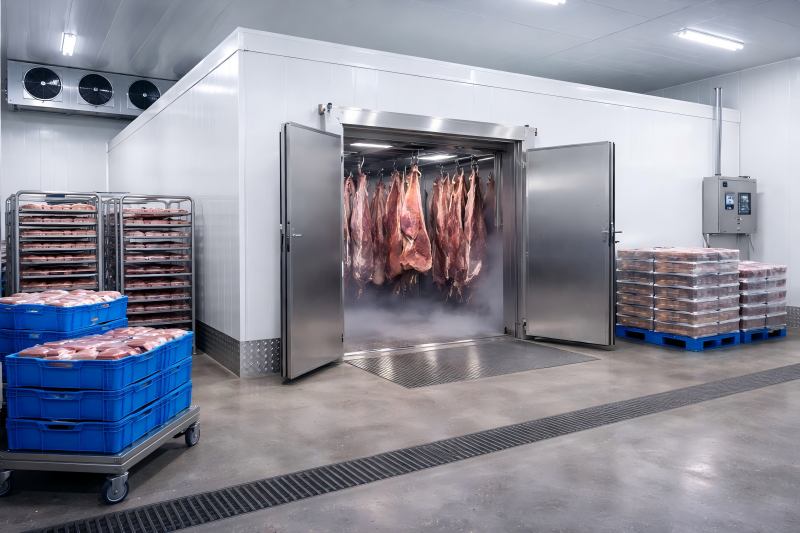
Selecting the Right Blast Freezer Room for Meat Processing
Selecting the appropriate blast freezer room involves considering various factors, such as the scale of your operation, the specific types of meat you handle, and the volume of production.
Capacity Requirements
The capacity of a blast freezer is typically measured in terms of how much meat can be frozen per hour. For smaller businesses, a blast freezer room with a capacity of 100–500 kg per hour might suffice, whereas larger facilities processing higher volumes may require systems capable of handling 1,000–5,000 kg per hour or more.
Space and Floor Layout
The size of the room should align with your production workflow. You’ll need to plan for space not only for the freezer itself but also for the loading and unloading areas, which should be easily accessible.
Room dimensions for different capacities:
| Room Dimensions (L × W × H) | Freezing Capacity (kg/hr) | Suitable For |
| 4m × 3m × 3m | 200–300 | Small processors, retail |
| 8m × 6m × 4m | 1,000–1,500 | Medium-sized meat processors |
| 10m × 8m × 5m | 2,000–5,000 | Large industrial facilities |
Insulation and Energy Efficiency
The level of insulation and energy efficiency are key factors in determining the operational cost and performance of your blast freezer. Good insulation helps the freezer retain temperature while using less energy.
- Insulation thickness: Use high-quality insulated panels, typically 150–200 mm thick, for optimal energy efficiency.
- Energy-efficient systems: Look for energy-efficient compressors, fans, and controls that help reduce power consumption.
Data on Blast Freezer Efficiency and Performance
Recent research and industry data highlight blast freezer performance and efficiency:
| Freezer Type | Average Energy Consumption (kWh/ton) | Freezing Time (hrs) | Typical Product |
| Standard Blast Freezer | 1,500–2,000 | 1–3 | Beef, Pork |
| High-Efficiency Freezer | 1,200–1,500 | 1–2 | Poultry, Lamb |
| Industrial Tunnel Freezer | 2,000–2,500 | 1–4 | Processed Meats |
From this table, it is clear that high-efficiency freezers offer significant energy savings while reducing freezing times for most meat products.
Blast freezer rooms are indispensable for ensuring the quality, safety, and longevity of meat products in the food processing industry. By investing in the right freezer size, ensuring proper operational practices, and focusing on maintenance and energy efficiency, businesses can benefit from enhanced product quality, increased shelf life, and reduced operational costs.
Implementing the best practices for blast freezing and selecting the appropriate system tailored to your business needs will not only optimize production but also help maintain the integrity and safety of your meat products.