
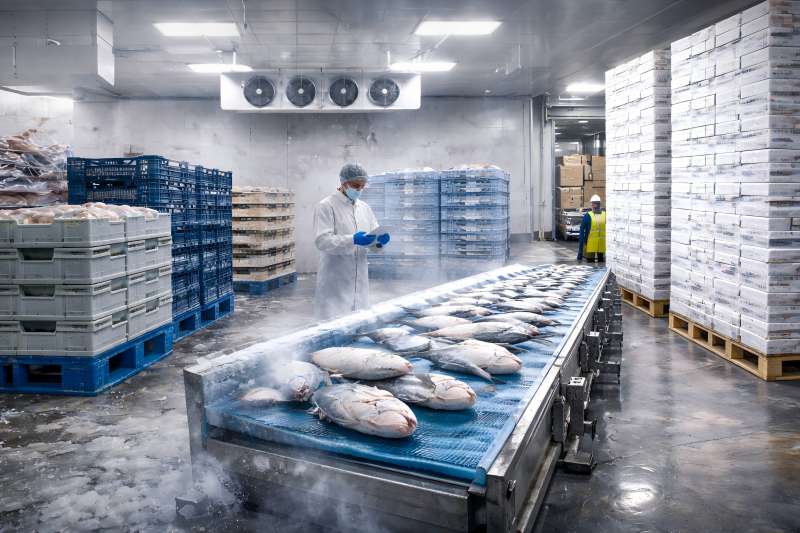
In modern fishing processing plants, maintaining product quality, safety, and market value depends heavily on temperature control. Among all temperature-controlled infrastructures, the cold room plays a central and irreplaceable role. From preserving freshly landed fish to stabilizing frozen products for global distribution, cold rooms act as the backbone of cold chain management in seafood processing.
Why Temperature Control Is Critical in Fish Processing?
Fish is one of the most temperature-sensitive food products. Once harvested, biochemical reactions and microbial activity begin almost immediately, leading to rapid quality deterioration if temperature is not strictly controlled.
Key risks without proper cold storage include:
- Rapid bacterial growth
- Texture degradation
- Loss of flavor and freshness
- Shortened shelf life
- Increased product rejection and economic losses
Cold rooms provide a controlled environment that slows enzymatic activity and microbial growth, preserving the physical, chemical, and sensory qualities of fish throughout processing and storage.
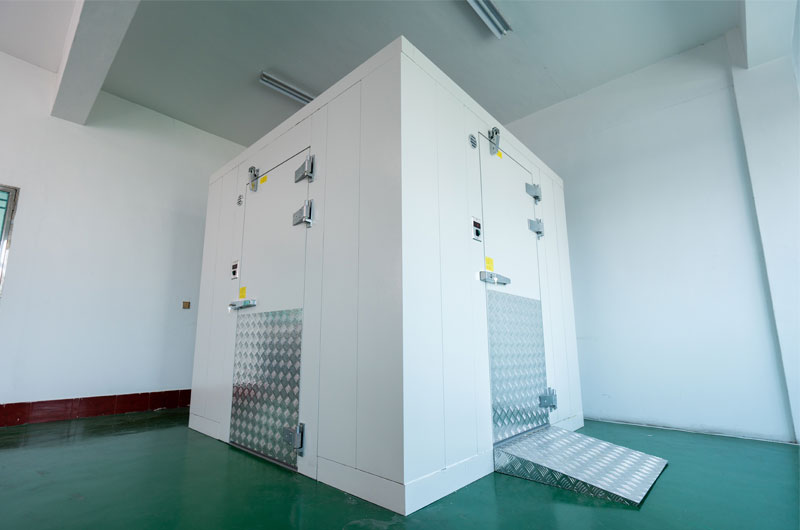
What Is a Cold Room in a Fishing Processing Plant?
In fishing processing plants, cold rooms are strategically integrated at multiple stages of production, including raw material reception, intermediate processing, finished product storage, and dispatch.
Cold rooms are not simply storage areas—they are active quality-control zones that directly influence food safety compliance, production scheduling, and logistics efficiency.
Core Functions of Cold Rooms in Fishing Processing Plants
Raw Material Preservation
Cold rooms are often the first destination for freshly landed or delivered fish. By rapidly lowering and stabilizing temperature, cold storage preserves the original quality of raw materials before processing begins.
Key objectives include:
- Maintaining freshness
- Preventing spoilage
- Allowing flexible processing schedules
This buffering capability is especially important in plants handling variable daily catch volumes.
Process Flow Stabilization
Fish processing lines often operate in multiple stages such as grading, gutting, filleting, washing, trimming, and packaging. Cold rooms act as intermediate holding zones, ensuring that temperature-sensitive products remain stable between operations.
Without cold rooms, production interruptions or equipment downtime could quickly lead to product losses.
Frozen Product Storage
For plants producing frozen fish, fillets, or shellfish, cold rooms function as long-term storage facilities. These rooms maintain sub-zero temperatures to:
- Prevent freezer burn
- Maintain texture and taste
- Preserve nutritional value
- Enable bulk storage for export markets
Frozen storage cold rooms are essential for global seafood trade, where products may be stored for weeks or months.
Support for Value-Added Processing
Many fishing processing plants now focus on value-added products such as marinated fillets, breaded fish, ready-to-cook portions, and ready-to-eat seafood. Cold rooms provide controlled environments for:
- Pre-processing chilling
- Ingredient stabilization
- Post-processing storage
Ensures stable product quality and safety across complex workflows.
By-Product and Waste Management
Fish by-products such as heads, bones, skins, and trimmings are often processed into fishmeal, fish oil, or other secondary products. Cold rooms slow degradation of these materials, preserving their value and preventing odors, contamination, and waste.
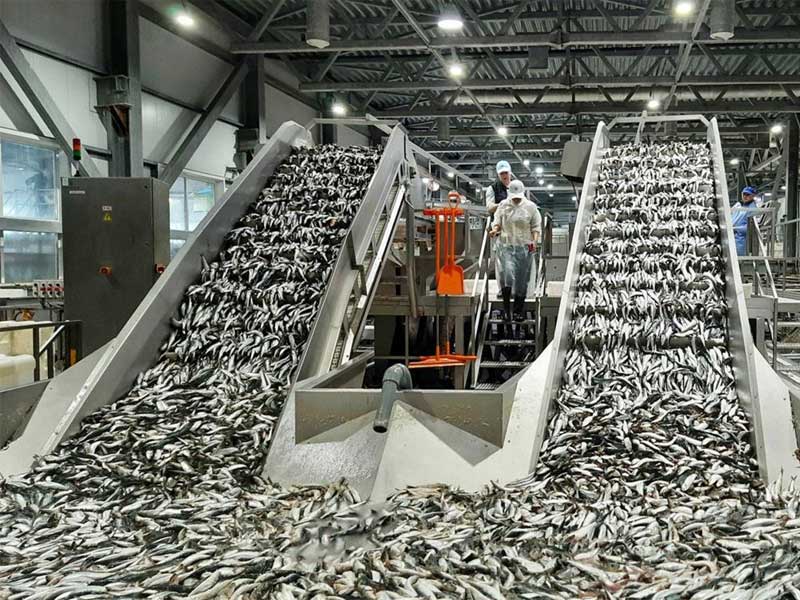
Types of Cold Rooms Used in Fishing Processing Plants
Different processing stages require different temperature ranges. As a result, fishing processing plants typically use multiple types of cold rooms.
Common Cold Room Types and Their Applications
| Cold Room Type | Temperature Range | Primary Application |
| Chilled Cold Room | 0°C to +4°C | Fresh fish storage, short-term holding |
| Superchilled Room | -1°C to -2°C | Extended freshness for fresh fish |
| Freezer Cold Room | -18°C to -25°C | Long-term frozen fish storage |
| Blast Freezer Room | -30°C to -40°C (air) | Rapid freezing to preserve texture |
| By-Product Cold Room | 0°C to +4°C | Temporary storage of trimmings and waste |
Each type serves a specific purpose, and proper integration ensures an efficient and safe processing environment.
Cold Rooms in Different Stages of Fish Processing
Raw Fish Reception and Chilling
When fish arrive at the processing plant—whether from fishing vessels or aquaculture farms—immediate chilling is essential. Raw fish are typically transferred directly into chilling rooms maintained at 0–4°C.
The chilling room:
- Slows bacterial growth
- Maintains freshness before sorting and grading
- Provides buffer storage during peak landing times
Without sufficient chilling capacity, raw fish quality can deteriorate within hours, especially in warm climates.
Cold Rooms During Primary Processing
Primary processing steps such as washing, de-scaling, gutting, and filleting generate heat due to mechanical action and human handling. Processing buffer cold rooms are used to stabilize product temperature between processing steps.
Benefits include:
- Maintaining consistent product temperature
- Preventing microbial spikes during processing pauses
- Supporting continuous production flow
In high-capacity plants, cold rooms are often integrated directly adjacent to processing lines to minimize exposure to ambient temperatures.
Cold Rooms for Freezing Operations
Freezing is a critical preservation method in seafood processing, especially for export markets. Cold rooms play two distinct roles here:
- Blast freezer rooms rapidly freeze fish to prevent ice crystal damage
- Frozen storage rooms maintain stable long-term storage temperatures
Rapid freezing preserves:
- Cellular structure
- Texture and appearance
- Nutritional value
Cold rooms ensure that once frozen, products remain within strict temperature limits to prevent partial thawing and refreezing, which can severely damage quality.
Storage of Value-Added Seafood Products
Value-added products such as marinated fillets, breaded fish, and ready-to-eat seafood require precise temperature and humidity control.
Cold rooms used for these products must:
- Prevent moisture loss
- Avoid condensation on packaging
- Maintain food safety standards for processed foods
Temperature consistency in cold rooms directly affects shelf life and consumer acceptance of these premium products.
Dispatch and Cold Chain Continuity
Before products leave the processing plant, they are staged in dispatch cold rooms. These areas ensure temperature stability while products await transportation.
Key functions:
- Maintaining cold chain integrity
- Preventing temperature abuse during loading
- Supporting efficient logistics scheduling
Dispatch cold rooms are often connected directly to refrigerated loading docks to minimize exposure time.
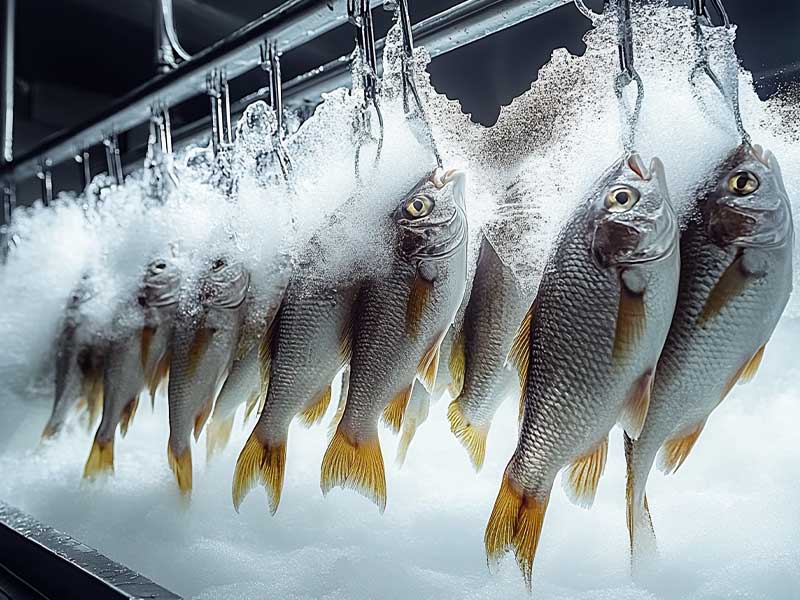
Cold Room Design Considerations for Fish Processing Plants
Designing an effective cold room system requires careful consideration of processing volume, product type, climate conditions, and regulatory requirements.
Temperature Accuracy and Stability
Fish processing cold rooms require precise temperature control with minimal fluctuation. Even small deviations can lead to condensation, freezer burn, or microbial growth.
Key design elements include:
- High-quality refrigeration units
- Accurate temperature sensors
- Real-time monitoring systems
Thermal Energy Optimization
Cold rooms operate continuously, making energy efficiency a major cost factor.
Effective insulation:
- Reduces energy consumption
- Maintains consistent temperatures
- Prevents external heat infiltration
Modern cold rooms often use insulated panels with polyurethane cores to achieve optimal thermal performance.
Hygienic Construction and Materials
Hygiene is critical in fish processing environments. Cold rooms should allow easy cleaning and corrosion resistance.
Design features include:
- Stainless steel fittings
- Smooth, non-porous wall surfaces
- Proper drainage systems
These features support compliance with food safety standards and reduce contamination risks.
Key Cold Room Design Factors and Their Impact
| Design Factor | Importance | Impact on Operations |
| Temperature Uniformity | Very High | Prevents spoilage and quality loss |
| Insulation Quality | High | Reduces energy costs and temperature fluctuation |
| Hygiene Design | Very High | Ensures food safety compliance |
| Capacity Planning | High | Supports production scalability |
| Monitoring Systems | High | Supports real-time quality monitoring |
Compliance with Food Safety
Cold rooms ensure seafood regulatory compliance by maintaining precise temperature control and documented traceability across processing stages.
Cold rooms support compliance by:
- Maintaining required storage temperatures
- Allowing traceability through temperature logs
- Reducing contamination risks
Automated monitoring and alarm systems are increasingly used to record temperature data and alert operators to deviations, ensuring continuous compliance.
Shelf Life and Quality Outcomes
The effectiveness of cold rooms directly influences the final quality of fish products.
Proper cold storage:
- Extends shelf life
- Preserves texture and color
- Maintains nutritional value
- Reduces waste and product returns
Inconsistent or poorly designed cold rooms can lead to dehydration, freezer burn, or microbial spoilage, even if freezing temperatures are maintained.
Operational Efficiency and Cost Control
Cold rooms are not just quality tools—they are also operational assets.
Well-designed cold room systems:
- Smooth production flow
- Reduce processing bottlenecks
- Minimize product losses
- Lower energy consumption per unit processed
Efficient cold room management helps plants handle peak processing volumes without compromising quality or safety.
Cold Rooms and Sustainability in Fish Processing
Environmental sustainability is gaining increasing importance throughout the seafood sector:
- Cutting food waste with more effective preservation systems
- Supporting by-product storage for fishmeal and fish oil production
- Improving energy efficiency with modern refrigeration technology
By extending shelf life and improving yield, cold rooms help maximize the value extracted from each fish harvested.
Future Trends in Cold Room Technology for Fish Processing
Advancements in cold room technology continue to reshape seafood processing.
Emerging trends include:
- Smart temperature monitoring with IoT integration
- Energy-efficient refrigeration systems
- Automated cold storage and retrieval systems
- Environmentally friendly refrigerants
These innovations further strengthen the role of cold rooms as strategic assets rather than simple storage spaces.
The cold room is a cornerstone of any fishing processing plant. From preserving raw fish quality to ensuring safe storage of frozen and value-added products, cold rooms support every stage of seafood processing. Their role extends beyond temperature control, influencing food safety compliance, operational efficiency, sustainability, and profitability.
As seafood markets become more competitive and regulations more stringent, investing in well-designed, efficient cold room systems is no longer optional—it is essential. A properly planned cold room infrastructure ensures that fishing processing plants can deliver high-quality seafood products to global markets while minimizing waste and maximizing economic returns.