
A used walk-in cold room is worth considering when its condition, original duty and relocation costs can be verified. A new room is often the clearer purchase when you need a specific layout, documented equipment selection or a defined warranty and installation scope. Compare the cost of a working room at your site, rather than comparing a seller’s equipment price with a supplier’s installed quotation.
The biggest uncertainty in a second-hand purchase is usually what the asking price leaves unresolved. Panels may still need dismantling, the refrigeration equipment may not suit your application, and a room that fitted its previous building may be awkward to install in yours. A structured inspection turns those unknowns into decisions before you commit.
Identify Exactly What Is For Sale
Ask for an itemised inventory. A listing described as a complete cold room may include the enclosure but exclude the refrigeration system, controls, insulated floor or dismantling. Photographs of a working room do not establish which items are included in the transaction.
List the wall panels, ceiling panels, floor, door assembly, trims, fixings, condensing unit, evaporator and control components separately. Record the dimensions and quantities. Any missing or unidentifiable item should have a supply plan and a cost allowance.
Also identify the seller’s role. An owner disposing of equipment, a dealer selling inspected equipment and a manufacturer supplying a new system offer different levels of documentation and responsibility. Ask what the seller has actually tested and what happens if the equipment does not match the description.
Match The Original Duty To Your Intended Use
Write down whether the original room was a chiller or freezer, what it stored and its normal setpoint. Then describe your own product, incoming temperature and busiest loading pattern. Similar room dimensions do not prove that the old refrigeration equipment is suitable for a new workload.
Ask a competent refrigeration contractor to review the equipment selection before the purchase becomes final. Provide photographs of readable nameplates, the original specification if available, and the intended site conditions. Without those details, a confident capacity statement is difficult to support.
For a new-room comparison, request a proposal for the same duty from the start. LINBLE’s cold room range is a starting point for discussing a complete system rather than piecing together a purchase solely around whatever equipment is available.
Inspect The Enclosure Before It Is Dismantled
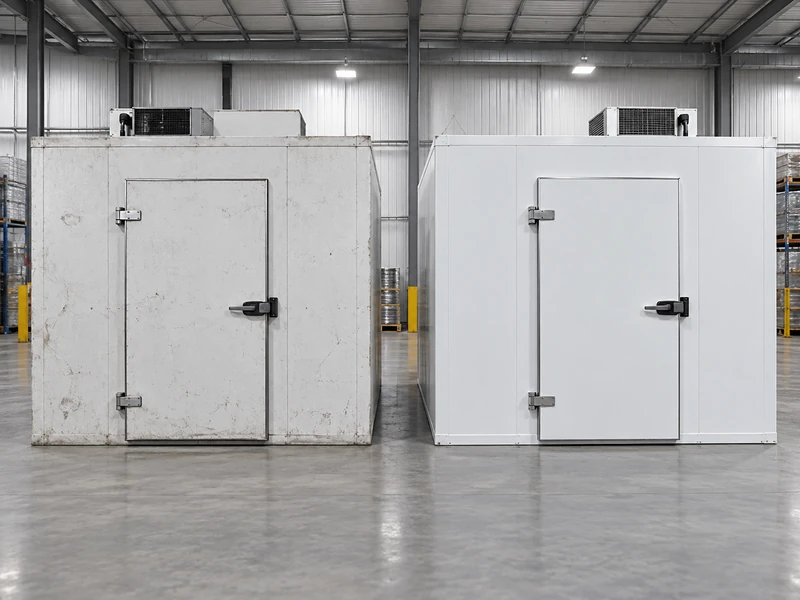
Walk around the outside and inside while the room is still assembled, if access is available. Record damaged joints, broken surfaces, corrosion, door alignment and evidence of water entry. Pay particular attention to corners and the floor-to-wall connection, where photographs in a sales listing may reveal little.
Check how the panels connect and whether their positions can be mapped for reassembly. Ask which parts can be reused and which seals or trims will need replacing. A complete panel set with a clear layout is easier to price than a mixed stack of unidentified components.
Surface appearance alone does not establish insulation performance. If moisture damage, delamination or persistent condensation is suspected, obtain a specialist assessment. For background on enclosure selection, review how to choose cold room panels before deciding whether reuse is sensible.
Measure Both The Room And The Installation Route
Measure internal and external dimensions, door opening and ceiling clearance. Check whether panels can be carried through the route into the new building. Include overhead obstructions, delivery access and working space for assembly.
A room that fits on a floor plan may still need expensive alterations to reach that position. If the new site needs a different door location, ask whether the panel arrangement supports it before assuming the room is freely interchangeable. Keep a marked drawing with the quotation.
Give The Door A Separate Inspection
Open and close it repeatedly and look at the complete assembly, including frame, seals, hinges or tracks. Ask the installer to assess the closing action and any safety-release mechanism. The room’s usefulness depends on staff being able to use the doorway reliably after relocation.
If the door needs replacement, confirm that an appropriate unit can be fitted to the existing opening. Compare the cost with specifying the correct door in a new room. A low enclosure price becomes less attractive when major components have to be redesigned.
Ask For Evidence That The Refrigeration Works
A running compressor is not a complete performance test. Request a dated service record and an observed operating check that records room conditions, ambient conditions and any load in the room. The contractor should identify problems that could prevent the system from meeting the proposed duty.
Ask whether the condensing unit and evaporator were originally selected together. Record refrigerant identification, electrical requirements and any known component replacements. If nameplates are missing or the equipment history is uncertain, reflect that uncertainty in the buying decision rather than treating an estimate as a verified specification.
Used, refurbished and remanufactured are not interchangeable promises. For example, Copeland describes its OEM remanufacturing process as restoration to its specifications using a defined process. That statement does not establish the condition of a privately sold compressor or an entire used cold room.
Budget For Removal And Reinstallation
Assign responsibility for safe decommissioning, refrigerant handling, dismantling, labelling, packaging and transport. Then obtain a separate installation scope for the new site. The seller’s obligation may stop long before the room is operational again.
Include the possibility of damage discovered during dismantling. Agree how missing panels or broken components will be documented and who will resolve them. A photographic inventory taken before loading is more useful than arguing later about what was present.
At the destination, allow for the floor base, electrical works, drainage, penetrations and commissioning. These are project costs even when the used equipment itself is inexpensive. Our overview of walk-in cold room price factors can help organise the wider budget.
Use A Total-Installed-Cost Worksheet
| Cost item | Used-room quotation | New-room quotation |
| Enclosure and door | Price plus repairs and missing parts | Specified new enclosure and door |
| Refrigeration | Inspection, repairs and any replacement equipment | Matched equipment for the stated duty |
| Logistics | Dismantling, packing, freight and unloading | Freight, unloading and stated assembly work |
| Site works | Adaptation, power, drainage and penetrations | Site works and exclusions confirmed in writing |
| Acceptance | Commissioning plus resolution of discovered defects | Commissioning against the agreed specification |
For a hypothetical comparison, a used package priced at $4,000 might need $1,000 for removal and transport, $1,500 for site work and $800 for identified repairs. Its known installed cost would then be $7,300, before any unresolved items. These figures illustrate the worksheet only; they are not market prices or a LINBLE quotation.
Place a comparable new-room quotation beside that total, with the same inclusions. Keep unknown costs visible in a separate row. A blank repair allowance should not silently be counted as zero.
Compare Warranty And Service Terms
Read what the seller actually promises about condition, not just how the equipment is described. Identify the warranty period, covered components and exclusions. Clarify whether removal, freight, labour and travel are included if something fails.
For a new system, ask the same questions. Confirm who takes responsibility when the enclosure supplier, refrigeration supplier and local installer are different companies. A clear written handover is more valuable than a general statement that the equipment is supported.
Build a practical service plan around local availability. Ask the contractor which parts can be sourced, what documentation is needed and how a breakdown would be handled. Retain the equipment details with your cold room maintenance checklist after installation.
Consider Keeping The Enclosure And Renewing The Cooling System
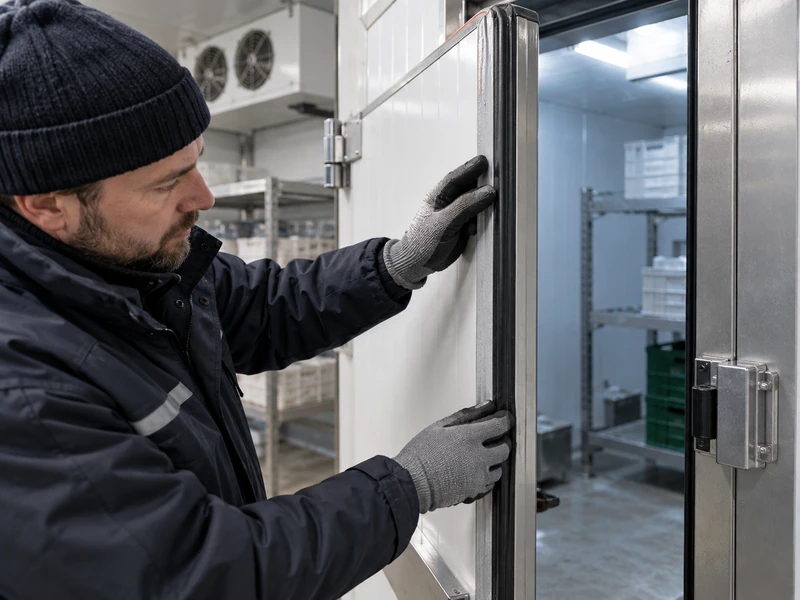
The choice is not always between an entirely used room and an entirely new one. A sound enclosure may be reusable with newly selected refrigeration, provided the proposed combination is reviewed. Conversely, apparently functional machinery may not justify reusing damaged panels.
Price these alternatives separately. Include any changes to equipment openings, pipe routes and controls rather than assuming new machinery will connect directly. LINBLE’s cold room condensing units can be discussed as part of a reviewed replacement specification, with suitability confirmed for the existing evaporator and room.
This approach requires a clear boundary of responsibility. One party should verify that the final combination meets the agreed duty. Buying individually plausible components is not the same as buying an assessed system.
Define Acceptance Before Paying The Final Balance
Agree which documents and checks will demonstrate that the room has been delivered as specified. A useful handover includes an inventory, equipment identification, settings record, operating instructions and commissioning results. Define the test conditions so an empty-room test is not confused with a loaded performance commitment.
Walk through the actual work routine during acceptance. Check access around shelving, door operation and the location of controls and alarms. Record defects with photographs and an agreed resolution date.
For a second-hand project, retain the original inspection report alongside the post-installation record. This makes changes and outstanding issues easier to understand. It also gives future service technicians a starting point beyond the seller’s description.
Questions To Answer Before Choosing
- Duty: Can the proposed equipment be verified for your product, temperature and loading pattern?
- Condition: Have the enclosure, door and refrigeration been inspected?
- Completeness: Is every included component listed, with missing items priced?
- Relocation: Are dismantling, transport and installation responsibilities clear?
- Support: Is there a usable warranty and a local service route?
- Acceptance: Are the handover documents and operating checks agreed?
Send the same site drawings and operating brief to the used-equipment seller, installer and new-room supplier. Once the quotations describe the same finished result, the price difference becomes meaningful. You can then decide whether the saving from reuse justifies the documented condition and remaining uncertainty.