
Ventilation and climate control in a poultry house should follow one coordinated operating sequence: maintain the required fresh-air exchange, direct incoming air where it can mix safely, then stage heating and cooling around bird age, moisture and outdoor conditions. A thermostat alone cannot manage that balance, because a house can reach its air-temperature target while litter stays wet or cold air falls directly onto chicks.
LINBLE presents poultry farming equipment as part of a wider route from growing birds to processing and refrigeration. For that kind of integrated project, the useful starting document is a house control sequence with clear equipment interfaces, followed by a separate capacity plan for the processing rooms downstream.
What Must Ventilation Achieve When the House Is Already Warm Enough?
It still has to manage moisture and air quality. Reducing ventilation whenever heating is needed may conserve heat briefly while allowing humidity and unwanted gases to accumulate.
The University of Georgia’s brooding guidance explains the relationship between inlet control, mixing, humidity and bird comfort. Its recommendations support an important distinction: minimum ventilation has a job even when the temperature controller is not asking for cooling.
Prepare the operating plan for the flock’s breed, age, stocking arrangement and local climate. The house designer and production team should agree the actual settings; a temperature or timer copied from a different farm may not reproduce the same conditions at bird level.
Why Can Heating and Ventilation Run Together?
Heating can offset the heat carried away by necessary air exchange. That combination is often intentional during brooding and cold weather, provided the incoming air is distributed correctly.
The warning sign is uncontrolled overlap: heaters fighting a cooling stage because sensors disagree, or large fans running through an inlet arrangement intended for a much smaller airflow. Review the sequence and sensor locations before describing either condition as an equipment-capacity problem.
How Should Fans and Inlets Be Matched?
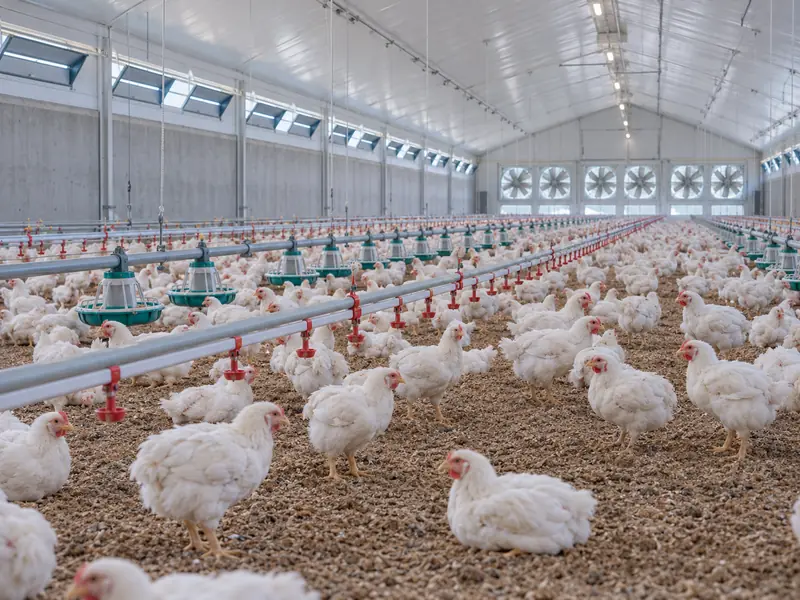
Select fans against their working resistance, then coordinate inlet opening with each ventilation stage. Nameplate airflow in free air does not describe delivery through the complete house.
Shutters, screens, cooling pads and dirty surfaces all affect resistance. The installation needs an agreed method of checking pressure and delivered airflow, together with enough access to keep those parts serviceable.
A sidewall inlet that opens too far at a low fan stage may admit a slow stream that drops prematurely. Opening less is not automatically the cure either: the remaining opening must still suit the required airflow and pressure.
- List the fan groups used at each operating stage.
- Identify the inlet route used by those groups.
- Confirm how inlet actuators respond to pressure and controller demand.
- Check the path above birds and around internal equipment.
- Include cleaning condition and power supply in the performance assumptions.
This is one reason to define the scope of LINBLE’s poultry farming and processing equipment package at the interface level. Fans, inlets, heaters, sensors and controls need named responsibilities, even when they arrive through different supply packages.
Which Signals Should Lead the Controller?
Temperature is essential, but it needs context from humidity, pressure, bird distribution and the condition of the litter. Use the signals the installed system genuinely measures, and provide staff with a routine for observations that remain manual.
Choose measurement positions for the current bird height and occupied area, with the flock adviser confirming that the readings reflect the conditions the birds experience. Direct heater radiation, an inlet jet, a wet wall or an unrepresentative corner can make a functioning sensor produce a misleading control decision.
Multiple sensors can help reveal differences along a long house. Their value depends on a documented control rule, however: an average that conceals one persistently cold area is not a satisfactory result simply because its arithmetic is correct.
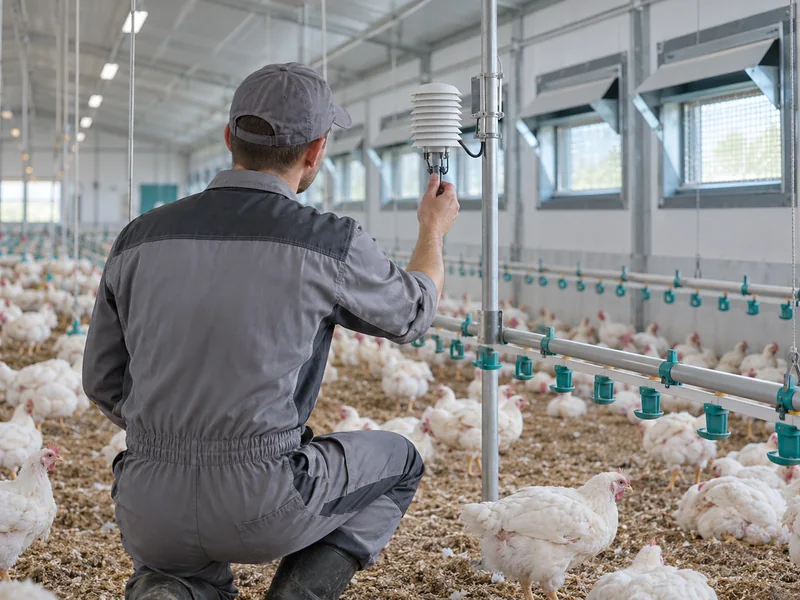
Use a reference instrument to investigate suspicious readings and record any relocation. Keep the arrangement understandable enough that an operator can explain which sensor is controlling which stage during a difficult weather change.
How Does the Sequence Change Through the Flock?
The sequence should change as birds grow and their heat production, moisture load and response to air movement change. Define transitions explicitly so that the house does not jump between incompatible inlet and fan arrangements.
| Operating Situation | Coordination Priority |
| Early brooding in cool weather | Retain suitable floor and bird conditions while providing the required minimum air exchange and mixing. |
| Growing birds in mild weather | Increase exchange in stages without losing inlet control or creating uneven zones. |
| Hot-weather tunnel operation | Verify the intended air path and actual fan performance before relying on additional cooling. |
| Humid weather | Review the moisture balance and evaporative-cooling benefit rather than assuming more water always improves comfort. |
Evaporative cooling needs particular care when the outdoor air is already humid. Establish its enable conditions with the house designer and flock adviser, then check the outcome at bird level instead of judging performance only by a lower thermometer reading near a pad.
Transitions also deserve attention at night and after sudden weather changes. A stage that works during a dry afternoon may require a different combination of inlet opening, fan duty and heat input later the same day.
What Does Wet Litter Tell the Project Team?
Trace the water input and the local drying conditions at each wet patch before changing fan capacity; the appropriate correction may be a drinker repair, an inlet adjustment or a revised operating stage. Examine drinker leakage, floor conditions, air distribution, condensation and the current ventilation schedule together.
The UGA publication on litter quality discusses moisture removal through coordinated heating and ventilation. Its practical implication for equipment planning is that water input and air movement belong in the same review.
Map where wet areas occur and compare their timing with controller records. A strip beneath drinkers suggests a different first investigation from repeated damp patches below sidewall inlets.
After a change, observe the flock and litter over a meaningful operating period. Several simultaneous adjustments make it difficult to know whether an apparent improvement came from the control change, weather or a repaired drinker.
Where Does the Poultry House End and the Cold Chain Begin?
The live-bird house and the meat cold room require different environmental strategies. The house exchanges outdoor air for bird conditions; a refrigerated processing space usually seeks to limit uncontrolled infiltration while meeting its own hygiene and process requirements.
Keep those control systems distinct, then coordinate production quantities and schedules between them. LINBLE’s meat cold room planning should use the actual chilled or frozen product flow after processing, including working hours, package form and dispatch timing.
For the building arrangement, review the cold room’s role in the slaughterhouse alongside the process flow. Farm exhaust, refrigeration heat rejection, clean access and loading routes should be coordinated on the site plan without treating the whole facility as one air system.
How Would a Cold Morning Become a Hot Afternoon?
Imagine a broiler house beginning the day with heat input and minimum ventilation, then facing a rapid rise in outdoor temperature. The controller needs to move through defined stages while preserving the intended air path; simply starting every available fan can create an unsuitable intermediate condition.
Before approving the sequence, walk through what happens to sidewall inlets, tunnel openings, heaters and cooling equipment at each transition. Include the reverse transition when the afternoon cools, because a house can become uneven after the main heat peak has passed.
Give operators a short explanation of the intended response for each stage. A clear stage display and a usable fault message help staff distinguish normal overlap from a valve, actuator or sensor that has failed to follow the command.
Test changes with the house designer’s approved method and the flock team present. Record pressure, representative conditions and bird behaviour together, so that an acceptable controller trace is supported by an acceptable occupied environment.
For a LINBLE project extending into slaughter and refrigeration, put the farm’s expected production calendar beside the processing schedule. A hot-weather change in bird delivery timing can shift the downstream receiving peak even though the nominal birds-per-hour rating stays the same.
That scheduling conversation helps size the chilled and frozen buffers without attempting to connect their controls to the poultry-house thermostat. Each system serves its own duty, while the production plan supplies the information they need to work together.
What Should a Coordinated Handover Include?
Handover should show how the house behaves, including transitions and failures, rather than merely confirm that each motor starts. Give staff a stage schedule, sensor plan, alarm list and a clear emergency response for ventilation loss.
Give the farm team a written sequence for supply failure, including essential equipment, notification routing and the named duty responsible for initiating the emergency response. Where backup is included, test the defined changeover and essential loads; LINBLE’s discussion of backup-system planning provides a useful parallel for the refrigerated part of the project.
Use the cold room commissioning checklist for that downstream equipment, with a separate poultry-house acceptance procedure. An integrated supplier conversation works best when each space has a precise duty, a responsible specialist and an operating sequence that the farm team can use.