
A slaughterhouse needs coordinated receiving, humane handling, slaughter, dressing, inspection, chilling, cutting, packing and storage equipment, supported by sanitation and utilities. The right specification follows the species, saleable product and work rate through every transfer. LINBLE’s role in that conversation is particularly useful where the processing line meets the refrigeration system: a mismatch there can leave a fast line waiting for cold-room space.
Where Should the Equipment Schedule Begin?
Begin with the products the plant intends to sell and work backwards to the incoming animals. Whole chilled carcasses, vacuum-packed cuts and frozen cartons require different handling and refrigeration arrangements. Even the same daily tonnage may produce different rail lengths, trolley movements and storage positions.
Separate the average production day from the peak arrival period. Record animals per hour, expected carcass weights, shift duration, batch timing and the proportion sold chilled or frozen. Include inspection holds, cleaning breaks and any seasonal change in species or product mix.
LINBLE’s slaughterhouse equipment offering covers processing, packaging and refrigeration. Use that scope to prepare one coordinated equipment schedule, while identifying who is responsible for civil works, utilities and local approvals. A machine list becomes much more useful when every entry has a defined incoming and outgoing condition.
What Is Needed at Intake and Before Slaughter?
Receiving equipment must suit the animals, handling method and applicable welfare requirements. The layout may include unloading facilities, holding areas, identification and weighing arrangements, inspection access and controlled movement to the slaughter line. Poultry crate handling and cattle lairage should never be treated as interchangeable versions of the same station.
Plan routes for vehicles, people, empty crates and cleaning separately from the movement of edible product. Identify where rejected or suspect animals can be held under the approved procedure. Equipment should support the local veterinary and welfare plan, rather than forcing staff to improvise around a fixed conveyor.
Water, ventilation and cleaning access deserve space at this early stage. If washdown traffic has to cross the clean product route later, the apparent saving in building area can become a persistent operating problem. Show these movements on the layout before finalising machine positions.
Which Machines Change with the Species?
The slaughter and dressing section must be specified for the species and approved process. Depending on the operation, it may require stunning and restraint equipment, hoists or conveyors, bleeding collection, scalding and dehairing or plucking, skinning, evisceration and carcass splitting. The exact sequence needs review by the plant’s competent specialists and authority.
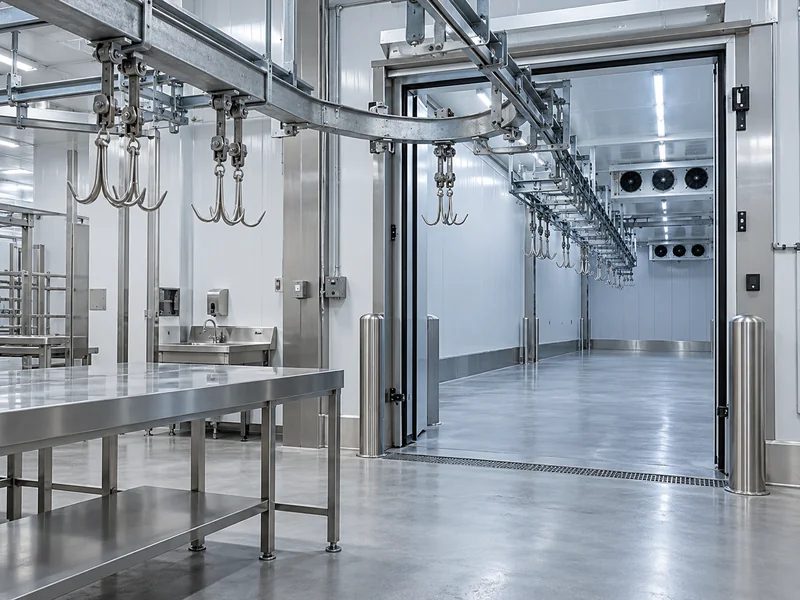
A poultry line may be governed by shackle pitch, bird size and the capacity of the chilling method. A red-meat line may depend on carcass suspension, rail transfer, dressing platforms and the clearance needed for larger carcasses. Similar headline throughputs can conceal very different building and utility requirements.
Do not add every available machine to the initial purchase. A plant selling whole carcasses may need little cutting automation, while a portioning business may need considerable downstream equipment. Buy the capability required by the product plan and reserve expansion space deliberately.
| Process Area | Equipment to Review | Critical Interface |
| Receiving and Handling | Unloading, holding, identification and inspection facilities | Species, arrival peaks and welfare plan |
| Slaughter and Dressing | Approved restraint, conveyor, dressing and collection systems | Clean and soiled operations |
| Inspection and Chilling | Inspection stations, transfer rails, chill rooms or approved chilling system | Product identity, timing and temperature |
| Cutting and Packing | Tables, cutting tools, portioning and packaging machines | Room conditions and pack format |
| Cold Storage and Dispatch | Racking, refrigeration, monitoring and loading equipment | Peak stock and vehicle schedule |
How Should Inspection and By-Products Fit into the Line?
Inspection needs usable access, product identification and an approved method of holding material until a decision is made. Include the handling arrangements for retained, condemned and edible material. A cold room cannot correct an identification failure that occurred upstream.
Provide appropriate collection and transfer equipment for blood, hides, feathers, inedible material and edible offal according to the process. Confirm containment, cleaning and the destination of each stream. Keep by-product traffic out of the clean transfer route, even when a crossing would shorten its journey.
FAO’s meat hygiene guidance treats slaughter, dressing and subsequent handling as a connected contamination-control problem. That is a useful basis for reviewing equipment interfaces, rather than judging hygiene from the finish of an individual machine. Confirm the proposed arrangement against the site’s authorised hygiene plan and the requirements applying at its location.
What Must Be Coordinated Before the First Chill Room?
Coordinate the line’s output rate with chilling capacity, rail or trolley positions and the approved cooling programme. Product entering warm creates a different duty from already chilled stock awaiting dispatch. Treat primary chilling and chilled holding as separate duties even when the building places them next to each other.
For suspended carcasses, confirm rail height, structural support, spacing, turning points and the door transfer detail. For crates or trolleys, confirm loaded dimensions and the return-air route. Refrigeration drawings and handling drawings should use the same finished dimensions.
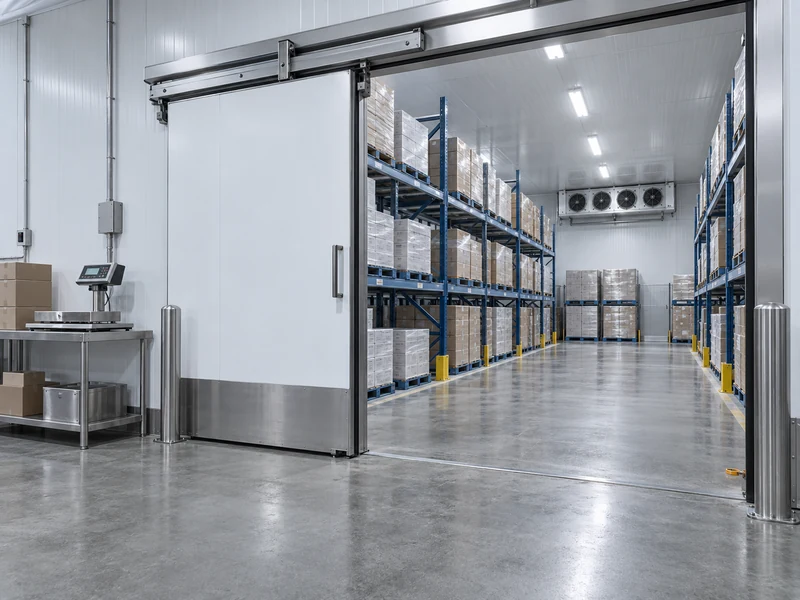
A LINBLE meat cold room should therefore be discussed with the actual incoming load and operating schedule. Species also affects the cooling programme and handling method; the related article on cold storage planning for beef, pork, lamb and poultry explains why one generic specification is inadequate.
FAO’s carcass refrigeration guidance highlights the importance of deep product temperature and circulation around suspended carcasses. For project acceptance, establish a species-appropriate cooling procedure with the plant’s technical team. A cold surface or a satisfactory room sensor reading cannot establish the condition deep inside the load.
What Changes After Cutting and Packaging?
Cutting changes both the handling unit and the cooling behaviour. A carcass on a rail becomes cuts on tables, then packs in cartons and possibly pallets. Each transition creates a new requirement for clean transfer, temporary holding and identification.
List the required cutting, deboning, trimming, weighing and packing operations in their working order. Specify vacuum or other packaging from the approved product requirements, including seal checks and pack identification. A packaging machine’s rated output is useful only if operators can feed it and move finished cartons away at that rate.
If cartons will be frozen, establish whether freezing occurs before or after final packing. Dense cartons can make the freezing task more difficult, while exposed product may need stronger control of drying and handling. The earlier LINBLE article on blast freezer rooms in meat processing is relevant when this branch is included in the process.
How Do You Find the Bottleneck Before Ordering?
Put every station on the same hourly basis and include the working time available. A packing machine rated for a high output cannot compensate for a chill room that releases product too late for the packing shift. Equally, extra refrigeration will not clear a queue caused by inspection or manual trimming.
Use an illustrative peak shift to test the schedule. Let the line run at the agreed rate, add the expected inspection hold and place the normal cleaning break on the timeline. Then show where each product stream waits and whether its location and condition remain acceptable.
For freezing, account for the number of complete batches possible after loading, unloading and defrost. For chilled carcasses, check available rail positions during the overlap of incoming warm product and released stock. These are different capacity checks and should not be hidden inside one daily-tonnage figure.
Ask each equipment supplier to identify the limits of its own section and the condition expected from the previous station. Assemble those statements into an interface schedule. It gives LINBLE and the processing specialists a concrete basis for resolving a mismatch while the layout can still be changed.
Which Supporting Systems Are Easy to Underestimate?
Utilities and sanitation equipment must be included in the purchase plan, with capacities and connection points that match the installed process. Review potable water, hot water, electricity, drainage, ventilation, cleaning equipment and any compressed-air requirement. Make the supplier boundaries explicit.
- Check simultaneous electrical demand, including refrigeration and defrost.
- Provide handwashing and tool sanitation at the locations required by the hygiene plan.
- Allow access to drains, evaporators, machine guards and service panels.
- Plan clean storage for packaging and tools.
- Define alarms, emergency arrangements and responsibility outside production hours.
Before ordering, walk one normal batch and one disrupted batch through the layout. Include an inspection hold, a stopped packing station and a delayed dispatch vehicle. The exercise exposes missing buffer space that a straight process arrow tends to hide.
For the refrigeration handover, use LINBLE’s commissioning checklist alongside the plant’s process validation. Ask for a coordinated layout, equipment schedule and interface list. Those documents are what turn a collection of machines into an operable slaughterhouse.