
Preserving the crispness of leafy greens starts with removing field heat promptly, then limiting water loss without freezing the leaves or leaving free water on them. A LINBLE room should be planned around the crop, harvest-to-cooling route and pack format. A low controller setting alone cannot compensate for a queue of warm crates or air that bypasses the produce.
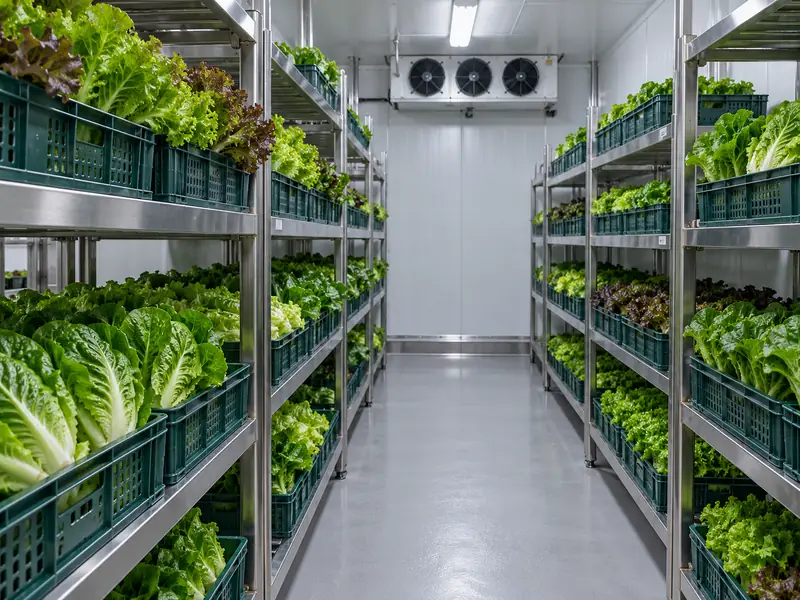
Which Greens Are You Actually Storing?
Specify the crop and product form before choosing a room temperature. Whole romaine heads, loose-leaf lettuce, spinach and packed salad leaves do not have identical handling requirements. Some tender herbs commonly stored beside greens are chilling sensitive, so a general “leafy produce” category is too broad.
Record whether the crop is unwashed, washed and drained, field packed or ready to eat. Include any package instructions and the intended storage period. A room used only to hold precooled cartons needs a different refrigeration duty from one receiving warm harvested crates throughout the day.
UC Davis’s crisphead lettuce fact sheet identifies near-0°C storage and very high relative humidity as favourable conditions for that crop. Those are product references, not permission to apply the same setpoint to every green leaf or to ignore local cold spots. The installed control range must protect the actual product throughout the room.
Where Is Crispness Being Lost Before the Cold Room?
Map the minutes between cutting, field collection, shade, transport, receiving and active cooling. Warm waiting time can consume product quality before refrigeration has a chance to help. A shaded receiving route and a prepared unloading position can therefore be part of the cold-room project.
Use a simple batch record: harvest time, arrival time, temperature at receipt, cooling start and cooling completion. Keep it short enough that staff can actually maintain it. If the largest delay is at a weighing station or a full loading bay, additional refrigeration alone may not remove the bottleneck.
LINBLE’s article on produce precooling versus cold storage explains the difference between removing field heat and holding cold produce. Decide which duty the new room must perform. Where both occur, the design and schedule should explicitly account for warm incoming loads.
Which Cooling Method Fits the Crop and Pack?
Select the cooling method from crop suitability, pack geometry, throughput and available utilities. Room cooling, forced-air cooling, vacuum cooling and water-based methods have different practical requirements. A general storage evaporator does not automatically create a forced-air precooling system.
For forced air, provide aligned ventilation openings and an arrangement that draws air through the packed crop. A large opening around the side of a stack may let air bypass the leaves. For water-based cooling, water quality, sanitation and crop suitability require their own controls.
Vacuum cooling can be appropriate for some lettuce operations, but the equipment and process need specialist assessment. Identify vacuum cooling as a separate item in the project scope, with its supplier and required connections. Tell LINBLE what upstream cooling equipment already exists and what condition the produce reaches at the room entrance.
| Observed Problem | What to Investigate | Useful Project Information |
| Warm Centres in Crate Stacks | Cooling method, vent alignment and batch resistance | Loaded crate drawing and temperature checks |
| Dry Leaf Edges Near Fans | Direct air exposure and moisture loss | Storage position and duration |
| Water-Soaked Leaves | Freezing injury, condensation or handling damage | Product history and local temperature record |
| Rapid Yellowing | Warm delays, crop condition and storage environment | Harvest-to-dispatch timeline |
How Can You Keep Humidity High Without Wetting the Leaves?
Reduce unnecessary moisture loss through a suitable combination of refrigeration design, packaging and air distribution. High relative humidity and visible water on the crop are different conditions. Persistently wet surfaces, condensation and poor drainage introduce problems that a humidity percentage does not describe.
UC Davis’s romaine and loose-leaf lettuce guidance explains the relationship between water loss and wilting, as well as the protective role of suitable packaging. It also describes freezing injury and sensitivity to ethylene. These crop responses help distinguish dehydration from damage that merely looks similar at dispatch.
Discuss coil selection and the temperature difference used for the duty with LINBLE. A selection that relies on an unnecessarily cold coil can remove substantial moisture from the air. The correct balance depends on the cooling load, crop, packaging and the time available to reach the target condition.
Humidification, if proposed, needs suitable water quality, hygienic maintenance and control. It should not be used to hide an air-distribution problem or replace packaging required by the crop process. First check whether the produce is being stored directly in a strong discharge stream for longer than necessary.
Where Should Crates Sit in a LINBLE Room?
Leave the designed paths for supply air, return air and handling access available. Keep crates off the floor on suitable supports and avoid pressing the load against the evaporator or insulated wall. Use the installed layout’s clearances rather than an invented universal gap.
The LINBLE fruit and vegetable room enquiry should include crate dimensions, stacking height and the amount received per hour. Show how empty crates and rejected produce leave the area. Reserve the area occupied by these transfers before calculating the number of permanent crate positions.
The relevant evaporator arrangement should distribute air for the intended cooling and holding duties. After precooling, the crop may no longer need the same exposure that helped remove field heat. Consider a planned transfer or an approved operating programme instead of leaving every batch in the strongest airflow until dispatch.
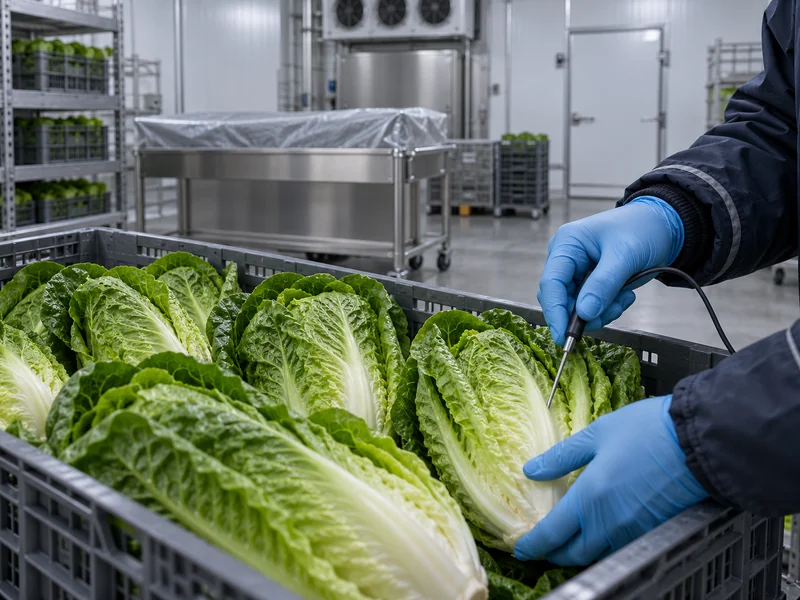
What Should Be Kept Out of the Greens Room?
Review mixed storage for temperature compatibility, hygiene and ethylene exposure. Ripening fruit can be a poor neighbour for sensitive lettuce, even when there is spare shelf space. Forklift emissions and other sources of contamination also need attention in the operating environment.
Use LINBLE’s guide to produce that should not share a cold room when building the storage list. Include seasonal products that may appear only briefly. A room that is dedicated on the purchase order can become mixed storage in practice if overflow rules are never defined.
Keep washing, waste handling and clean packed product under the site’s hygiene plan. Cooling does not remove contamination, and a crisp leaf is not evidence of food safety. Define the product flow so that staff do not move dirty harvest containers through a ready-to-eat packing area.
What Could a Small Grower Change Before Adding Equipment?
Consider an illustrative grower who harvests several small lots but delivers them to the cooler together at lunchtime. The peak heat load and waiting time may be greater than the daily total suggests. Earlier shaded collection and smaller scheduled transfers could change the cooling requirement without changing the crop area.
Check the crate stack before changing the refrigeration unit. If vents do not align or a liner closes the intended air passage, the outer leaves may cool while inner heads remain warm. Correcting the pack arrangement deserves a controlled comparison using similar crop and incoming conditions.
Also check where the cooled lot waits for sale. If finished crates remain beside an open receiving door while new harvest arrives, part of the benefit of prompt cooling can be lost. Assign a holding position and a clear transfer rule that staff can follow with the available trolleys.
These are proposed operating adjustments, rather than promised savings or a reported LINBLE case study. Record their effect on product temperature and visible condition. Bring those observations to the design discussion so that any equipment change addresses the remaining limitation instead of compensating for an avoidable handling delay.
Which Checks Should Accompany the Greens to Dispatch?
Check product temperature, visible condition and the time spent in each stage of handling. For quality assessment, compare similar crop lots and pack formats; otherwise maturity and harvest damage can confuse the result. Where useful, track representative package weights to investigate moisture loss.
- Check the centre of representative loads after cooling.
- Inspect fan-facing leaves and the slowest-cooling positions separately.
- Look for wilting, breakage, water-soaked tissue and condensation.
- Record door activity and any prolonged waiting at dispatch.
- Keep the successful crate pattern as a working instruction.
Cold room temperature mapping helps locate warm and cold positions that deserve closer product checks. Use those findings to adjust loading or control before treating every loss as a need for a colder setpoint. The useful specification for LINBLE is a complete crop route: harvest condition, cooling method, storage positions and dispatch timing.