
A CoolBot system can be a practical option for an insulated, above-freezing storage room with a suitable air conditioner and a manageable daily workload. Purpose-built commercial refrigeration deserves closer consideration when your business needs freezing temperatures, demanding product cooling, frequent access or a clearly specified installation and service package. The right choice follows from what happens inside the room during a busy day, not simply its floor area.
For a farm, florist or growing food business, this comparison is really about the operating conditions behind the purchase. A low equipment price is useful only if the completed room can meet the required temperature and recovery time. Before choosing either approach, write down what you store, how it arrives and how often people enter.
What Are You Actually Comparing?
CoolBot is a controller used with compatible air-conditioning equipment in an insulated cooler. A commercial cold-room system typically combines a refrigeration condensing unit, an evaporator and controls selected for the application. Both still need a suitable enclosure, electrical supply, drainage and somewhere to reject heat.
A controller purchase therefore cannot be compared directly with a complete installed cold-room quotation. Separate the enclosure from the cooling equipment, then compare the finished scope. If your starting point is an empty space, LINBLE’s small cold room page provides a useful reference for the type of complete storage solution you may want to discuss.
Start With The Temperature Requirement
According to CoolBot’s official FAQ, the controller can be set between 32°F and 65°F, but the manufacturer recommends a minimum setting of 34°F to help avoid air-conditioner coil freezing. It is not intended to create below-freezing storage. A display setting is also different from a promise that every product will reach that temperature within your required time.
If frozen storage is part of the plan, request a freezer design from the outset. Do not budget for a cooler on the assumption that changing its thermostat will later turn it into a freezer. The enclosure and refrigeration selection must be reviewed together for the intended duty.
For chilled goods, define the acceptable range for the specific product. Flowers, beverages and different foods do not share one universal storage requirement. Record any requirements from your product supplier, food-safety plan or local authority before accepting a proposed room setpoint.
Distinguish Holding From Pulling Down Warm Products
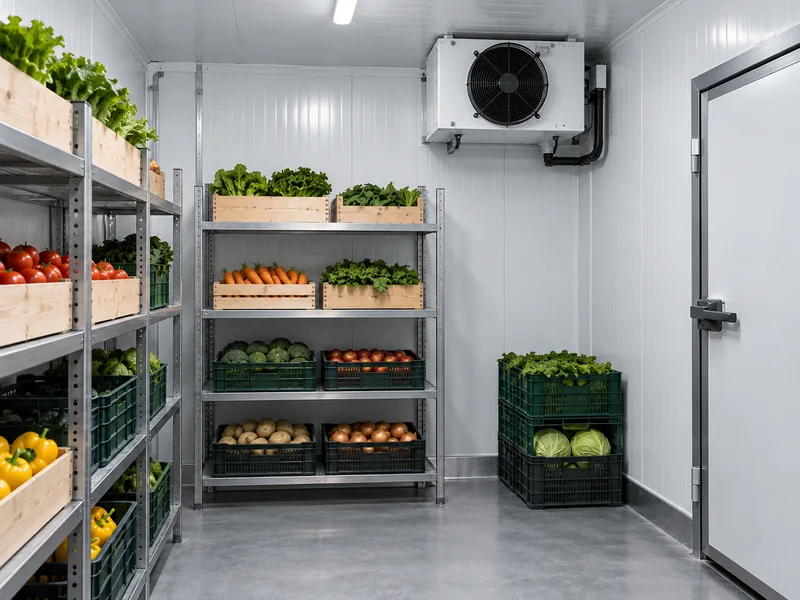
A room holding already-chilled stock has a different assignment from one receiving a large warm delivery. In the second case, the equipment must remove heat from the incoming product while also handling heat entering through the enclosure and open door. The important question is how much product arrives and how quickly it must cool.
Prepare a simple loading description: kilograms per delivery, arrival temperature, packaging, delivery times and target product temperature. Include the busiest normal day rather than only the average. Where pull-down performance matters, ask the supplier to state its assumptions in the quotation.
Air temperature can fall before the centre of a packed product cools. An empty-room demonstration is useful for checking operation, but it does not establish performance with stacked crates or a full delivery. Our article on factors affecting chiller-room cooling speed explores the wider cooling problem.
Check Door Traffic And The Work Pattern
Think through a working hour rather than estimating daily door openings from memory. Does one worker load an entire batch and close the door, or do several staff repeatedly collect small orders? Note how long the doorway remains open and whether goods obstruct closure.
The manufacturer’s CoolBot A/C selection guide says not to size an air conditioner using the room-area rating printed on its box. Its quick-reference chart includes assumptions about insulation, ceiling height and limited door openings. Confirm that your project fits the current guidance for the exact equipment being considered.
A busy doorway is a design input for either system. Commercial refrigeration should not be treated as permission to ignore doors, seals or loading discipline. Review how door frequency affects chiller-room energy use when describing your busiest operating period.
Compare The Same Project Scope
| Decision point | CoolBot-based proposal | Commercial refrigeration proposal |
| Application | Confirm above-freezing storage and exact A/C compatibility. | Confirm chilled or frozen duty and the stated design conditions. |
| Equipment selection | Use current controller-manufacturer guidance for the proposed A/C. | Request a matched selection for the calculated load. |
| Enclosure | Identify who supplies insulation, door and sealed penetrations. | Check whether panels, floor and door are included. |
| Installation | Separate owner work from electrical and specialist work. | Identify site works, commissioning and excluded items. |
| After-sales support | Clarify responsibility across controller, A/C and room suppliers. | Confirm responsibility for the assembled system and local service. |
Neither column is automatically the lower-cost choice. A reasonably priced component can become an expensive project if the enclosure needs extensive work or the installation team has to correct an unsuitable selection. Ask both suppliers to quote against the same written brief.
Give The Enclosure Its Own Budget
Inspect the floor, wall joints, ceiling and doorway before focusing on the cooling equipment. A room that is difficult to seal may keep producing operating problems regardless of the controller brand. Also consider whether the door can remain accessible after racks and stock are installed.
For a new build, ask how the panel joints, penetrations and floor interface will be finished. For an existing space, document what is already there and what must be removed or upgraded. Photographs of the empty room and the proposed outdoor equipment position are more useful than a single floor-area figure.
A modular room can make the enclosure scope easier to specify, but panel thickness alone is not a complete assessment. Doors, joints and installation quality deserve equal attention. LINBLE’s cold room panels are one of the enclosure options to review as part of a complete project.
Plan Heat Rejection, Power And Access
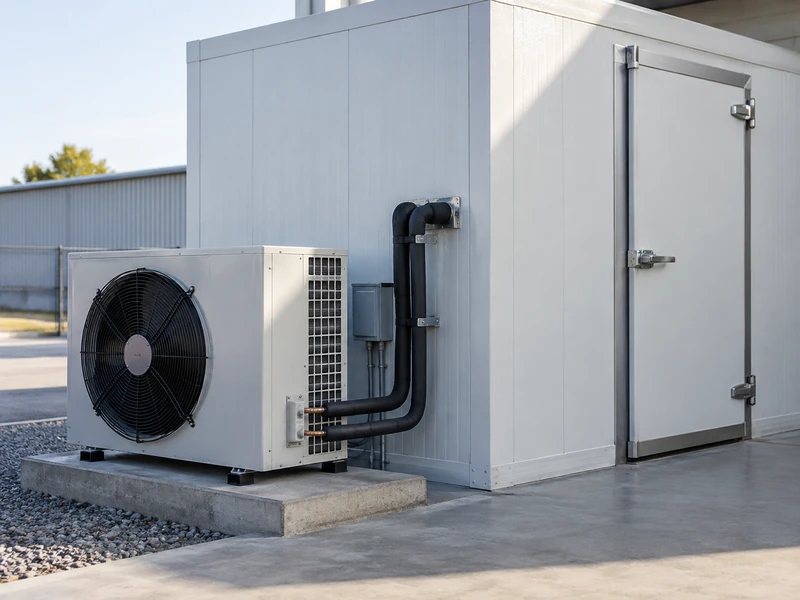
Mark the proposed location of each major component on a sketch. Show nearby walls, roof cover, walkways and other equipment. The space receiving rejected heat should be considered as carefully as the cold room itself.
Ask the installer to verify the actual power supply and starting requirements before ordering. A convenient socket or an old equipment connection is not proof that the new system can use it. Include access for future cleaning and replacement rather than designing only for the day of installation.
Winter operation can matter as much as summer operation. Describe the site’s seasonal conditions to the supplier and ask how the selected equipment is intended to operate there. Avoid transferring performance expectations from a different climate or installation arrangement.
Build A Cost Comparison You Can Use
Use three headings: installed cost, operating cost and interruption exposure. Installed cost includes the room, cooling equipment, controls, electrical work, freight and commissioning. Operating cost includes energy, cleaning, routine servicing and expected consumables.
Interruption exposure is specific to your business. Consider the value of stock at risk, how quickly you could move it and whether local repair support is available. This does not require inventing a failure probability; it requires knowing what you would do if the room stopped cooling.
For illustration only, imagine two proposals differ by $2,000 in installed cost. If verified annual operating and maintenance savings for the higher-priced option were $400, the simple payback would be $2,000 divided by $400, or five years. This is a calculation method, not a LINBLE price or an expected saving for either technology.
If neither supplier can support the annual cost estimates, keep them as unknowns. Do not fill the gap with a universal claim that one approach uses a fixed percentage less electricity. Compare the assumptions, operating hours and electricity tariff behind any forecast.
Decide Who Owns The Service Problem
Before purchasing, ask who answers the first call when the room is too warm. With a multi-supplier installation, the controller, air conditioner, enclosure and site wiring may have separate support arrangements. Record those boundaries while everyone is still preparing the quotation.
For a commercial package, ask equally specific questions. Does the warranty cover parts only, or local labour and travel as well? Who checks an installation carried out by a separate contractor, and what commissioning records are required?
Keep model numbers, serial numbers, manuals and the commissioning report together. A clear equipment record helps the next technician understand the installation and reduces the temptation to replace parts based on guesswork.
Apply The Comparison To Your Business
A Small Flower Business With Planned Access
Begin by documenting the flower varieties, required storage conditions and delivery schedule. If access is controlled and the requirement is above freezing, a compatible CoolBot proposal may be worth evaluating alongside a commercial quote. Confirm the actual humidity and product requirements rather than assuming that all flowers need the same conditions.
A Kitchen With Constant Picking Activity
Record the busy service period, not just overnight holding. Ask for a design that accounts for staff movements and incoming stock. The commercial proposal should explain the duty it is selected for, while any alternative proposal should explicitly address the same workload.
A Business Planning Frozen Products
Treat the freezer requirement as a separate specification. Even if most current products are chilled, an anticipated frozen range changes the procurement question. Buying a solution for today’s easier duty can be false economy if the planned expansion requires a different system.
Send A Useful Brief Before Requesting Prices
Prepare the internal dimensions, product list, target temperatures, peak loading schedule, door traffic, site climate and available electrical supply. Add photographs and note whether the project is a new enclosure or a conversion. State who will install and service the equipment locally.
Then ask each supplier to confirm the proposed equipment, included work, commissioning checks and operating assumptions in writing. That gives you a fair basis for choosing a small cold room that fits your business, with an understandable budget and a practical support plan.