
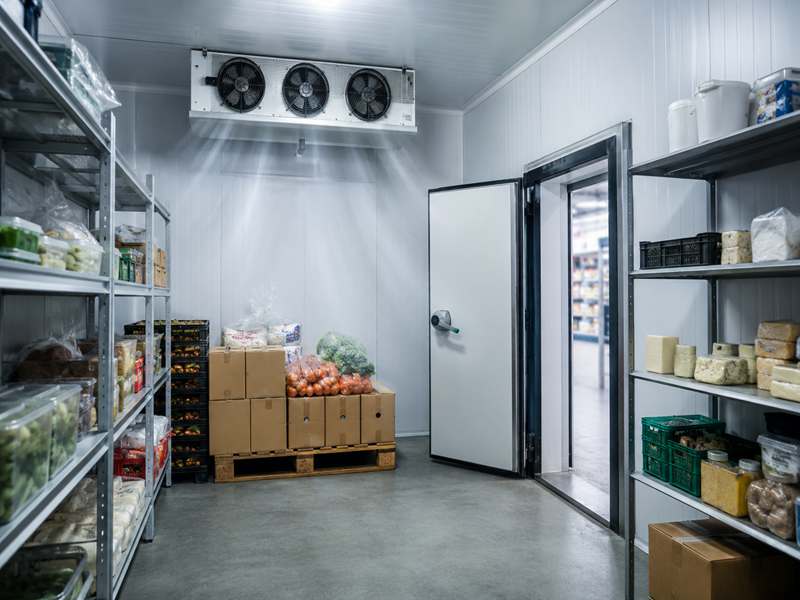
Chiller room cooling speed affects how quickly the storage area reaches the required temperature and recovers after product loading or door opening. Refrigeration capacity, insulation performance, room design, product conditions, and airflow management all influence cooling efficiency.
Key Factors That Influence Chiller Room Cooling Speed
Cooling speed is affected by multiple factors working together. A suitable refrigeration system may still perform poorly if insulation, airflow, or storage conditions are not properly considered.
| Factor | Impact on Cooling Speed | Main Considerations |
| Refrigeration System Capacity | Determines heat removal speed | Compressor capacity and cooling demand |
| Room Size and Internal Volume | Affects cooling time required | Storage volume and layout |
| Insulation Performance | Controls heat transfer | Panel thickness and sealing quality |
| Product Load and Initial Temperature | Influences cooling demand | Product quantity and incoming temperature |
| Airflow Distribution | Affects cooling uniformity | Evaporator position and air circulation |
| Door Opening Frequency | Influences temperature recovery | Access frequency and door sealing |
1. Refrigeration System Capacity
The performance of the refrigeration system exerts a critical influence on how rapidly a chiller room can reach its target cooling temperature. The system needs sufficient capacity to remove heat from the storage area and reduce temperature efficiently.
| Refrigeration Condition | Cooling Performance |
| Insufficient Capacity | Longer cooling time and slower temperature recovery |
| Suitable Capacity | Stable cooling speed and efficient operation |
| Oversized Capacity | Higher investment and possible energy waste |
The required cooling capacity depends on more than room size. Product quantity, loading frequency, insulation performance, and operating conditions should also be considered during system selection.
A small restaurant storing daily ingredients usually requires a compact refrigeration solution, while a food processing facility with continuous product movement often needs stronger cooling capacity.
A properly matched refrigeration system includes:
- Compressor:Provides the power required to remove heat from the room.
- Evaporator:It draws in ambient heat and feeds this thermal energy into the refrigeration circulation loop.
- Control System:Responsible for keeping the internal temperature steady throughout running operations.
Selecting equipment only based on maximum capacity may increase initial costs without providing better practical cooling performance.
2. Chiller Room Size and Internal Volume
Room size directly affects cooling speed because larger spaces require more time to reduce the temperature of the air inside. A small storage room usually reaches the target temperature faster than a large commercial facility.
| Room Size | Cooling Characteristics |
| Small Chiller Room | Faster temperature reduction with lower cooling demand |
| Medium Chiller Room | Requires balanced refrigeration planning |
| Large Storage Facility | Needs stronger capacity and airflow design |
Before installation, businesses should evaluate:
- Storage volume
- Ceiling height
- Internal layout
- Future expansion requirements
A properly planned room size helps avoid selecting a system that is too small for actual needs or unnecessarily large for the application.
For example, a supermarket with high inventory turnover requires a different cooling design compared with a small restaurant using the room for daily ingredient storage.
3. Insulation Performance
Insulation performance affects cooling speed by controlling heat transfer between the inside and outside of the chiller room. Poor insulation allows external heat to enter continuously, increasing the workload of the refrigeration system.
Important insulation factors include:
- Panel Thickness:
Suitable thickness helps reduce heat transfer and maintain stable internal temperatures. - Panel Material:
Wall panel materials deliver varying degrees of thermal insulation capability and long‑term service robustness. - Sealing Quality:
Properly sealed joints prevent warm air and moisture from entering the structure.
A chiller room with good insulation can reach the target temperature faster because the refrigeration system does not need to remove additional heat from the surrounding environment.
For facilities operating in hot climates or areas with frequent temperature changes, insulation quality becomes even more important.
4. Product Load and Initial Temperature
Stored products also influence cooling speed because every product entering the room brings additional heat that needs to be removed.
| Product Condition | Effect on Cooling Speed |
| Small Product Load | Faster temperature reduction |
| Large Product Load | Longer cooling time |
| Higher Initial Temperature | Increased cooling demand |
Businesses should consider both product quantity and incoming temperature when planning chiller room operation.
For example, a restaurant adding a small amount of fresh ingredients every day has different cooling requirements from a food factory loading large quantities of products at once.
To improve cooling efficiency:
- Avoid loading excessive warm products at one time
- Maintain proper spacing between products
- Allow cold air to circulate around stored items
A practical loading strategy helps reduce temperature recovery time and improves overall storage performance.
5. Airflow Distribution Inside the Chiller Room
Airflow distribution determines whether cold air can reach all areas of the storage space effectively. Poor air circulation may create uneven temperatures and slow down cooling in certain areas.
Good airflow management includes:
- Proper evaporator positioning
- Clear air circulation paths
- Suitable shelf arrangement
- Avoiding blocked ventilation areas
For larger chiller rooms, airflow planning becomes especially important because cold air needs to move across a wider storage area.
A well-designed airflow system improves temperature uniformity and helps the refrigeration system work more efficiently.
6. Door Opening Frequency
Door operation has a direct impact on cooling speed because each opening allows warm air to enter the cold storage environment.
| Operating Condition | Cooling Impact |
| Occasional Door Opening | Limited temperature changes |
| Frequent Daily Access | Longer temperature recovery time |
| Poor Door Sealing | Increased cooling loss |
Restaurants, supermarkets, and commercial kitchens often require frequent access throughout the day. In these applications, door design and sealing performance should be considered together with refrigeration capacity.
Effective measures include:
- Reducing unnecessary door opening time
- Checking door seals regularly
- Selecting suitable door types based on usage frequency
Better door management helps reduce heat entering the room and supports faster temperature recovery.
Cooling Speed Comparison Under Different Operating Conditions
Chiller room cooling speed changes under different operating conditions. The same refrigeration system may perform differently depending on product loading, room usage, and surrounding conditions.
| Operating Condition | Cooling Speed Performance |
| Empty Room Cooling | Usually reaches target temperature faster |
| Normal Product Storage | Requires balanced cooling performance |
| Large Product Loading | Needs longer cooling recovery time |
| Frequent Door Opening | Slows down temperature recovery |
Understanding these conditions helps businesses set realistic expectations and choose a chiller room solution that matches actual operating requirements.
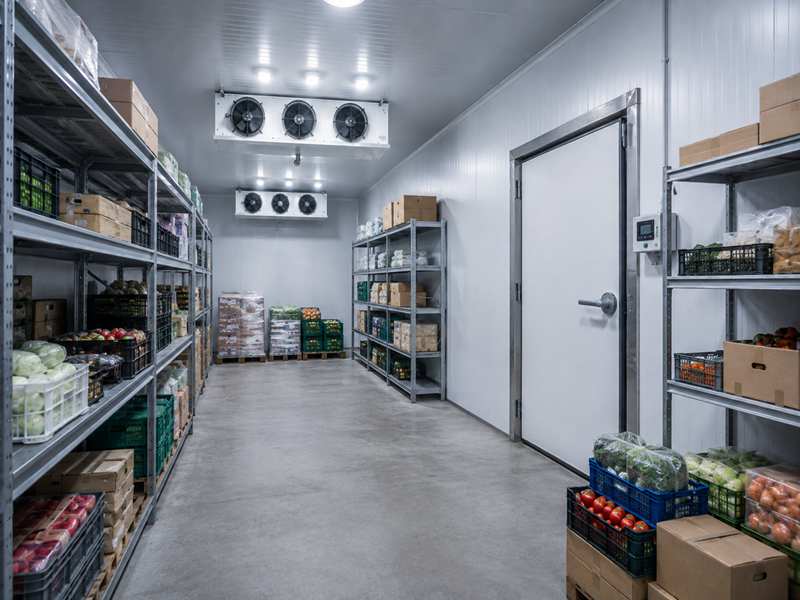
Practical Considerations for Improving Chiller Room Cooling Speed
Cooling speed should be evaluated together with temperature stability and recovery ability. A chiller room that reaches the target temperature quickly but cannot maintain stable conditions may not provide reliable performance.
| Evaluation Factor | What It Indicates |
| Temperature Reduction Time | Shows how quickly the room reaches the target temperature |
| Temperature Recovery Speed | Reflects performance after door opening or product loading |
| Temperature Uniformity | Indicates whether all areas receive sufficient cooling |
| System Operating Stability | Shows long-term refrigeration performance |
For commercial operators, cooling capability assessments ought to be carried out against real world working scenarios, instead of solely putting emphasis on the initial cooling rate.