
Store light-sensitive medicines in their approved protective packaging and maintain the temperature conditions stated for the particular product. A dark or dim cold room cannot replace light-resistant containers, and light sensitivity does not automatically mean refrigeration is required. For a LINBLE project, specify packaging protection, room conditions and handling exposure as three connected requirements.
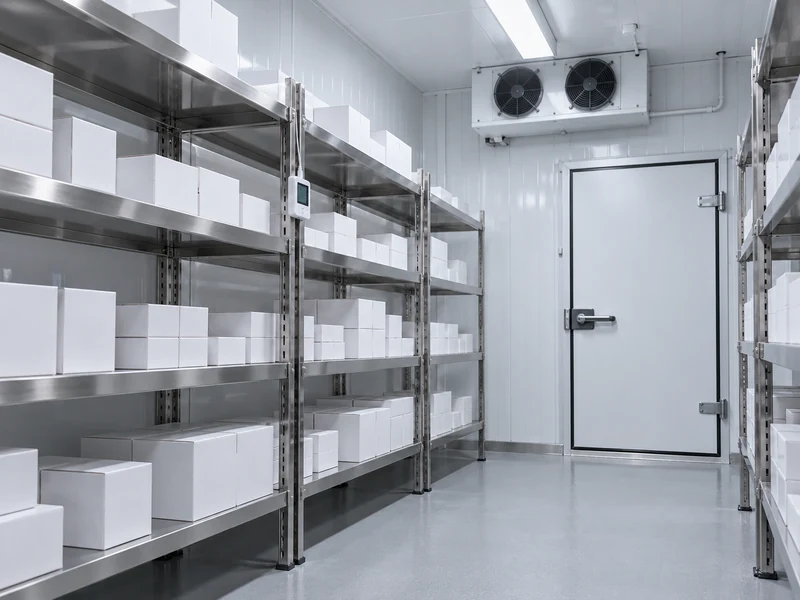
What Does the Product Documentation Require?
Begin with the approved label, current product information and the manufacturer’s storage instructions. Record the permitted temperature range, any prohibition on freezing, the required light protection and the conditions after opening or removal from the outer carton. Different presentations of the same medicine may have different instructions.
Do not assign every light-sensitive item to a 2–8°C room. Some require a controlled room-temperature environment, while others need refrigeration or another defined condition. Cooling a product unnecessarily can introduce a separate stability problem.
LINBLE’s pharmaceutical room options include different temperature applications. The product documentation should determine which application is relevant. General room categories are useful for early discussion, but they cannot establish suitability for a medicine on their own.
Prepare a product matrix before combining stock. For each presentation, identify the storage range, packaging state, allowed handling conditions and quality decision-maker. If the requirements are incompatible, the solution may be separate rooms, qualified cabinets or a different storage arrangement.
Why Does Packaging Remain the Main Light Barrier?
The protective pack travels with the medicine through receiving, shelving, picking and transport. Room lighting control covers only part of that route. Keeping the approved packaging intact is therefore central to a workable storage procedure.
The WHO good storage and distribution guidance hosted by USP states that products labelled to be protected from light should remain in the original manufacturer’s light-resistant containers. Use that principle alongside the product’s own instructions. An amber bottle may still require its carton, depending on the approved packaging system.
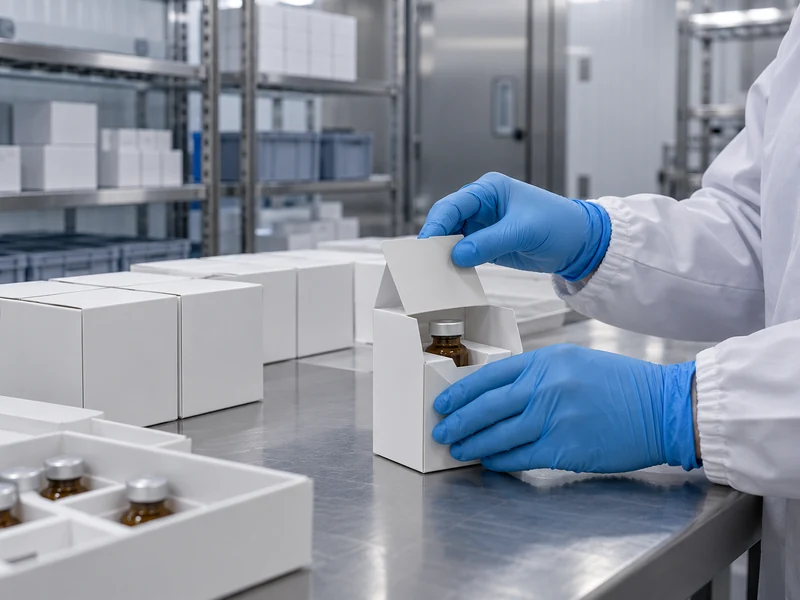
Check primary containers, outer cartons, closures and any protective sleeves at receipt. Damaged or incomplete packs should follow the site’s quality procedure. Do not assume that putting an exposed vial on a darker shelf restores the original protection.
| Control Layer | What It Does | What It Does Not Establish |
| Approved Packaging | Provides the specified product protection | Acceptability after unassessed damage or repacking |
| Room Temperature Control | Maintains the qualified storage environment | Light protection for an exposed product |
| Lighting and Daylight Control | Reduces avoidable exposure during storage and work | A universal safe exposure time |
| Handling Procedure | Controls unpacking, picking and transfers | Product release without the required quality assessment |
How Much Light Is Acceptable During Handling?
Use the product’s approved information and the quality system to define acceptable exposure. There is no single lux limit or universal number of minutes that makes all medicines safe. Both the light source and the exposure history may matter.
ICH Q1B on photostability testing describes assessment of drug substances and products, including protective packaging. Its laboratory test exposures are not a ready-made allowance for warehouse handling. Translating stability evidence into an operating procedure belongs with the responsible product and quality specialists.
List the tasks that remove or open protective packaging: receiving inspection, sampling, stock counts, picking and repacking. Decide which must occur in the room and which need a separately controlled work area. Keep the duration and extent of exposure within the documented procedure.
If the required information is absent, quarantine or hold the affected stock according to the site’s process while clarification is obtained. Neither visual appearance nor a normal temperature log can prove that a light-sensitive medicine remains acceptable. The room operator should know whom to contact and what evidence to retain.
What Should Change in the Room Layout?
Use an arrangement that limits unnecessary exposure while allowing safe, accurate work. Opaque insulated doors and a location away from direct daylight can help. A window in the receiving or picking route deserves review even when the cold room itself has none.
Provide enough lighting for staff to read labels, identify damage and move safely. Leaving the room nearly dark can increase picking errors without establishing product protection. Suitable lighting controls may reduce unused operating time, provided they support safe access and the approved procedure.
Do not place opaque covers or enclosed bins around stock without checking their effect on temperature distribution and access. A cover that blocks light may also obstruct air circulation. Qualify the final storage configuration, including any cabinets, totes or protective screens used in normal operation.
Discuss the room envelope and door arrangement with LINBLE using the actual receiving route. Include the clear opening, frequency of access, viewing needs and emergency arrangements. A door decision should support both the environmental conditions and the staff who handle the stock.
How Should Temperature Qualification Account for Protective Packs?
Assess the room in the storage arrangement that will actually be used. Shelf positions, carton density, closed totes and door activity can affect local conditions. A satisfactory empty-room test does not establish the behaviour of every loaded position.
Use the site’s qualification plan to define mapping, instruments, calibration, acceptance criteria and operating limits. LINBLE’s guide to cold room temperature mapping explains the practical purpose of locating hot and cold positions. The pharmaceutical quality team should determine the project-specific protocol and release requirements.
Keep alarm sensing, control sensing and qualification measurements clear in the documentation. Their purposes differ, even if some instruments share locations. Establish an alarm response that identifies who evaluates stock, what records are retained and where product can move if the room is unavailable.
How Do Receiving and Picking Procedures Protect the Product?
Prepare the destination before unpacking a shipment. Inspect transport packaging and temperature evidence under the approved procedure, then move stock into its assigned qualified location. Keep light-protective product packaging in place unless the task and instructions require otherwise.
- Retain product, lot and expiry identification when cases are split.
- Keep original protective cartons with the products that require them.
- Define sampling and repacking in a separate approved procedure.
- Control the time outside the specified storage environment.
- Record damaged packaging or suspected exposure for quality review.
- Use first-expiry stock rotation without obscuring the required labels.
LINBLE’s earlier article on product-specific vaccine cold storage requirements illustrates why product documentation must come before broad category assumptions. The same discipline is useful for light-sensitive stock. A general term such as “injectable” does not define a complete storage programme.
What If Temperature Records Are Normal but a Carton Is Damaged?
Treat packaging damage as its own event under the quality procedure. A satisfactory temperature history does not answer whether the medicine had excessive light exposure or lost required protection. Record the affected presentation, lot, packaging condition and the circumstances of discovery.
For an illustrative case, a picker finds an open outer carton containing intact amber vials. The appropriate next step depends on the approved product packaging requirements and the exposure information available. The operator should not infer acceptability from vial colour or replace the carton and return the stock to sale without the required assessment.
Provide a clearly identified hold position that maintains the product’s specified storage condition while a decision is pending. Keep it separate in the stock system so that another shift cannot pick it inadvertently. The quality team should determine disposition and any additional investigation.
Use the event to review the handling route: where cases are opened, how part packs are stored and whether stock counts remove protective packaging unnecessarily. The room design may help by providing an appropriate inspection area or clearer storage positions. It cannot replace the product-specific evidence needed for the release decision.
Which Documents Release the Room for Routine Storage?
Keep the approved product matrix, room qualification, loading limits, alarm procedure and handling instructions available to the operating team. Include the final shelf and container configuration in the records. Changes to packaging, covers, lighting or stock arrangement should go through the site’s change-control assessment where applicable.
LINBLE’s commissioning checklist can support the equipment handover, alongside the pharmaceutical qualification and quality work. A functional refrigeration system and a released pharmaceutical storage area are different milestones. Both need clearly assigned responsibilities.
For the design enquiry, send the approved temperature ranges, product presentations, protective packaging details and expected picking activity. State the required qualification support, monitoring interfaces and contingency arrangements. That gives LINBLE a concrete room brief while preserving the product-specific decisions that belong to the medicine’s documentation and quality system.