
A DNA vaccine cold room must be designed around the exact product’s authorised storage conditions or, for investigational material, its approved trial and stability documentation. Confirm formulation, presentation, temperature limits, freeze–thaw restrictions, permitted exposure periods and excursion procedures before selecting a room; the words “DNA vaccine” do not establish a common refrigeration requirement.
For LINBLE, the first deliverable should be a product-requirement schedule accepted by the owner’s quality team. The refrigeration proposal can then state how it will maintain and demonstrate those conditions, without making an unsupported promise about vaccine potency or shelf life.
Which Product Documents Should Define the Design?
Use the current documents for the exact formulation, container and market or study. A research paper about another plasmid product is useful background, but it cannot authorise a storage programme for your inventory.
Identify whether the room will hold finished vaccine, a component, a diluent, reference samples or investigational stock. Materials used in the same programme may have different conditions and cannot automatically share one chamber.
- Exact product identity, formulation and presentation.
- Approved label or controlled study-storage instructions.
- Long-term conditions and any separately defined temporary conditions.
- Container-closure and secondary-packaging requirements.
- Document owner, revision and the quality contact who resolves ambiguities.
LINBLE’s vaccine cold room offering is an equipment starting point. The project specification must take precedence over broad platform descriptions or indicative product-category ranges.
Why Does Formulation Matter More Than the Platform Name?
Because storage stability belongs to the complete product in its defined container. DNA, excipients, delivery components and presentation can change the evidence needed to support the proposed conditions.
An original study of a liposome-formulated DNA vaccine candidate examined formulation-specific storage stability alongside other properties. It illustrates that formulation must be studied; its experimental conditions are not a commercial storage instruction for unrelated DNA vaccines.
Do not transfer an mRNA freezer specification to a DNA project by analogy, or assume that every DNA formulation can tolerate ambient storage. Have the product owner state the requirement explicitly and retain the supporting document reference.
How Should Investigational DNA Vaccine Stocks Be Specified?
Use the controlled requirements approved for that stage of development and define how changes will be managed. A room intended for several future candidates needs a justified operating range and segregation plan, not an assumption that all candidates will converge on one temperature.
Record which future duties are included in the equipment design and which would require reassessment. That helps the owner distinguish useful flexibility from a capability that has not yet been qualified.
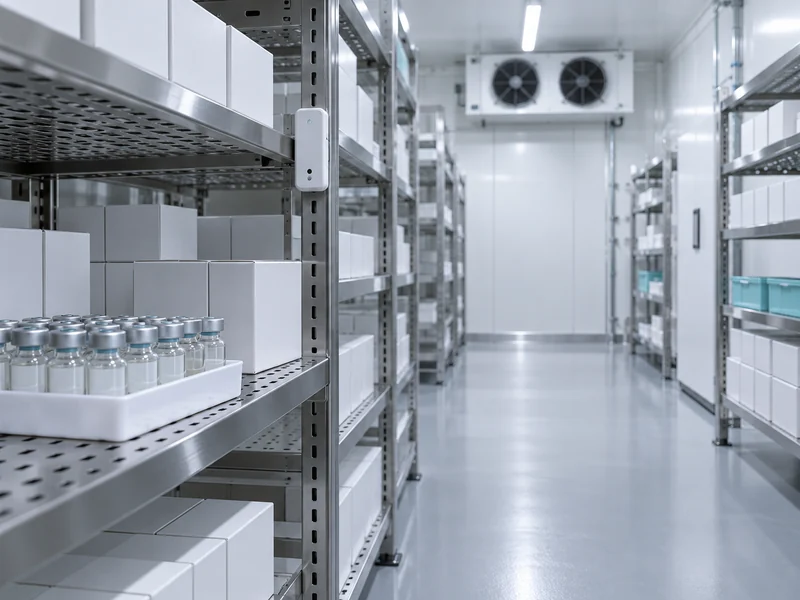
What Temperature Limits Need to Be Confirmed Separately?
Confirm the acceptable product range, proposed control target, alarm limits and any permitted short-term conditions as separate entries. Keep a separate entry for each limit so reviewers can distinguish routine control, product acceptance and the conditions that trigger an operator response.
A controller may operate around a chosen target, while the quality specification applies to all approved storage positions. Alarm thresholds should provide a meaningful response opportunity within the agreed product-protection strategy.
| Requirement | Question for the Product Owner |
| Long-term storage | What conditions and duration are authorised for this presentation? |
| Temporary handling | Are different conditions permitted, and how is cumulative exposure tracked? |
| Freezing and thawing | Is freezing permitted or prohibited, and are any cycles or thawing steps specifically defined? |
| Opened or prepared material | Does opening, reconstitution or preparation create a separate time-and-temperature limit? |
| Excursion assessment | Who decides disposition, using which product-specific evidence? |
A temporary exposure allowance is not an alternative long-term storage setpoint. Keep the room’s routine operation inside its qualified programme instead of relying on excursion limits to make an unstable design appear acceptable.
How Do Packaging and Stock Movement Affect the Room?
They determine usable capacity, air distribution and the frequency of handling events. Calculate the space from secondary cartons, shipping containers and segregation requirements rather than from vial volume.
Define whether shipments arrive in passive transport packaging, whether that packaging is removed before storage and where receiving inspection takes place. A heavily insulated shipper inside a cold room may respond differently from the storage carton used during qualification.
Provide positions for quarantined, released, returned and otherwise segregated stock as required by the quality system. Physical capacity should include those operating states so that a busy receiving day does not force material into an unapproved location.
Where several controlled rooms are needed, LINBLE’s pharmaceutical cold room planning can support the enclosure and equipment discussion. Clarify the boundary between refrigeration supply and the owner’s product-quality responsibilities.
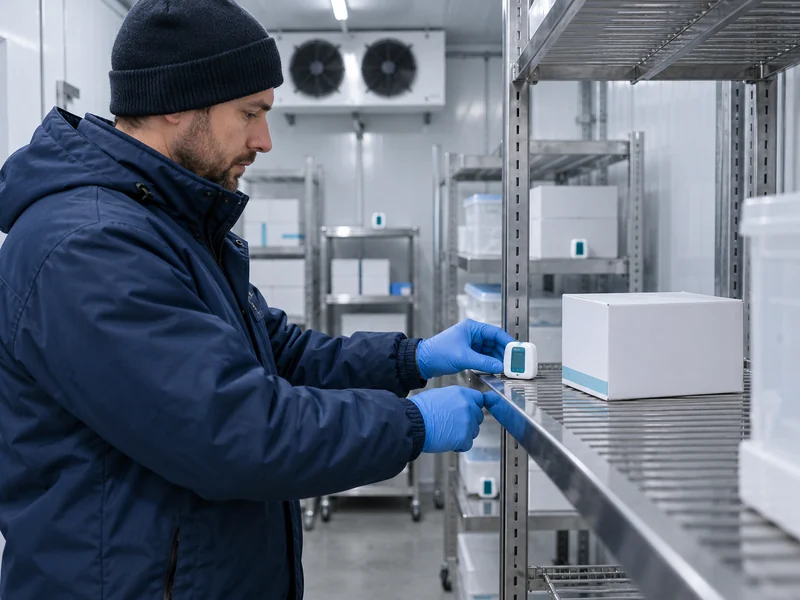
What Must Temperature Mapping Demonstrate?
It should establish that the intended storage area meets the agreed criteria under justified operating conditions. Include the actual shelving arrangement, load assumptions and events relevant to normal use.
Plan the mapping protocol with the qualification team before installation. Door activity, defrost, representative occupancy and recovery need consideration where they could affect the product, with test acceptance criteria established in advance.
LINBLE’s temperature-mapping explanation helps distinguish control sensing from spatial verification. A single sensor beside the controller cannot establish the conditions at every permitted carton position.
Define calibrated instruments, measurement uncertainty, data intervals and report review. Mark approved storage boundaries in a way staff can follow, including any exclusions near walls, doors or equipment discharge.
Which Alarm and Backup Functions Need a Real Response?
Every critical alarm needs an identified recipient, a response time and an action that can still protect the inventory. A notification sent to an unattended device is not a complete response system.
Confirm independent monitoring where required, power arrangements, communication failure indication and data retention. Assess refrigeration redundancy and emergency transfer against the site’s actual ability to respond.
PATH’s cold-chain temperature data job aid shows how temperature records can support equipment diagnosis and maintenance. That operational use of data complements, rather than replaces, product-specific excursion assessment.
Use LINBLE’s discussion of cold-storage backup systems to frame the equipment questions. Ask what happens after a shared electrical failure as well as after a single refrigeration fault.
How Should an Ambiguous Storage Instruction Be Resolved?
Suppose a project brief says only “refrigerated DNA vaccine,” while the receiving team expects to store both final cartons and a separate component. The equipment order should not convert that incomplete phrase into a numerical temperature specification.
Ask the authorised product or study owner to issue a controlled requirement for each material and presentation. Record any condition that depends on opening, preparation or cumulative exposure, together with the process that tracks it.
A quotation can identify the missing information and offer a provisional equipment concept with explicit assumptions. Those assumptions must be resolved before they become acceptance criteria or a basis for storing product.
Use the same approach when a new formulation replaces an existing one. A familiar product name or similar carton does not establish that the previous room qualification and handling programme remain suitable.
Have the quality team assess the change against the qualified operating range, storage positions, monitoring and emergency plan. Any additional testing or procedural change should be decided through the owner’s controlled process.
LINBLE can then review the refrigeration consequences against a precise requirement: load, operating condition, temperature distribution, recovery and equipment resilience. Keeping that boundary explicit helps the supplier provide useful engineering evidence while leaving product stability interpretation and stock disposition with the people authorised to make those decisions.
Connecting DNA Vaccine Requirements to Room Acceptance
Agree the performance evidence and the responsibility for reviewing it. Equipment commissioning, room qualification and product release are connected activities, but they should not be treated as the same approval.
The supplier should provide the agreed installation and operating records, control description and maintenance information. The owner’s authorised quality team should determine whether the complete evidence supports the intended product use.
LINBLE’s commissioning checklist can help organise the refrigeration handover. Keep the product-requirement schedule, mapping protocol, alarm tests and emergency plan alongside it, so that the room’s demonstrated capability can be traced to the vaccine it is actually meant to hold.