
A pharmaceutical cold storage warehouse should separate quarantine and released stock through a documented status-control system, backed by a layout that makes unauthorized picking difficult. Provide suitable temperature-controlled space for both statuses; awaiting release does not suspend a product’s approved storage conditions.
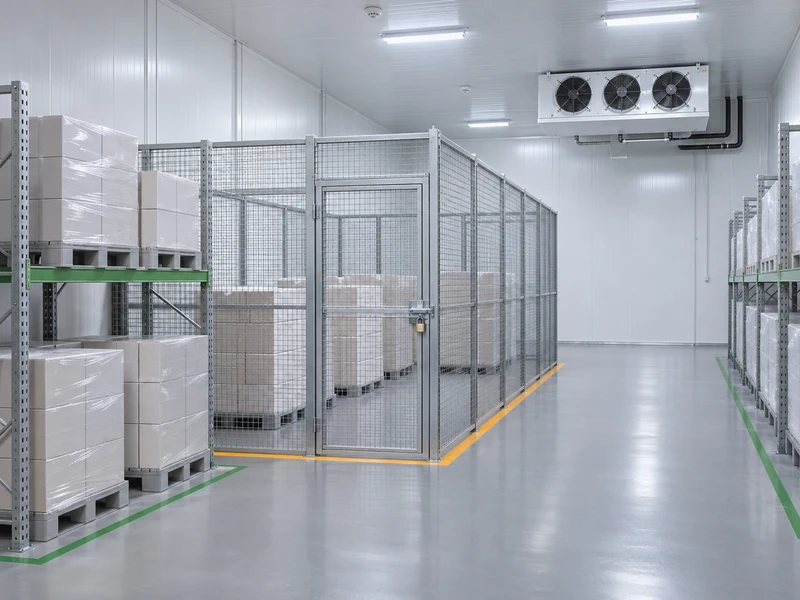
For a LINBLE room, decide the stock-control method before fixing partitions, doors and pallet positions. A colored floor line can help staff navigate, but it cannot, by itself, prevent an unreleased batch from entering a dispatch order.
What Exactly Is Being Separated?
Separate permission to distribute from the physical condition of the goods. A sealed carton can be correctly refrigerated and still be unavailable for sale because receipt checks, quality review or an excursion investigation remain open.
Define the statuses your operation actually uses, including received-awaiting-check, quarantine, released, returned, rejected and recalled where applicable. The quality team should specify who assigns each status, who changes it and what evidence supports the change.
LINBLE’s pharmaceutical cold room solutions provide the starting point for discussing the enclosure and refrigeration requirements. The warehouse operator still needs a product-specific user requirement specification and qualified procedures; equipment selection alone cannot establish the warehouse’s regulatory suitability.
Does Quarantine Need a Separate Room?
Sometimes, but a separate insulated room is not the only possible arrangement. The right choice depends on applicable distribution requirements, product risks, access controls and the reliability of the inventory system.
| Arrangement | Where It May Fit | Design Question to Resolve |
| Dedicated refrigerated quarantine room | High segregation needs or substantial quarantine volume | How will cooling, monitoring and emergency access be provided? |
| Restricted cage within a qualified room | Products sharing compatible storage conditions | Will the cage restrict access without compromising airflow? |
| Defined bays with validated electronic controls | Where accepted by applicable requirements and justified by the quality system | Can picking remain blocked during errors, overrides and outages? |
| Mixed informal storage with colored labels alone | Insufficient as the sole basis for controlled release | What actually prevents an unauthorized issue? |
The Singapore GDP guidance hosted in USP’s supply-chain toolkit describes physical quarantine or an equivalent electronic system for specified suspect products. This is a jurisdiction-specific reference, not blanket permission to replace physical segregation everywhere.
Ask your quality lead to approve the segregation concept before the room is ordered. If an electronic approach is accepted, its validation must address the actual transactions and failure modes used in that warehouse, including manual picking and exceptional release routes.
When Is a Cage the More Practical Choice?
A cage can give staff a visible, restricted boundary without creating another temperature zone. It is particularly useful when occasional quarantined pallets would otherwise occupy several scattered bays.
Specify gate clear width, lock control, pallet-truck turning space and the cage height relative to the evaporator air path. A mesh partition usually interferes less with airflow than a solid wall, but its effect still needs to be assessed with the final loading arrangement.
How Much Quarantine Capacity Should Be Reserved?
Size it from peak inventory awaiting a decision, rather than average daily receipts. Review receipt frequency, batch size, release lead time and the volume that might be held together after a transport or temperature investigation.
For an illustrative planning exercise, suppose six pallets arrive daily and routine review takes two working days. Twelve pallet positions represent only the routine pipeline; weekend receipts, a delayed review or an entire delivery placed on hold could require additional space.
Do not treat that example as a capacity formula for every pharmaceutical warehouse. Use your own receipt records and credible hold scenarios, then define a controlled overflow location that preserves both storage conditions and status restrictions.
- Allow room to inspect labels without unpacking pallets into the main aisle.
- Keep damaged or leaking goods within an approved containment process.
- Reserve movement space for a full inbound load when release is delayed.
- Document the maximum occupancy for each approved quarantine location.
How Should Receiving and Release Routes Work?
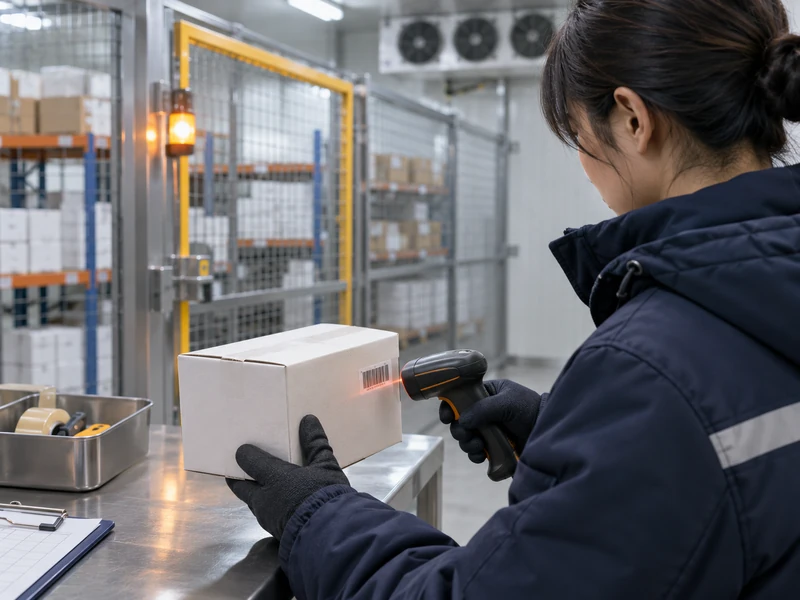
Draw the route of one unreleased pallet from receipt to storage and then repeat the exercise for a released picking order. Wherever the routes share a space, identify the transaction, physical control or staff check that prevents a status error.
Incoming cold-chain goods should not queue in an uncontrolled corridor simply because the quarantine gate is locked. Arrange timely access to the correct holding area and set responsibilities for receipt checks, temperature records and inventory booking.
A release decision also needs an operational handoff. If a pallet is physically moved into a released bay, its location record and status must agree; if it stays in place under electronic segregation, the picking permission must change through the approved release process.
Returned goods need a distinct decision route rather than an automatic return to released stock. Label appearance and an undamaged outer carton do not establish that the full storage history is acceptable.
Can a New Partition Change Temperature Performance?
Yes. A new wall, cage, shelf or dense pallet block can change how supply and return air reach stock, even if the room controller continues to display the same temperature.
Coordinate the segregation plan with evaporator placement and the approved storage envelope. LINBLE’s modular insulated panel options allow partition discussions to happen during room planning, but the refrigeration implications must be checked alongside the panel drawing.
Keep designated no-storage areas clear beneath equipment where required by the layout, around sensors and along return-air routes. A quarantine cage should not become a convenient place to stack cartons above its approved height.
Use a risk-based qualification plan to establish acceptable storage locations after the final arrangement is in place. LINBLE’s guide to cold room temperature mapping explains why a single controller reading cannot describe every pallet position.
What Evidence Should Be Ready Before Stock Arrives?
Prepare a signed layout, approved status procedure, location register and access list. Then test a small set of realistic cases: an unreleased pallet selected for dispatch, a partial-batch release, a return received after hours and an inventory-system interruption.
Check the physical arrangement during those tests, not only the computer screen. A convincing electronic block is of limited value if a manual dispatch process can remove the same pallet without recording the transaction.
Include alarm response and power-loss handling in the warehouse plan. LINBLE’s commissioning and handover checks can support the equipment review, while the quality system establishes product disposition and release authority.
How Should Partial Releases and Exceptions Be Handled?
Make the release unit explicit: batch, pallet, carton or another controlled quantity. If only part of a received batch is released, staff need to know which physical units and inventory records that decision covers.
Do not assume a release label on one pallet applies to neighboring pallets from the same delivery. Use the approved identification method and reconcile the remaining held quantity after any authorized split or movement.
An exception should leave an audit trail explaining who authorized it and why. If an urgent dispatch requires quality review, urgency does not itself provide permission to pick quarantine stock.
What Happens When the System Is Unavailable?
Define an outage procedure before relying on electronic segregation. It should establish whether dispatch stops, how stock movements are recorded and who can authorize any controlled continuation.
Test the procedure with warehouse staff using the actual paper forms or fallback process. A technically secure inventory system can still be undermined by an undocumented manual workflow used when the normal screen is unavailable.
For a physically separated area, review access outside office hours as well. The staff responsible for receiving a late delivery need a controlled route into suitable storage without borrowing unrestricted keys or leaving goods in an unqualified space.
These decisions can alter the LINBLE layout brief: gate access, temporary holding positions and inspection space may need adjustment. Agree them before the final pallet count is accepted, then include them in the training and qualification records.
Which Product and Workflow Details Does LINBLE Need to Draw the Pharmaceutical Storage Layout?
Provide the product storage ranges, peak pallets by status, handling equipment dimensions, release workflow and proposed segregation method. Add the maximum pallet height, doorway requirements and the monitoring or backup functions that the project needs.
For light-sensitive products, coordinate label reading and inspection with the approved packaging and exposure limits. The related article on light-sensitive medicine storage covers that separate handling issue.
The resulting warehouse should make a batch’s location, storage condition and release status agree. That is a much more useful design objective than filling a plan with green and yellow rectangles and assuming the colors will manage the stock.