
Controlled atmosphere storage is worth considering for apples when a defined share of the crop must retain saleable quality beyond the practical air-storage programme, and the expected return can cover the additional room, gas-control and operating costs. It becomes a stronger option when suitable fruit can remain in closed batches; frequent mixed-order picking makes the case harder.
For a LINBLE project, the decision begins with cultivar, harvest maturity and release dates. Choosing the refrigeration temperature first and adding a nitrogen system later leaves the most consequential questions unresolved.
Which Apples Are You Trying to Sell Later?
Name the cultivar and the intended selling window before estimating the value of CA. Different lots do not acquire the same storage potential simply because they share a harvest month.
Record orchard source, maturity assessment, condition at intake and any planned postharvest treatments. Keep the storage adviser involved where treatment history affects the recommended temperature or gas programme.
The UC Davis Fuji apple guidance illustrates why cultivar detail matters: its discussion of carbon dioxide sensitivity and harvest maturity places conditions on the use of CA. A recipe chosen for a different apple is not an acceptable substitute.
Do not count damaged, overmature or poorly cooled fruit as a reliable source of extra storage revenue. Gas control can slow particular changes; it does not restore quality already lost before the room closes.
What Is the Actual Air-Storage Baseline?
Use the performance of a well-managed conventional cold room as the comparison. An unreliable existing store can make almost any proposed upgrade appear attractive for the wrong reason.
Check temperature distribution, cooling delay, door use and quality at release. If an airflow obstruction causes uneven fruit temperatures, correcting it may improve the baseline before the business commits to a more complex system.
LINBLE distinguishes precooling, chilled holding and CA options within its fruit and vegetable cold room solutions. Treat them as different process duties when defining the comparison.
Will the Room Stay Closed Long Enough to Earn Its Keep?
CA is easier to justify when the inventory plan supports closed lots with known opening dates. Opening a large room to retrieve a few pallets can conflict with the intended atmosphere-management strategy.
Start with the sales calendar and draw the release groups. Apples for early sale, long holding and uncertain spot orders may deserve different room assignments even when the total tonnage would fit one large chamber.
Smaller chambers can offer release flexibility, but they introduce more doors, partitions, controls and service points per tonne. Price the chamber arrangement against the actual release calendar. The alternative with the lowest enclosure cost may require an opening pattern that sacrifices the intended late-season benefit.
| Inventory Pattern | What It Suggests for the CA Decision |
| Uniform lot with a later contracted release | A relatively clear basis for evaluating closed-batch CA storage. |
| Daily mixed-order picking | Examine conventional holding or a separate picking room before allocating the whole flow to CA. |
| Several cultivars with different programmes | Assess independent chambers and controls rather than one compromise gas setting. |
| Uncertain volume and selling date | Test the economics against low occupancy and an early opening, not only the best season. |
Keep incompatible produce outside the plan for the apple chamber. The questions raised in mixed-produce cold storage still apply when a room has sophisticated gas equipment.
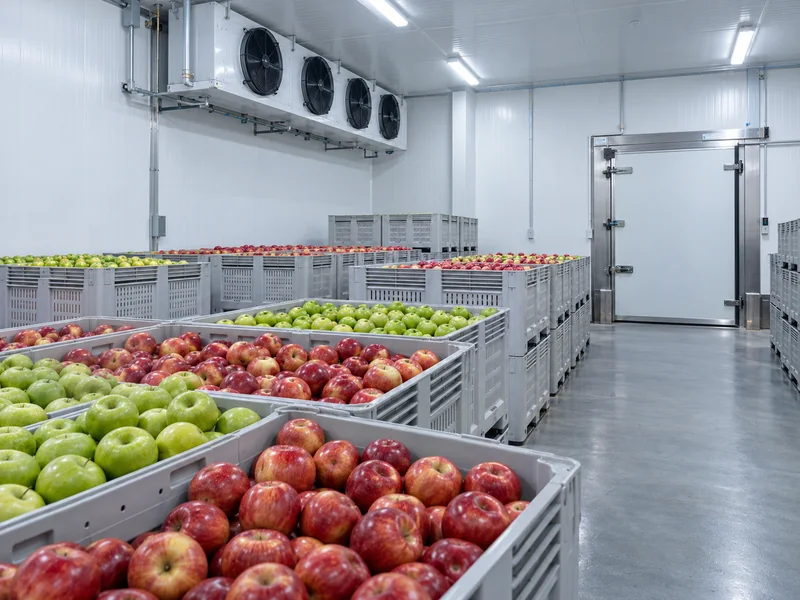
What Does CA Add to a Modular Cold Room?
It adds a controlled gas environment that the room envelope, equipment and operating procedures must support. Thermal insulation is necessary, but an insulated room is not automatically a gas-tight room.
Define the required leakage performance, sealing system, penetrations, doors and pressure-management arrangement with the CA specialist. Panel joints, cable entries and service openings need details that remain maintainable after installation.
LINBLE’s cold room panel options form part of the enclosure discussion. The complete CA specification must also identify who supplies and verifies gas-tightness, analysis, atmosphere control and safety functions.
- Refrigeration duty for intake cooling and steady holding.
- Envelope and doorway requirements for the chosen atmosphere.
- Oxygen and carbon dioxide measurement, sampling and calibration.
- Gas-generation or supply equipment and carbon dioxide removal where required.
- Pressure relief, alarms, emergency arrangements and safe entry procedures.
- Service access, spare parts and responsibility for recommissioning after repairs.
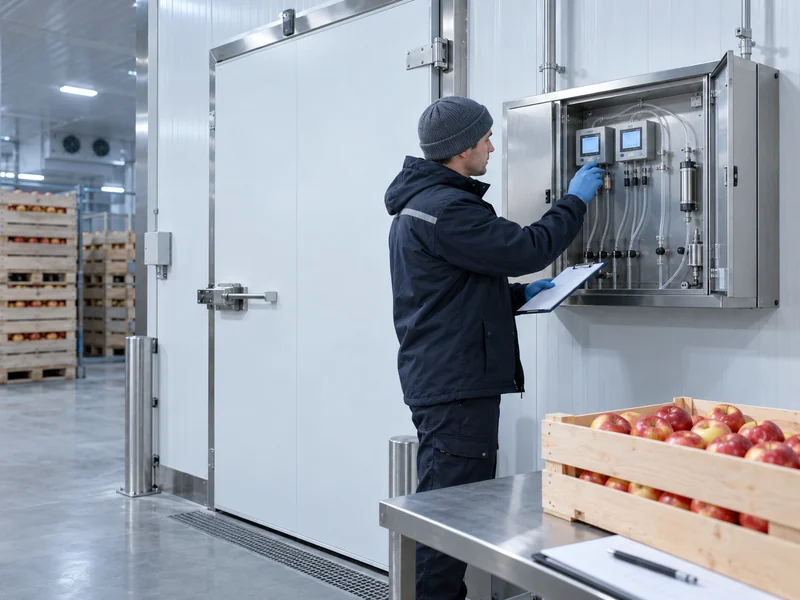
Oxygen-deficient storage presents a serious entry hazard. The design and operating plan must prevent casual entry and establish an appropriate isolation, ventilation, atmospheric testing and authorised-entry procedure; the refrigeration control panel alone does not provide that protection.
How Should the Financial Comparison Be Made?
Compare the additional net value recovered from the actual fruit with the additional annual cost of CA. Include changes in grade, shrink, storage duration and selling price without counting the same benefit twice.
A useful calculation is: additional saleable revenue minus additional handling and selling costs, minus the annual ownership and operating cost of the CA upgrade. Run it for a realistic season, a weak sales year and an early-opening scenario.
What Does a Simple Example Reveal?
Suppose, purely as an illustration, 400 tonnes allocated to late sales would generate an additional net contribution of 45 currency units per tonne after variable selling costs. That produces 18,000 units before the extra annual cost of the CA installation.
If the annualised ownership, gas, power, calibration, maintenance and added labour total 14,000 units, the remaining margin is only 4,000 units. Lower occupancy or an earlier release could erase it, so the optimistic selling price should not be the only scenario shown to the investor.
Use local quotations and actual packout records in the real assessment. The example demonstrates the calculation structure and is neither a LINBLE price nor a forecast return.
What Could Make an Apparently Good CA Plan Fail?
The common planning weakness is a mismatch between fruit biology and the intended room programme. A technically stable atmosphere can still be unsuitable for a sensitive cultivar or maturity group.
UC Davis explains in its apple internal-browning guidance that carbon dioxide injury varies with cultivar and fruit condition. Include cut-fruit quality checks in the release plan, because external appearance may not reveal the problem.
Another weakness is asking the closed holding room to do an intake job it was never sized to perform. Review precooling versus cold storage when deciding how quickly newly harvested apples must reach the intended condition.
Equipment serviceability matters too. A gas analyser that cannot be calibrated locally, or a valve with no defined replacement route, can undermine an otherwise sensible capital calculation.
What Does Low Occupancy Do to the Business Case?
A room that is profitable when full may be much less attractive when a poor harvest leaves it half occupied. Many ownership and service costs remain, while fewer tonnes benefit from the later selling window.
Repeat the calculation using the volume the business can reasonably commit to CA, excluding apples intended for early sale or unsuitable lots. Then check whether the remaining room plan still supports the proposed opening sequence.
Consider the effect of opening early to satisfy a valuable order. The immediate sale may be sensible, yet it can change the expected benefit for the fruit that remains; the business should see that tradeoff before making the commitment.
Keep measured quality gains separate from an assumed future price premium. A later price is uncertain, whereas retained packout and reduced downgrade can be assessed from the business’s own trials and release records.
For a staged LINBLE project, ask whether a smaller first CA chamber and conventional holding space would serve the initial crop more convincingly. Expansion can follow when contracted volume, staff capability and the sales programme justify it.
Also compare the cost of service interruptions with the margin being pursued. Calibration access, spare components and a clearly supported control package deserve a place in the financial review, since an inexpensive installation that cannot be kept within its agreed programme may lose the value the CA room was purchased to preserve.
What Information Should Go to LINBLE Before a CA Proposal?
Provide a crop-and-sales schedule rather than only a building size. Include cultivar volumes, intake dates, maturity criteria, package or bin dimensions, room-opening dates, quality targets and available utilities.
Ask for separate descriptions of the refrigeration scope, enclosure scope and CA-control scope, with a single interface schedule. Acceptance should cover the actual agreed performance of each, with evidence retained in the commissioning record.
CA earns consideration when the fruit, selling programme and operating capability support it together. If the business mainly turns stock quickly, a well-planned conventional apple room and a disciplined cooling route may be the more productive first investment.