
Before storing eggs in a restaurant cold room, verify the product form, supplier instructions, applicable local requirements, receiving condition and the suitability of the assigned shelf. A LINBLE room should be specified around that combination, with shell eggs, chilled liquid egg and frozen egg products treated as separate stock categories. The word “eggs” on an inventory list is not a complete refrigeration brief.
The awkward failures often occur between departments: purchasing changes the pack, receiving accepts it under the old procedure and the kitchen puts it in the familiar location. A short product-specific check prevents the room from becoming the place where those unanswered questions accumulate.
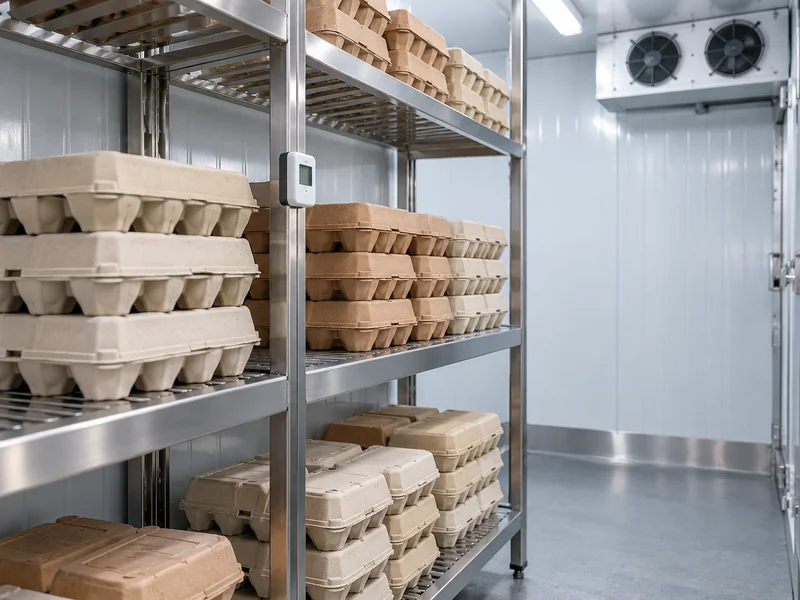
Which Egg Product Is Arriving at the Kitchen?
Identify the exact product before deciding where it belongs. Raw shell eggs, pasteurized shell eggs, refrigerated liquid egg, frozen egg and prepared egg dishes can have different handling instructions.
Record the pack format, lot identification, storage instruction and any separate requirement after opening or thawing. Keep that information available to the staff who receive and use the stock, rather than only to the buyer.
When discussing a LINBLE restaurant cold room, include these categories in the stock schedule. The designer needs to know which goods share the room and which require another condition or process.
Does Pasteurization Remove the Need to Read the Label?
No. A pasteurized product still has a defined storage life, package condition and handling instruction, and those details may change after it is opened.
Clemson Extension’s egg handling guidance distinguishes egg products from shell eggs and directs users to the manufacturer’s storage and use instructions. For a restaurant, translate those instructions into the receiving sheet and the opened-pack identification system.
Which Temperature Requirement Applies to This Operation?
Use the rules that apply in the restaurant’s jurisdiction together with the product specification. Do not borrow a number from an export market or assume that a shell-egg provision covers liquid egg and prepared dishes.
For a clearly identified United States example, 21 CFR 115.50 on retail shell-egg refrigeration specifies ambient refrigeration at no more than 7.2°C (45°F), subject to its stated exception. This is a particular regulatory provision, not a universal setpoint recommendation for a mixed restaurant chiller.
Confirm any additional state, local or product requirements with the responsible food-safety team. Put the resulting operating range and acceptance criteria in the room brief, including which measurements will demonstrate them.
Why Is a General Chiller Range Insufficient?
A catalogue describes equipment capability; the kitchen needs an agreed operating condition for its actual stock. The final selection must also account for shared products, loading and the possibility of localized overcooling.
LINBLE’s chiller room options can be reviewed against that brief. Ask how the selected system and controls will maintain the approved storage environment rather than assuming every setting within the catalogue range suits eggs.
What Should Receiving Staff Check Before Acceptance?
Check the delivery against the approved product and receiving procedure. A neat carton is useful evidence of condition, but it does not by itself establish the product’s temperature history.
Have suitable storage ready before the delivery is unloaded. If the allocated shelf is already occupied, resolve that problem without leaving the new load waiting while the team rearranges the room.
| Check | What to Verify | What to Record When Uncertain |
| Product identity | Correct form, supplier and approved pack | Difference from the purchase specification |
| Packaging | Sound cartons or sealed containers, without visible leakage | Damage, affected quantity and lot |
| Condition | Required receiving checks using the approved method | Measurement type, location and result |
| Traceability | Readable lot and date information | Missing or conflicting identification |
| Destination | Prepared storage space matching the product instruction | Temporary hold location and responsible reviewer |
Should a Probe Be Pushed Through Saleable Shell Eggs?
Do not improvise a destructive check simply because a probe is available. Use the approved receiving method and identify what the result represents, whether delivery-air conditions, a non-destructive package measurement or a designated sample.
A surface reading should not be reported as the temperature at the centre of every egg. If the result is questionable, preserve the details and use the site’s acceptance or hold procedure.
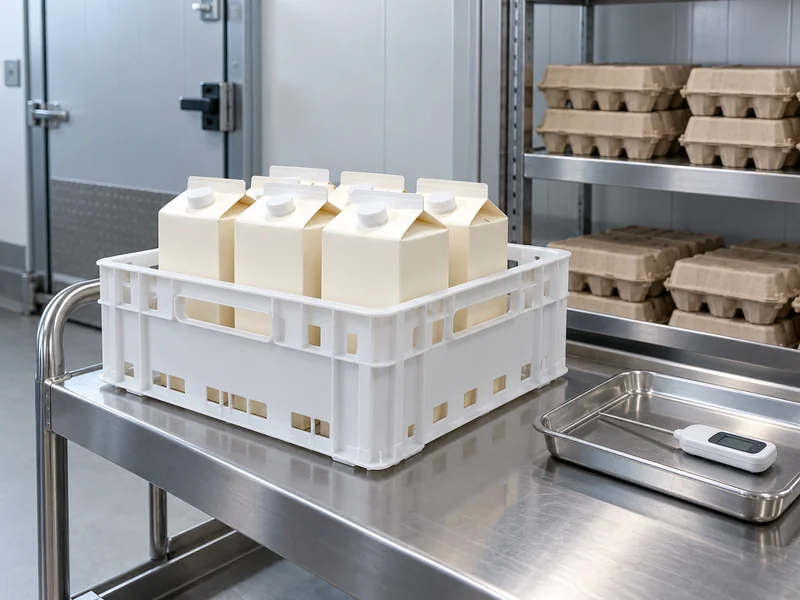
Where Should Egg Cartons Stand Inside the Room?
Choose a dedicated, identifiable location that protects the cartons and supports the restaurant’s segregation procedure. Keep them away from overhead leaks, splash and positions where handling or other stock can damage them.
Assess the shelf under the actual loading arrangement. A position directly in a cold discharge path and a sheltered corner can behave differently even when the wall controller shows one reassuring number.
LINBLE’s guide to finding hot and cold spots explains how to investigate those differences. Include the intended egg positions and relevant door events in the loaded-room assessment.
Can the Lowest Shelf Be Assigned Automatically?
Use the site’s segregation plan, container protection and local requirements to decide the position. “Bottom shelf” is not a complete answer if that position is exposed to floor splash, unstable stacking or a passing trolley.
Show the category allocation on the rack plan. Staff should be able to return stock to its correct location without inventing a new hierarchy during every busy service.
What Do Wet Cartons or Recurring Condensation Tell You?
They justify an investigation into moisture entry, handling and the equipment above the stock. Replacing the cartons while leaving the cause untouched can turn a visible warning into a recurring routine.
Note whether moisture appears after a delivery, prolonged door opening, cleaning or defrost. Photograph the location and record the event before assuming that the room needs a different humidity setting.
For the enclosure, review joints, corners and surfaces against the cleaning method. The article on stainless and coated panel finishes can support that materials discussion without substituting for a site cleaning specification.
Should Restaurant Staff Wash Shell Eggs Before Storage?
Follow the approved supplier and local handling procedure rather than introducing an unvalidated washing step. If shells or packaging arrive in unacceptable condition, use the receiving decision process instead of trying to repair the consignment at the sink.
Keep the responsibility clear: the storage room maintains an agreed environment, while purchasing, acceptance, hygiene and food preparation retain their own controls. Refrigeration does not erase uncertainty about damaged or mishandled stock.
What Changes When Breakfast Volume Increases?
Recalculate the overlap between incoming cases and the stock left from the previous service. A breakfast programme can change both the quantity held and the hour at which the egg shelf is busiest.
For an illustrative kitchen switching part of its menu from shell eggs to liquid egg, compare the external carton dimensions and the containers used after opening. Fewer individual shells do not automatically mean less shelf space once the preparation and identification routine is included.
LINBLE lists dual-temperature arrangements among its restaurant options, but that does not make every combination necessary or suitable. If frozen egg products join the menu, first establish the quantities and required conditions, then compare a separate freezer arrangement with the proposed project configuration.
Keep the approved allocation simple enough to survive the busiest service. If every breakfast delivery forces other food into the aisle, the problem has become a capacity-and-workflow issue as well as a stock-control issue.
How Should Opened Liquid Egg and Prepared Food Be Managed?
Give them separate identification and storage rules appropriate to the product and process. An unopened supplier carton and a kitchen container filled from it should not be indistinguishable on the shelf.
Record opening or preparation information as required by the site’s procedure, retain the link to the source lot and use a suitable covered container. Confirm the permitted storage period from the relevant instructions rather than copying a household shelf-life table into a commercial routine.
Where frozen egg is used, specify the approved thawing arrangement and the handling of thawed stock. A chilled room can support a defined procedure, but it does not define that procedure by itself.
What Should Be Verified at Handover and After Menu Changes?
Verify that the approved product mix can occupy its allocated positions while the room meets its agreed conditions. Include representative receiving activity and confirm that the monitoring and alarm arrangement reaches the responsible person.
Use the LINBLE commissioning checklist to retain the layout, test results and operating instructions together. Revisit the assumptions when the kitchen changes supplier, introduces liquid egg or adds a breakfast service.
- Product identity and storage instruction remain current.
- Receiving staff know the acceptance and hold process.
- The assigned shelf is protected, reachable and included in the temperature assessment.
- Opened, thawed and prepared products retain the required identification.
- Changes in carton size or delivery frequency are checked against usable capacity.
A well-planned egg storage area makes the correct action easy to repeat. For a LINBLE project, specify the product, the shelf and the operating routine with the same care as the room temperature.