
For most commercial frozen-food storage, a walk-in freezer temperature of approximately -18°C to -23°C is a practical starting range. Rooms with frequent door openings, sensitive products, or changing loads may need to operate closer to the colder end of this range.
Ice cream, seafood, specialty materials, and long-term storage may require lower temperatures. A separate rapid-freezing system may be necessary when warm products must be frozen quickly.
The most reliable setting is not determined by one number alone. Product type, airflow, refrigeration capacity, sensor location, loading patterns, insulation, and operating habits must work together.
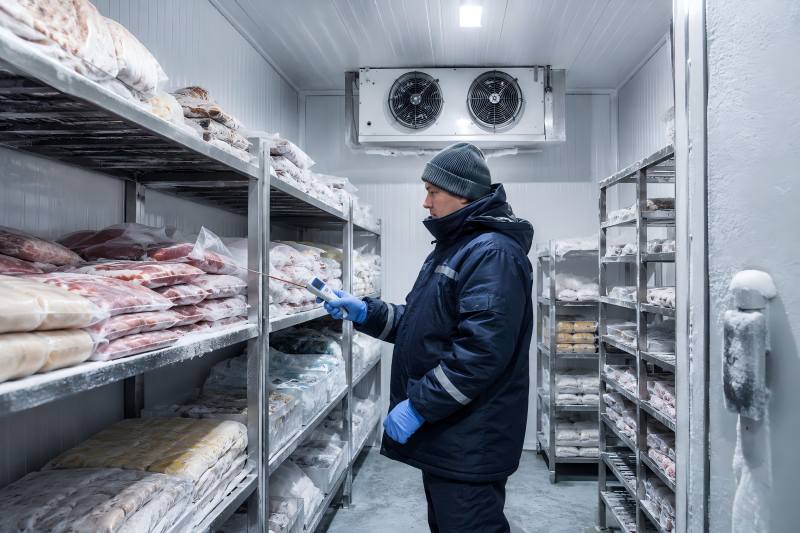
Recommended Walk-In Freezer Temperature Ranges
The following table provides practical operating ranges for common applications. These values should be treated as general selection guidance rather than universal requirements.
| Application | Suggested Room Temperature | Main Consideration |
| General frozen food | -18°C to -22°C | Stable long-term storage |
| Meat and poultry | -18°C to -23°C | Limit temperature fluctuation |
| Frozen seafood | -20°C to -25°C | Protect texture and product quality |
| Ice cream and frozen desserts | -22°C to -28°C | Maintain firmness and reduce softening |
| Bakery products and dough | -18°C to -22°C | Prevent moisture and texture changes |
| High-traffic commercial kitchen | -20°C to -24°C | Compensate for frequent door opening |
| Distribution and temporary storage | -18°C to -23°C | Handle changing loads and rapid turnover |
| Low-temperature specialty storage | Below -25°C | Requires application-specific design |
The thermostat setting may need to be slightly lower than the required product temperature. This provides a buffer against short temperature increases caused by door openings, defrost cycles, or newly loaded products.
However, reducing the setpoint too far can increase energy consumption, frost formation, compressor operating time, and equipment wear without producing a meaningful improvement in storage quality.
Is -18°C Cold Enough for a Walk-In Freezer?
For many standard frozen-food applications, -18°C is an appropriate product storage target. At this temperature, food remains frozen and microbial activity is greatly limited.
The practical difficulty is maintaining this temperature throughout the entire freezer room. A controller may display -18°C while products near the door, ceiling, or blocked evaporator area experience warmer conditions.
A room set to exactly -18°C may also rise above its target during busy operating periods. Restaurants, supermarkets, food factories, and distribution centers often benefit from setting the air temperature several degrees lower to create an operating margin.
A freezer that normally works at -20°C or -22°C may recover more effectively after door openings than a system operating directly at its maximum acceptable temperature.
The correct target is therefore not simply the warmest temperature at which food stays frozen. It is the temperature that the system can maintain consistently under actual working conditions.
Product Temperature Matters More Than Air Temperature
Freezer controllers usually measure the surrounding air, which changes more quickly than the temperature inside a carton, package, or frozen product.
When a door opens, the displayed air temperature may rise rapidly. A fully frozen product may change very little during the same period because its mass retains cold energy.
The opposite can also happen. After warm products enter the freezer, the surrounding air may return to the setpoint while the center of the products remains too warm.
This difference is important when evaluating freezer performance. Air temperature shows how the refrigeration system is responding, while product temperature shows whether the stored goods are actually protected.
For general operation, air sensors are sufficient for daily monitoring. For sensitive products, large pallet loads, or newly frozen goods, product probes or simulated product sensors can provide a more useful picture.
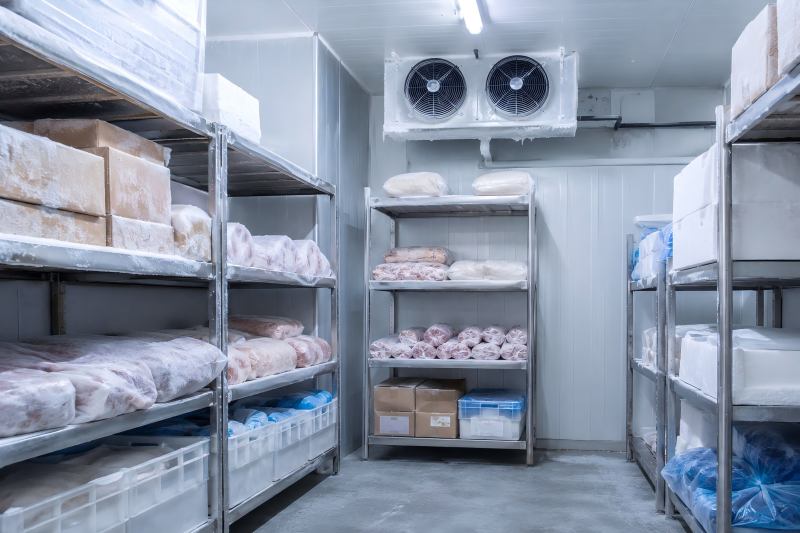
Different Products May Need Different Temperatures
Meat and Poultry
Frozen meat and poultry are commonly stored at approximately -18°C or below. Stable temperature is often more important than extremely low temperature.
Repeated warming and cooling can encourage surface ice formation, moisture migration, packaging damage, and quality loss. A consistently controlled room is therefore preferable to a colder room with frequent temperature swings.
Businesses storing large cartons of meat should also consider pull-down time. Dense products cool slowly, especially when pallets are tightly stacked or placed too close to walls.
Seafood
Seafood can be more sensitive to storage conditions because texture, surface moisture, and oxidation affect its commercial value.
A slightly lower operating range may provide additional protection, particularly for long storage periods or high-value products. Good packaging and limited air exposure remain essential because a low room temperature cannot correct poor product protection.
Ice Cream and Frozen Desserts
Ice cream normally requires colder and more stable conditions than many other frozen foods. Minor temperature fluctuations can soften products and enlarge ice crystals.
This can produce a coarse texture even if the ice cream later becomes hard again. For this application, temperature recovery after door openings deserves as much attention as the nominal setpoint.
A freezer used for ice cream should not be selected only by storage volume. Door usage, evaporator airflow, refrigeration reserve, and loading procedures have a direct effect on product condition.
Frozen Bakery Products
Frozen dough, cakes, pastries, and other bakery products can be affected by moisture loss, odor transfer, and repeated temperature variation.
A standard frozen-storage range is usually suitable, but packaging quality and humidity control should also be considered. Excessive airflow directly across unprotected products may lead to surface drying.
Mixed Frozen Products
Many commercial freezers store meat, vegetables, prepared meals, desserts, and packaged ingredients together.
In this situation, the room should normally be set according to the product with the strictest reasonable temperature requirement. However, placing every product in an unnecessarily cold environment may increase operating costs.
When storage requirements differ significantly, separate freezer zones may be more practical than forcing one room to serve every product.
How Door Openings Affect Freezer Temperature
Every time the door opens, warmer and more humid air enters the freezer. The refrigeration system must remove both the added heat and the moisture that may freeze on coils, doors, walls, or floors.
A freezer with frequent staff access may require a lower setpoint than a low-traffic storage room. It may also need stronger refrigeration capacity, faster-closing doors, strip curtains, air curtains, or an entrance vestibule.
The largest temperature problems often come from operating habits rather than the thermostat setting. Doors left open during loading, damaged gaskets, blocked entrances, and slow product handling can create repeated heat loads.
Lowering the thermostat cannot fully solve these problems. Improving access control and loading procedures is often more effective than continuously forcing the refrigeration system to operate at a colder setting.
How Product Loading Changes the Required Setting
A walk-in freezer designed for storage is not automatically suitable for freezing large quantities of warm products.
When already frozen products enter the room, the system mainly removes heat that entered during loading. When chilled or room-temperature products enter, the refrigeration system must remove much more heat from the product itself.
This can result in long compressor operating periods and slow temperature recovery. Products in the center of tightly packed cartons may remain above the desired temperature even when the room air appears cold.
Where frequent pull-down is required, the freezer should be designed with sufficient refrigeration reserve and appropriate airflow. In some operations, a blast freezer should be used for initial freezing before products are transferred to the walk-in freezer for storage.
A storage freezer should not be expected to perform like a rapid-freezing system unless it was designed for that purpose.
Why Setting the Freezer Colder Is Not Always Better
A lower setpoint creates a larger difference between indoor and outdoor temperatures. This increases heat transfer through the insulated panels, floor, ceiling, door, and structural joints.
The refrigeration unit must operate longer to remove this additional heat. The result may include higher electricity use, more frost, longer defrost cycles, and greater compressor wear.
Very low temperatures can also affect door seals, plastic components, lubricants, flooring materials, and worker comfort. These factors become increasingly important in rooms operating below standard frozen-storage temperatures.
The goal should be the warmest setting that reliably protects the product under peak operating conditions. This does not mean operating close to the product limit. A reasonable safety margin is still needed.
An efficient freezer is not the one with the lowest controller setting. It is the one that maintains the required product condition with minimal fluctuation and unnecessary energy use.
Where Should Temperature Sensors Be Installed?
Sensor position can significantly influence the displayed temperature.
A sensor located directly in the evaporator discharge airflow may show a colder reading than the rest of the room. A sensor near the door may show frequent increases that do not represent conditions deeper inside the freezer.
The main control sensor should be installed where it can measure representative return air without being directly affected by the evaporator outlet, door opening, lighting, or warm product loading.
Larger rooms may require several monitoring points. Useful locations include:
- Near the entrance
- In the center of the room
- At the rear storage area
- Near the highest product level
- In known low-airflow zones
Comparing several sensors makes it easier to identify uneven cooling, blocked airflow, damaged insulation, or inaccurate equipment settings.
How Much Temperature Fluctuation Is Acceptable?
A short air-temperature increase during door opening or defrosting is not automatically a storage failure. The duration, frequency, and effect on product temperature are more important than a single high reading.
A freezer that briefly rises and quickly returns to its setpoint may be operating normally. A room that remains warm for an extended period may have insufficient capacity, excessive door activity, coil icing, refrigerant problems, or airflow restrictions.
Temperature records should therefore be evaluated as a pattern. Operators should review how high the temperature rises, how long it remains elevated, how quickly the room recovers, and whether the same event occurs repeatedly.
This approach provides more useful information than reacting to every temporary change.
Common Reasons a Walk-In Freezer Runs Too Warm
Blocked Evaporator Airflow
Products placed near the evaporator may restrict cold-air circulation. This creates cold areas near the coil and warm areas elsewhere in the room.
Excessive Frost
Frost on the evaporator reduces heat transfer and restricts airflow. Defrost settings, door seals, drainage, and moisture entry should be checked.
Damaged Door Gaskets
A worn gasket lets warm air leak inside continuously. Frost around the frame is often an early warning sign.
Incorrect Refrigeration Capacity
An undersized system may operate continuously without reaching the required temperature, especially during hot weather or heavy loading periods.
Poor Panel or Floor Insulation
Damaged joints, wet insulation, thermal bridges, and uninsulated floors can add a continuous heat load.
Incorrect Sensor Reading
A poorly positioned or inaccurate sensor may cause the system to stop too early or operate longer than necessary.
How to Choose the Final Temperature Setting
Start with the storage requirement of the most temperature-sensitive product. Then evaluate actual operating conditions, including door-opening frequency, daily loading volume, incoming product temperature, room size, outdoor climate, and expected storage duration.
A practical selection process should include four steps:
- Define the required product temperature.
- Add a reasonable operating margin.
- Confirm that the refrigeration system can maintain the target during peak loads.
- Monitor several areas of the room and adjust based on real temperature records.
The final setting should not be selected only during an empty-room test. A freezer may perform well without products but develop warm zones after shelving, cartons, and pallets change the airflow.
Testing the room under normal working conditions gives a more realistic result.