
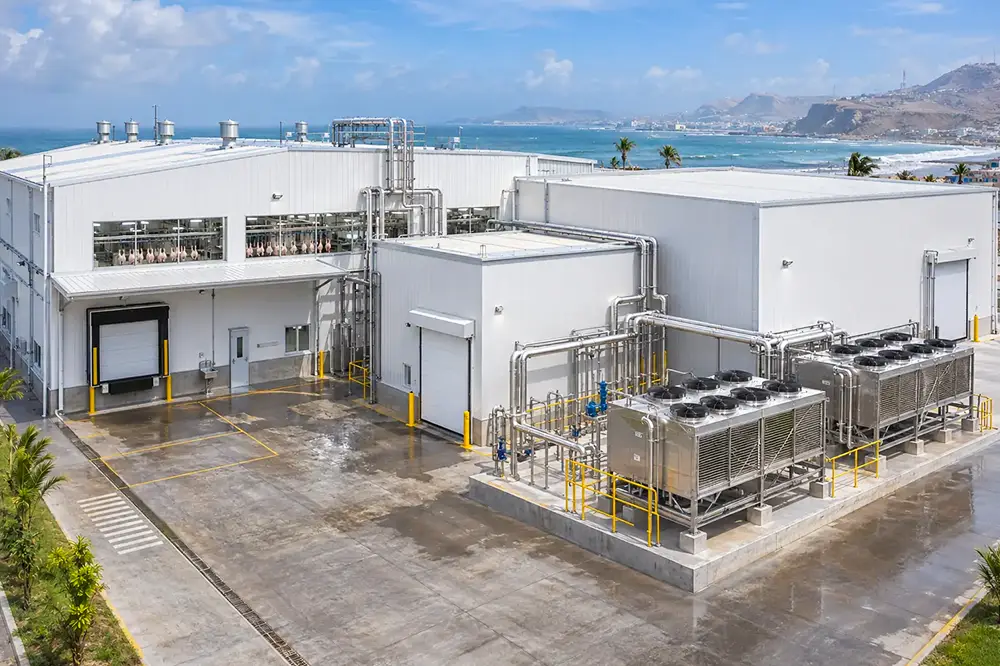
1,000 BPH Coastal Poultry Cold Storage Project in South America
A regional poultry processor in coastal South America planned a cold-chain center for a 1,000 BPH slaughter line serving local supermarkets and fresh-food markets.
LINBLE configured a 0–4°C processing room, an 8-ton blast freezer and a 120-ton frozen-storage room for a salt-exposed site with just 4.5 m of beam clearance.
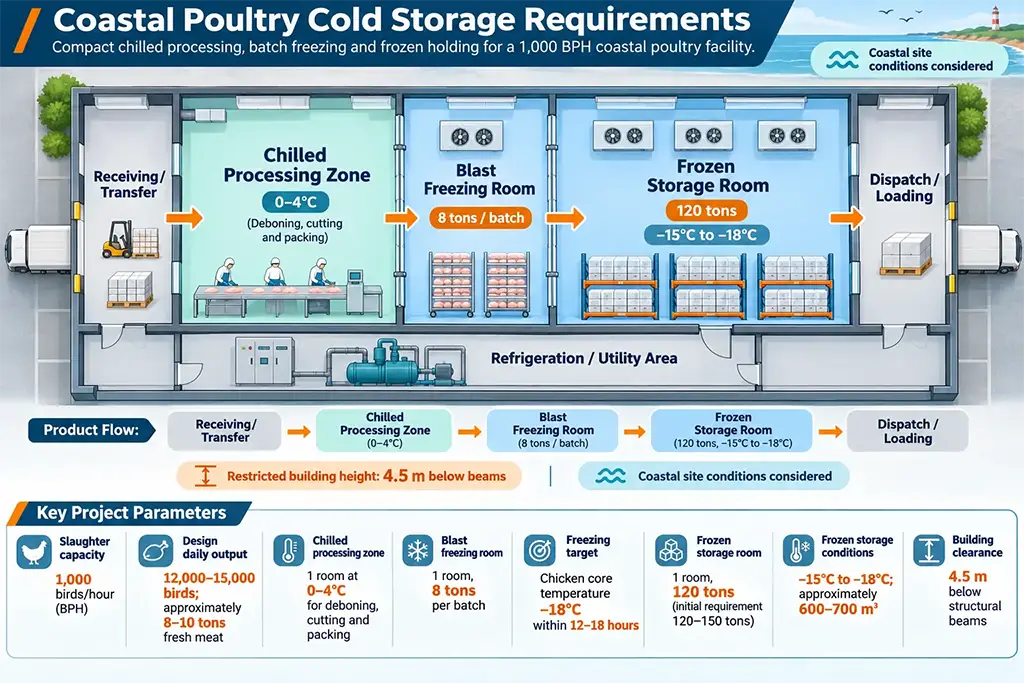
Coastal Poultry Cold Storage Requirements
The customer needed chilled cutting and packing, batch freezing and frozen holding in one compact facility. Local coastal exposure, restricted building height and energy costs were important design considerations.
Project Parameters | Project Specifications |
Slaughter capacity | 1,000 birds/hour (BPH) |
Design daily output | 12,000–15,000 birds; approximately 8–10 tons fresh meat |
Chilled processing zone | 1 room at 0–4°C for deboning, cutting and packing |
Blast freezing room | 1 room, 8 tons per batch |
Freezing target | Chicken core temperature −18°C within 12–18 hours |
Frozen storage room | 1 room, 120 tons (initial requirement 120–150 tons) |
Frozen storage conditions | −15°C to −18°C; approximately 600–700 m³ |
Building clearance | 4.5 m below structural beams |
Site Challenges & Custom Solutions
Salt-laden coastal air, a 4.5 m roof clearance and high electricity costs shaped the project’s corrosion protection, airflow and defrosting choices.
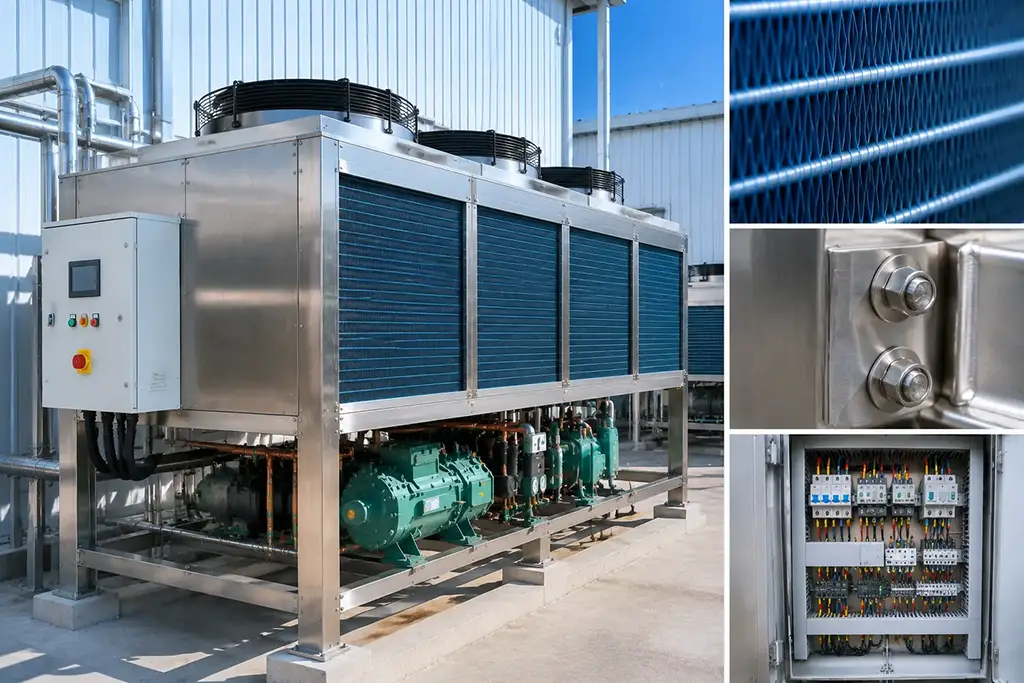
01 Coastal Salt Spray & Corrosion
The facility was exposed to humid sea air and heavy salt spray. Conventional galvanized outdoor housings and unprotected copper-aluminium fins were vulnerable to corrosion in these conditions.
Damage to condenser surfaces or fasteners could increase maintenance demands and put the refrigeration equipment at risk.
01 Corrosion-Resistant Refrigeration Equipment
The outdoor system combined coated condenser fins and stainless-steel hardware to accommodate the marine environment, while staged compressor output matched changing refrigeration demand.
- Condenser Fins: Hydrophilic aluminium with epoxy protection.
- Housing: 304 stainless steel outdoor enclosure.
- Fasteners: 304 stainless steel bolts and fittings.
- Compressor: Semi-hermetic reciprocating unit with staged capacity control.
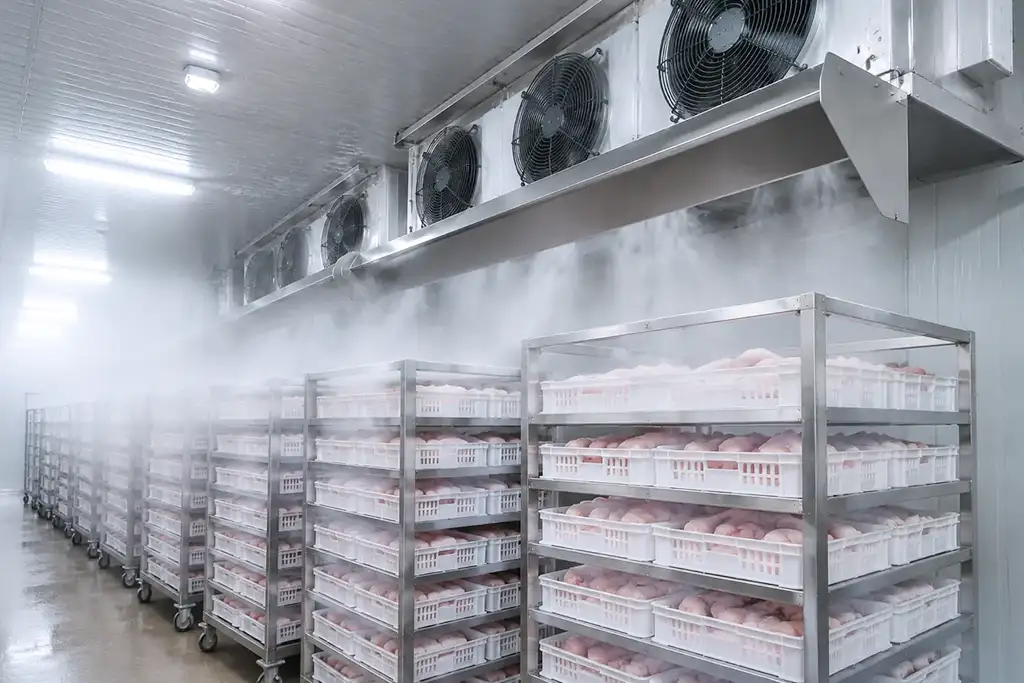
02 Restricted Height & Uneven Airflow
Only 4.5 m remained below the factory beams. With insulated floors and suspended equipment taking up space, conventional downward airflow risked overcooling upper trays while leaving lower trolley levels insufficiently exposed.
02 Low-Profile Evaporator & Directed Airflow
A side-discharge, low-profile air system was specified for the shallow room. Its lowered duct arrangement guided freezing air toward the middle and lower trays rather than directly onto the top tier.
- Fans: Low-profile, high-static-pressure side-discharge design.
- Ducting: Slightly lowered airflow path.
- Air Guides: Removable stainless-steel deflector hoods.
- Uniformity Target: Within ±1°C between loading levels.
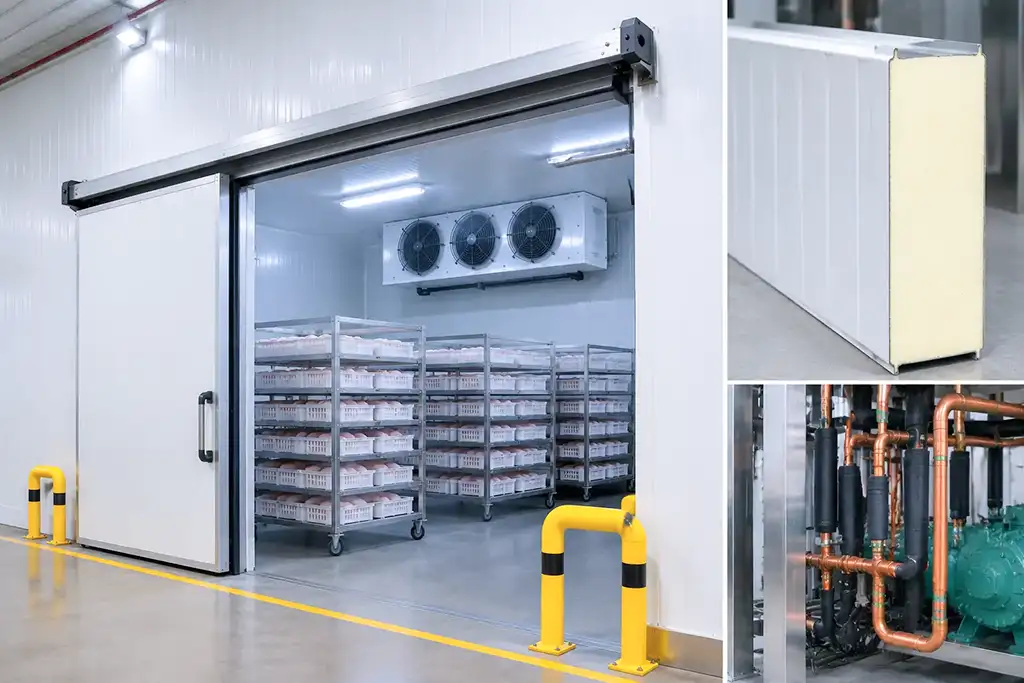
03 High Electricity & Defrosting Costs
Electricity expense was a major operating concern for the regional processor. Heat entering the cold rooms and power-intensive electric defrosting could add substantially to the cost of each freezing batch.
03 PIR Insulation & Hot-Gas Defrost
The enclosure and defrosting approach were selected together: thick, low-conductivity insulation limited heat gain, while a discharge-gas-assisted system reused available compressor heat for evaporator defrosting.
- Panels: 150 mm flame-retardant PIR insulation.
- Conductivity: ≤0.022 W/(m·K).
- Defrosting: Compressor discharge-gas-assisted system.
- Control: Intelligent hot-gas defrost operation.
Installation & Commissioning
The equipment was prepared for container shipment and local assembly, supported by bilingual installation materials and remote video guidance from LINBLE engineers.
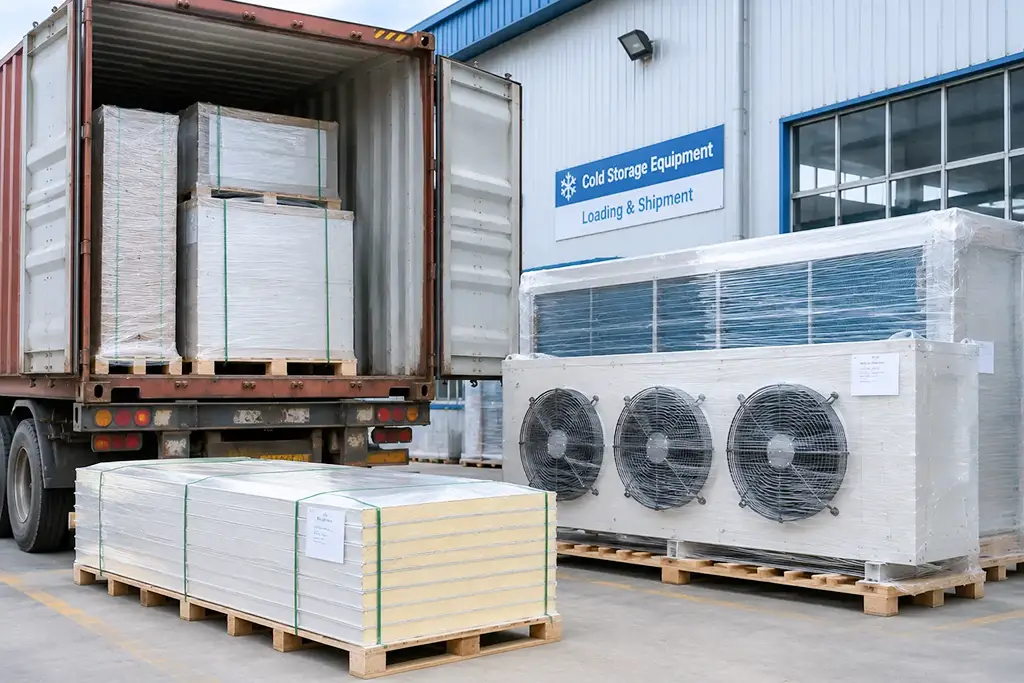
01 Container-optimized Shipment
The cold-room and refrigeration equipment was separated into transport-ready packages for international container shipping. English and Spanish 3D assembly diagrams were supplied to help the local team identify components and prepare the installation sequence.
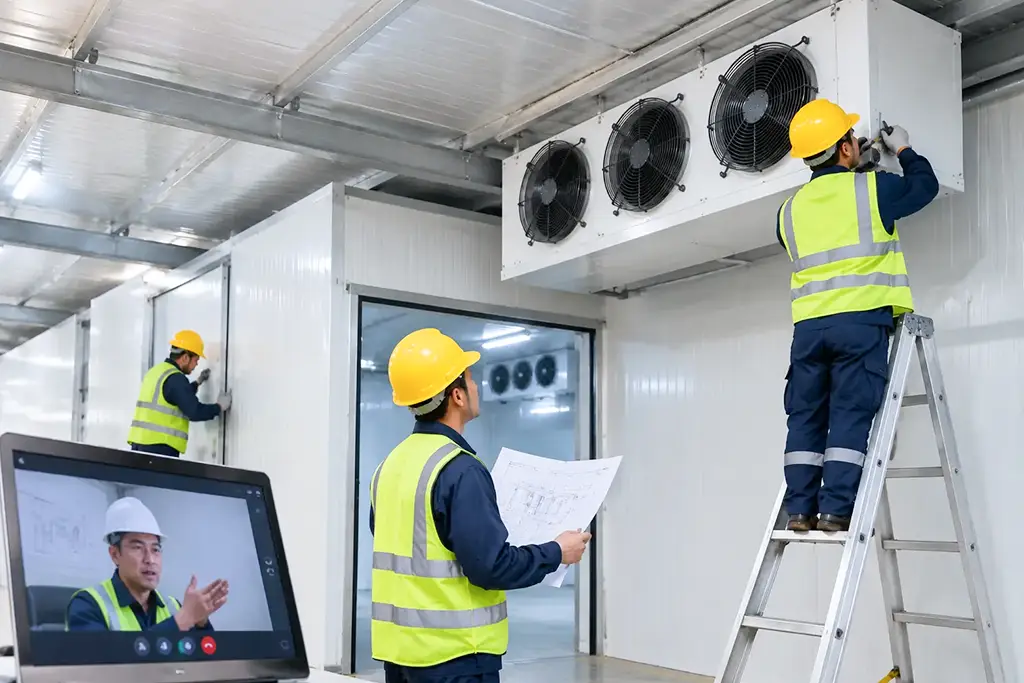
02 Local Assembly & Video Guidance
The owner’s installers assembled the 0–4°C processing room, 8-ton blast freezer and frozen-storage room with remote video support. The low 4.5 m beam clearance required careful coordination of enclosure and airflow-equipment placement.
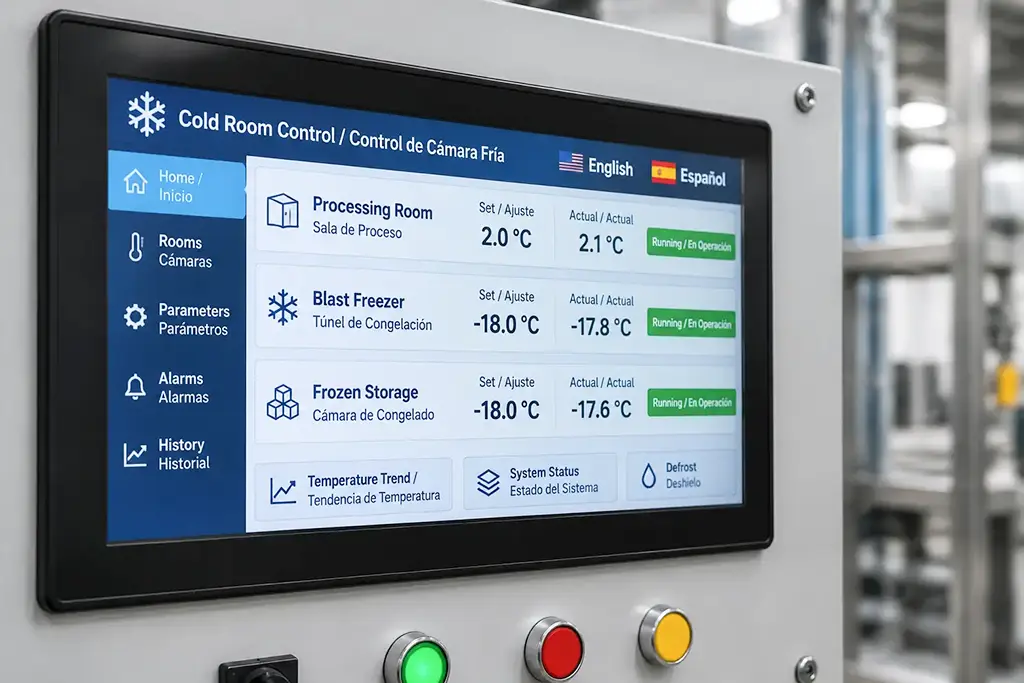
03 Piping Tests & Start-Up
According to the project record, the local team completed room assembly and refrigeration-piping airtightness tests in just 14 days. The packaged facility was subsequently brought into operation for regional poultry processing and distribution.
Operating Results:
18.5% Lower Daily Electricity Use Than Comparable Local Facilities
The case record reports measured daily electricity use approximately 18.5% below comparable local poultry cold stores. The customer also described steady freezing and favorable equipment condition after more than a year.
≈18.5% Lower
Reported daily electricity use compared with comparable local poultry cold stores.
Over 1 Year
No refrigeration-piping leaks or visible rust reported by the customer.
Steady Freezing
The customer described freezing speed as steady during routine operation.
Energy Use & Coastal Equipment Condition
Performance Indicator | Reference / Site Condition | Reported Outcome |
Daily electricity consumption | Comparable local poultry cold stores | Approximately 18.5% lower |
Equipment condition | Coastal salt-spray and humid exposure | No rust or piping leaks after over 1 year (reported) |
Freezing & Day-to-Day Operation
The customer described freezing speed as steady during routine operation. Feedback particularly emphasized the low-ceiling airflow arrangement, which had been a central concern during system design.
Customer Feedback After One Year
After more than one year of operation, the customer reported no refrigeration-piping leaks or visible rust. They specifically appreciated the attention given to coastal corrosion protection and airflow in the low factory building.