
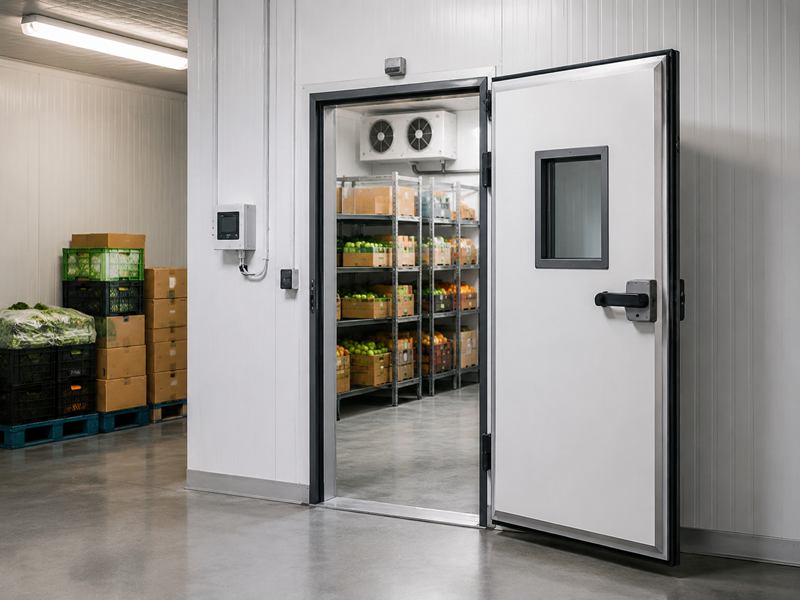
Chiller room door design affects cooling efficiency and temperature stability. Proper insulation, sealing, door selection, and functional features help reduce cold air loss and improve thermal performance.
Understanding the Impact of Chiller Room Door Design
A chiller room door is not only used for access but also serves as an important insulation barrier. Its structural design has a direct bearing on cooling performance, temperature consistency and the comprehensive operating effect of the refrigeration system.
Key impacts of proper chiller room door design include:
- Reducing Cold Air Loss:
A well-designed door with proper insulation and sealing helps minimize the escape of cold air during operation. This reduces unnecessary cooling loss and allows the refrigeration system to maintain the target temperature more efficiently. - Improving Temperature Stability:
Frequent temperature fluctuations can affect stored products, especially in food and temperature-sensitive applications. A suitable door design helps limit heat exchange and maintain a more consistent internal environment. - Lowering Energy Consumption:
Poor insulation, damaged seals, or unsuitable door structures can increase the workload of the refrigeration unit. An optimized door design reduces cooling demand and supports more efficient operation. - Supporting Daily Operation Requirements:
Different facilities have different access needs. Selecting the right door structure based on opening frequency, product movement, and working conditions improves both usability and thermal performance.
Key Factors Affecting Chiller Room Door Thermal Performance
1. Insulation Material and Door Thickness
The insulation structure inside a chiller room door plays a critical role in limiting heat transfer between the internal and external environment. A properly designed insulation layer helps maintain stable temperatures and reduces unnecessary cooling demand.
Common insulation materials include:
| Insulation Material | Main Features | Suitable Applications |
| PU (Polyurethane) | High insulation efficiency and lightweight structure | Food storage rooms and commercial cold rooms |
| PIR (Polyisocyanurate) | Better thermal stability and fire resistance | Industrial cold storage facilities |
| EPS (Expanded Polystyrene) | Cost-effective insulation solution | Small-scale cold room applications |
For most chiller room applications, polyurethane-filled doors are commonly selected because they provide reliable insulation performance while maintaining reasonable cost and durability.
The required door thickness should match the storage temperature, room conditions, and operating requirements. A door suitable for a standard chilled environment may not provide enough insulation for applications with stricter temperature control needs.
2. Door Sealing Performance
A high-quality sealing system helps prevent cold air leakage and reduces the entry of warm air into the chiller room.
Important sealing components usually include:
- Magnetic gaskets for tighter closing performance
- Multi-layer sealing strips around the door edges
- Adjustable hinges for proper door positioning
- Durable sealing materials for long-term use
Even an insulated door may lose thermal efficiency if gaps appear between the door panel and frame. Poor sealing performance can cause temperature fluctuation, condensation problems, and additional refrigeration load.
For facilities with frequent access, sealing durability should be carefully considered because repeated operation can gradually affect gasket performance.
3. Door Type Selection Based on Usage Conditions
The suitable chiller room door depends on access frequency, available installation space, and product handling requirements. Different door designs provide different advantages for specific working environments.
| Door Type | Suitable Applications | Key Advantages |
| Hinged Door | Small cold rooms, restaurants, and low-frequency access areas | Simple structure, easy maintenance, lower investment cost |
| Sliding Door | Food factories, warehouses, and areas using carts or pallets | Space-saving design, large opening capacity, convenient operation |
| High-Speed Door | Logistics centers and high-traffic storage areas | Fast opening speed, reduced cold air loss, improved temperature stability |
Selecting the correct door type can help reduce energy loss while improving daily operation efficiency. Small storage spaces usually require simple door solutions, while busy facilities need faster opening systems with better durability.
4. Door Opening Frequency and Traffic Flow
The frequency of door operation has a direct impact on chiller room temperature stability. Every opening allows external heat and moisture to enter, increasing the workload of the refrigeration system.
Before selecting a door design, consider:
- Daily opening frequency
- Personnel movement patterns
- Cart or forklift transportation
- Loading and unloading requirements
For example, a small restaurant may operate effectively with a standard hinged door, while a food processing facility with continuous product movement may require a sliding or high-speed door.
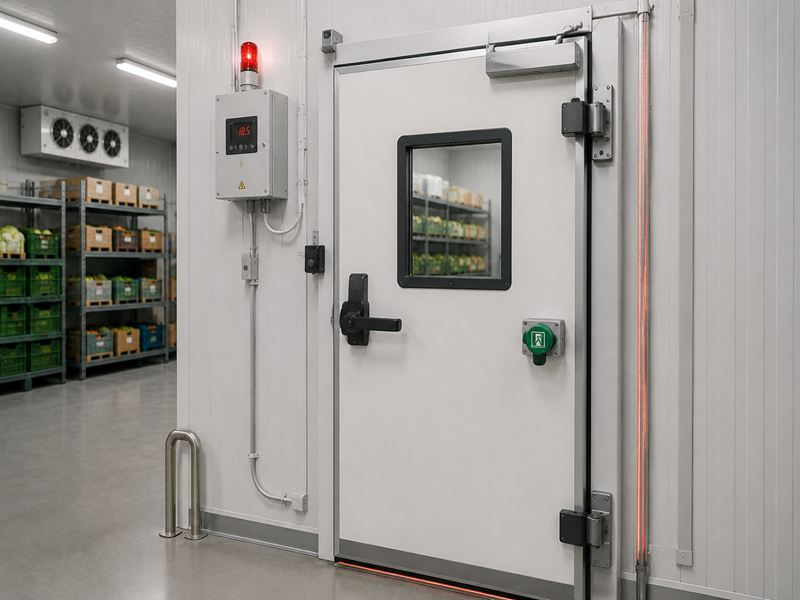
Additional Features That Improve Chiller Room Door Performance
1. Door Heater System
In humid environments or low-temperature conditions, moisture around the door area may freeze and affect normal operation.
A door heater system helps prevent:
- Frozen door gaskets
- Difficult door opening
- Damage caused by ice accumulation
This feature is especially useful for chiller rooms that operate continuously under demanding temperature conditions.
2. Safety Release System
For large chiller rooms, safety functions can improve protection for workers who enter the storage area.
Common safety features include:
- Emergency opening mechanisms
- Internal safety handles
- Reliable operation during unexpected situations
These functions improve workplace safety while maintaining the overall performance of the insulated door system.
3. Observation Window
An insulated observation window allows operators to check stored products without frequently opening the door.
Main benefits include:
- Reducing unnecessary door openings
- Maintaining temperature stability
- Improving operation convenience
This option is suitable for applications where staff need to regularly monitor products inside the cold room.
Guidelines for Picking a Qualified Chiller Room Door
Selecting the right chiller room door requires evaluating both technical requirements and actual operating conditions.
| Selection Factor | Key Considerations |
| Temperature Requirement | Match insulation performance with the required storage temperature |
| Access Frequency | Choose door structure according to daily opening times |
| Installation Space | Consider whether the area supports hinged or sliding operation |
| Product Handling | Select based on manual handling, carts, or forklift usage |
| Maintenance Needs | Check sealing durability and component replacement convenience |
An ideal door ought to satisfy existing operational demands and reserve adjustable space to accommodate future adjustments. Proper selection helps improve energy efficiency and reduce long-term maintenance requirements.
Apart from assessing the door itself independently, enterprises need to take the entire operating environment into account prior to finalizing the selection. The best solution should match the refrigeration system, storage requirements, and daily operating process.
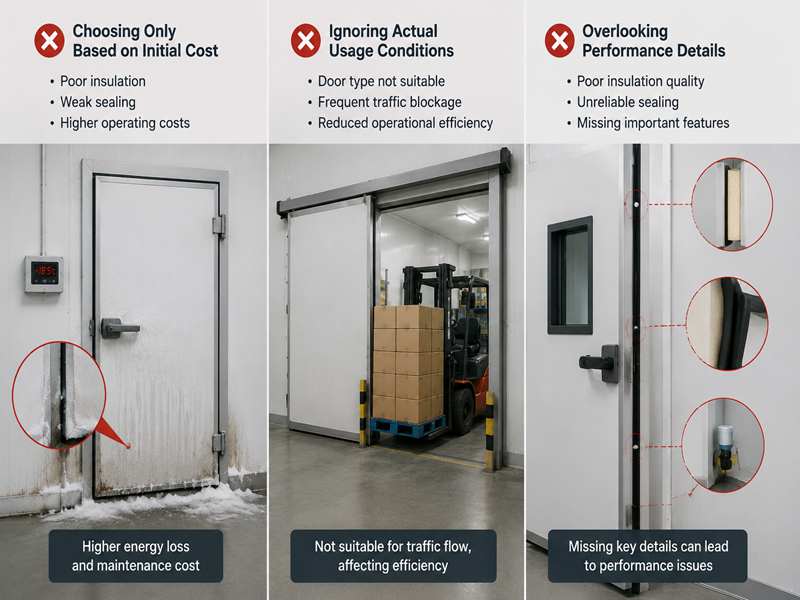
Typical Errors in Chiller Room Door Selection
1. Making Decisions Merely Based on Upfront Expenses
Selecting a door only according to purchase price may lead to higher operating expenses in the future. Poor insulation or weak sealing performance can increase cooling loss and maintenance frequency.
A slightly higher initial investment in better materials and stronger sealing design may provide better long-term value by reducing energy waste and replacement costs.
2. Ignoring Actual Usage Conditions
A door design that does not match the working environment may reduce operational efficiency. For example, a standard hinged door may not be suitable for warehouses with frequent forklift traffic.
Understanding product movement, access frequency, and available space helps avoid selecting a door that creates operational limitations.
3. Overlooking Performance Details
Important factors such as insulation quality, sealing reliability, and additional functions should not be ignored. A complete evaluation helps ensure the door meets the actual requirements of the chiller room.
Minor discrepancies in structural design may impact long-run operational performance, particularly for facilities running nonstop all year round.