
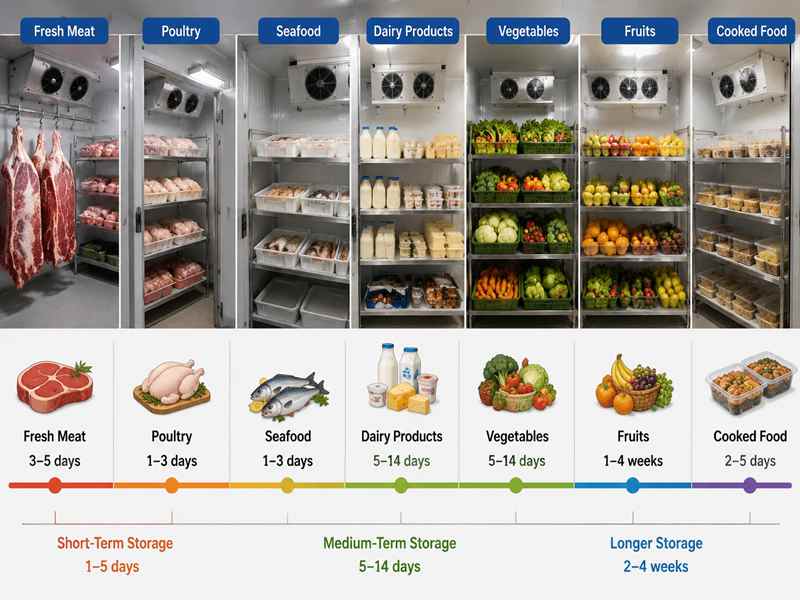
A chiller room provides a controlled refrigerated environment that helps slow down food deterioration and extend storage periods. However, different foods have different storage limits due to variations in product characteristics, freshness, moisture content, and packaging conditions.
Food Storage Time in Chiller Rooms
Different food categories have different storage periods because their structures and sensitivity to temperature changes are not the same. The following table provides general storage time references for common foods under suitable chiller room conditions.
| Food Type | Typical Storage Time | Main Factors Affecting Storage Duration |
| Fresh Meat | 3–5 days | Freshness, packaging condition, temperature stability |
| Poultry | 1–3 days | Product quality, hygiene condition, cooling performance |
| Seafood | 1–3 days | Freshness level, moisture control, temperature consistency |
| Dairy Products | 5–14 days | Packaging type, product characteristics, cooling stability |
| Vegetables | 5–14 days | Humidity level, moisture content, airflow condition |
| Fruits | 1–4 weeks | Variety, ripeness, storage environment |
| Cooked Food | 2–5 days | Preparation time, packaging, handling process |
These storage periods are general references for properly managed chiller rooms. The actual storage time may change depending on product quality before refrigeration and daily storage conditions.
Storage Time of Different Food Categories
1. Fresh Meat Storage
Fresh meat can usually be stored in a chiller room for around 3–5 days under stable refrigerated conditions. The actual storage period may differ depending on product freshness, packaging method, and temperature control.
The actual storage period can vary depending on several conditions:
- Freshness Before Refrigeration:
Meat stored immediately after processing generally maintains quality longer than products that have already experienced unsuitable conditions. - Packaging Protection:
Vacuum packaging or sealed wrapping helps reduce air exposure and moisture loss during storage. - Temperature Stability:
A consistent chilled environment helps prevent unnecessary reduction of storage time.
For butcher shops, restaurants, and food processors, suitable chilled storage helps maintain meat quality and improve inventory management.
2. Poultry Storage
Fresh poultry generally has a storage period of around 1–3 days in a chiller room. Due to its sensitivity to temperature changes, poultry usually requires shorter storage cycles compared with many other products.
Several factors can influence how long poultry remains suitable for storage:
- Product Freshness:
Fresh poultry entering refrigeration shortly after processing usually has better storage potential. - Hygiene Condition:
Proper handling and clean storage conditions help reduce quality deterioration. - Cooling Performance:
Stable refrigeration performance supports better preservation during short-term storage.
For restaurants and food suppliers, understanding poultry storage limits helps improve purchasing frequency and reduce product loss.
3. Seafood Storage
Fresh seafood can generally be stored for around 1–3 days in a chiller room. Because seafood quality declines quickly, businesses usually require faster product turnover.
The final storage time is determined by factors such as product freshness and storage conditions:
- Initial Freshness Level:
Seafood with better freshness before storage usually maintains quality for a longer period. - Temperature Consistency:
Stable cooling conditions help slow down freshness loss. - Moisture Management:
Suitable moisture control helps maintain seafood texture and appearance.
For seafood suppliers and restaurants, accurate storage planning is important because seafood normally has a limited chilled storage period.
4. Dairy Product Storage
Dairy products such as milk, yogurt, and cheese can usually be stored for around 5–14 days in a chiller room. The exact period depends on product type, packaging, and refrigeration stability.
Maintaining this storage period requires suitable storage conditions, including:
- Packaging Type:
Sealed packaging helps protect dairy products from external exposure. - Product Characteristics:
Raw material composition and production processes determine the storage stability of different dairy commodities. - Cooling Stability:
Stable temperatures help maintain product quality throughout storage.
For cafes, restaurants, and food manufacturers, reliable chiller room performance supports consistent dairy ingredient supply.
5. Vegetable Storage
Fresh vegetables can generally be stored for around 5–14 days, depending on vegetable type and storage conditions. Products with higher moisture content often require more careful environmental control.
The freshness period may change according to the following storage factors:
- Moisture Content:
Vegetables with high water content may lose quality faster under unsuitable conditions. - Humidity Level:
Proper humidity helps prevent dehydration and excessive moisture accumulation. - Airflow Condition:
Good air circulation supports more even cooling inside the storage area.
For supermarkets and produce suppliers, proper vegetable storage helps reduce spoilage and maintain product appearance.
6. Fruit Storage
Fresh fruits can usually remain suitable for around 1–4 weeks in a chiller room. The actual storage period depends greatly on fruit variety and maturity level.
The time fruits remain fresh depends on several key conditions:
- Fruit Variety:
Different fruits have different tolerance levels for chilled storage. - Ripeness Stage:
Fully mature fruits usually have a shorter remaining storage period. - Storage Environment:
Suitable temperature and humidity help maintain texture, color, and freshness.
For fruit distributors, understanding storage differences helps improve seasonal inventory planning.
7. Cooked Food Storage
Cooked food generally has a storage period of around 2–5 days in a properly managed chiller room. Since prepared food has already undergone processing, its storage time is often shorter than fresh ingredients.
In practical applications, the available storage time is affected by several aspects:
- Preparation Time:
Freshly prepared products usually maintain quality longer than food stored after extended exposure. - Packaging Method:
Sealed containers help reduce contamination risks and protect product quality. - Handling Process:
Frequent handling may shorten the remaining storage period.
For commercial kitchens and catering businesses, accurate storage management helps reduce waste and improve food safety.
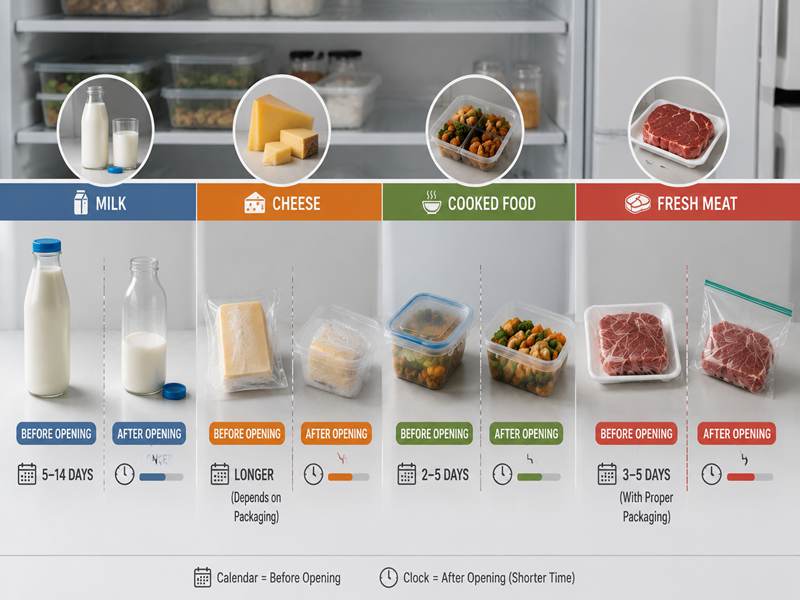
Freshness Retention Time for Foods After Package Opening
Opening food packaging changes the storage environment because products become more exposed to air and external conditions. In most cases, opened foods have a shorter usable period than unopened products.
| Food Type | Before Opening | After Opening |
| Milk | 5–14 days | Shorter storage period after exposure |
| Cheese | Longer depending on packaging | Reduced after opening |
| Cooked Food | 2–5 days | Requires faster consumption |
| Fresh Meat | 3–5 days with proper packaging | Shorter without protection |
For restaurants and food businesses, recording opening dates and monitoring remaining storage time can improve inventory control.
Short-Term and Long-Term Food Storage Guide
Different foods can be divided according to their typical storage periods.
| Storage Period | Common Food Types | Characteristics |
| Short-Term Storage (1–5 Days) | Meat, poultry, seafood, cooked food | Requires faster turnover |
| Medium-Term Storage (5–14 Days) | Dairy products, vegetables | Needs stable storage conditions |
| Longer Storage (2–4 Weeks) | Certain fruits and processed products | Allows more flexible inventory planning |
Short-term products usually require frequent purchasing and monitoring, while longer-storage products provide more flexibility for inventory management.
Why Do Some Foods Have Longer Storage Periods?
Different foods have different storage periods because their structures and preservation requirements vary.
1. Product Structure and Moisture Content
Foods with higher moisture levels usually experience quality changes faster. Seafood, vegetables, and some fruits require more careful storage conditions.
2. Packaging Protection
Packaging reduces exposure to air, moisture, and external contamination. Vacuum packaging and sealed containers can help extend usable storage time.
3. Temperature Requirements
Stable refrigeration conditions help slow down food deterioration and prevent unnecessary reduction of storage periods.
4. Freshness Before Storage
The storage period depends partly on the condition of the product when it enters the chiller room. Fresher products usually maintain quality for a longer time.