
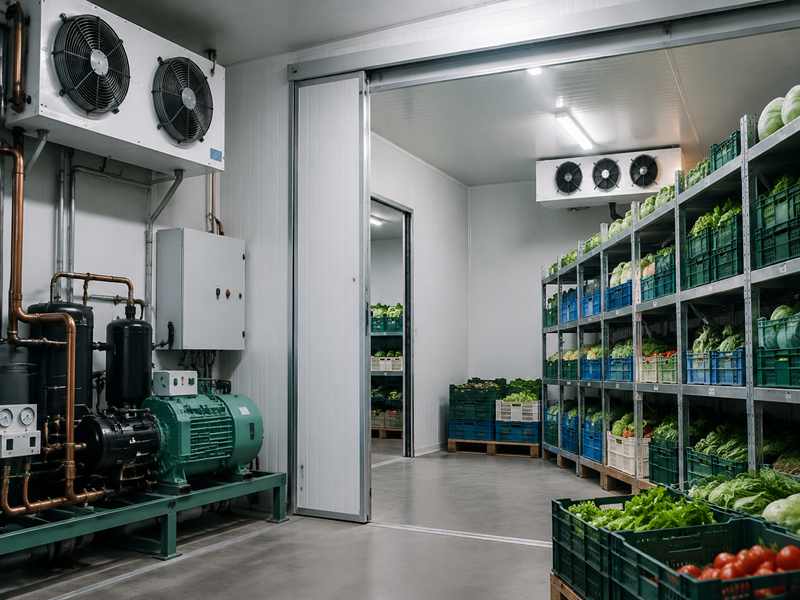
A suitable refrigeration system plays an important role in chiller room performance. Selecting the right solution based on storage needs, cooling capacity, and operating conditions helps maintain stable temperatures and reliable product protection.
What Is a Chiller Room Refrigeration System?
A chiller room refrigeration system is a complete cooling solution designed to remove heat from the storage area and maintain a controlled low-temperature environment. It works through multiple components that operate together to provide continuous refrigeration.
The main components include:
- Compressor:Provides the power required to circulate refrigerant through the system and maintain the refrigeration cycle.
- Condenser:Releases heat from the refrigerant to the surrounding environment and prepares it for the next cooling stage.
- Evaporator:Absorbs heat inside the chiller room to reduce internal temperature and maintain cooling conditions.
- Expansion Valve:Controls refrigerant flow and regulates cooling efficiency according to system requirements.
- Control System:Monitors temperature changes and adjusts system operation to maintain stable conditions.
Different applications require different refrigeration solutions. For example, a small restaurant storing vegetables, meat, and beverages may only need a compact refrigeration system, while a food processing facility handling large quantities of products may require higher cooling capacity and stronger operating stability.
Common Refrigeration Systems Used for Chiller Rooms
Different refrigeration systems are designed for different storage conditions. The selection usually depends on room size, cooling requirements, installation conditions, product types, and maintenance expectations.
| Refrigeration System | Suitable Applications | Main Advantages |
| Split Refrigeration System | Small and medium chiller rooms | Flexible installation and convenient maintenance |
| Monoblock Refrigeration System | Compact storage rooms and small businesses | Simple structure and quick setup |
| Centralized Refrigeration System | Large facilities and multiple storage areas | Strong capacity and centralized control |
| Condensing Unit System | Medium and large commercial applications | Flexible configuration and stable performance |
Understanding the differences between these systems helps businesses select a refrigeration solution that matches their actual storage requirements instead of choosing equipment based only on capacity.
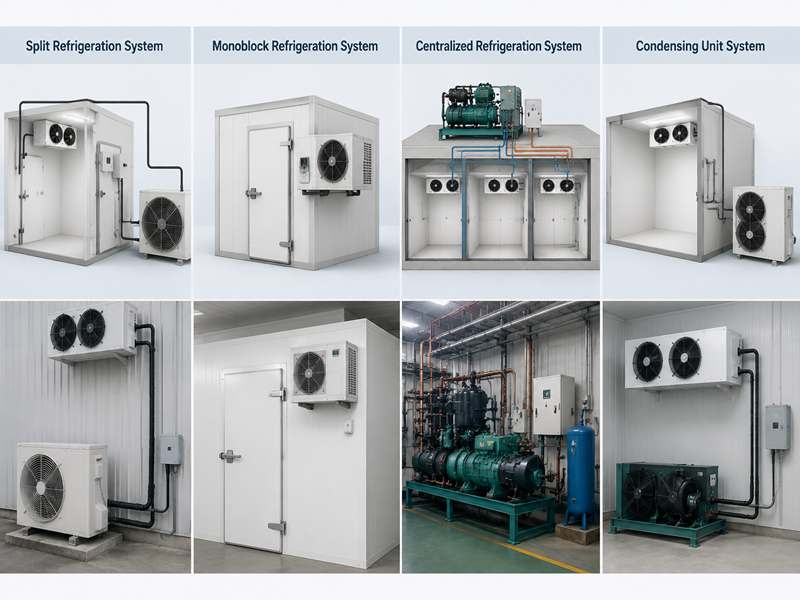
Different Refrigeration System Options for Various Applications
1. Split Refrigeration System
A split refrigeration setup keeps the indoor evaporator unit separate from the outdoor condenser unit. This structure provides installation flexibility and is commonly used for small and medium-sized chiller rooms.
Typical applications include:
- Restaurants
- Supermarkets
- Commercial kitchens
- Small food storage facilities
Main advantages include:
- Flexible Installation:
The indoor and outdoor units can be arranged according to available space and building conditions, making them suitable for customized storage layouts. - Easy Maintenance:
Separate components make inspection and servicing more convenient, which helps reduce downtime during operation. - Suitable Cooling Capacity:
It can provide stable cooling performance for daily food storage requirements without requiring complex system design.
For businesses with limited storage areas, a split system is often a practical choice because it balances installation cost, cooling performance, and operating convenience.
2. Monoblock Refrigeration System
A monoblock refrigeration system integrates the main refrigeration components into one compact unit. It is designed for applications that require simple installation and easy operation.
Common applications include:
- Small chiller rooms
- Retail food storage
- Beverage storage areas
- Small restaurants
Key advantages include:
- Quick Installation:
The integrated design reduces installation complexity and allows businesses to start operation faster. - Compact Structure:
The unit requires less installation space compared with separated systems, making it suitable for small storage rooms. - Simple Operation:
It is suitable for businesses that need a straightforward refrigeration solution with convenient daily management.
For small-scale storage needs, monoblock systems provide a convenient option without requiring complicated refrigeration planning or large installation areas.
3. Centralized Refrigeration System
A centralized refrigeration system uses a larger refrigeration unit to supply cooling for multiple storage areas. It is commonly applied in large-scale operations that require continuous refrigeration and centralized management.
Typical applications include:
- Food processing plants
- Distribution centers
- Large supermarkets
- Industrial storage facilities
Main benefits include:
- High Cooling Capacity:
The system can support larger storage spaces and higher cooling demands, making it suitable for continuous commercial operation. - Centralized Management:
Multiple refrigeration areas can be monitored and controlled from one system, improving overall operation efficiency. - Suitable for Expansion:
It can support future storage increases when business requirements grow.
For large facilities, centralized refrigeration systems provide better management efficiency and are suitable for businesses with multiple storage zones.
4. Condensing Unit System
A condensing unit system combines key refrigeration components, including the compressor and condenser, into an independent cooling unit. It is commonly chosen for projects needing flexible system layout and consistent refrigeration output.
Common applications include:
- Medium-sized chiller rooms
- Food storage facilities
- Commercial cold chain applications
Main advantages include:
- Flexible Configuration:
The system can be matched with different evaporators according to specific cooling requirements. - Stable Performance:
It provides reliable refrigeration for continuous operation and helps maintain consistent storage conditions. - Suitable for Customized Projects:
The design can be adjusted according to room size, product type, and operating conditions.
For businesses with specific refrigeration requirements, condensing unit systems offer more flexibility during project planning and equipment selection.
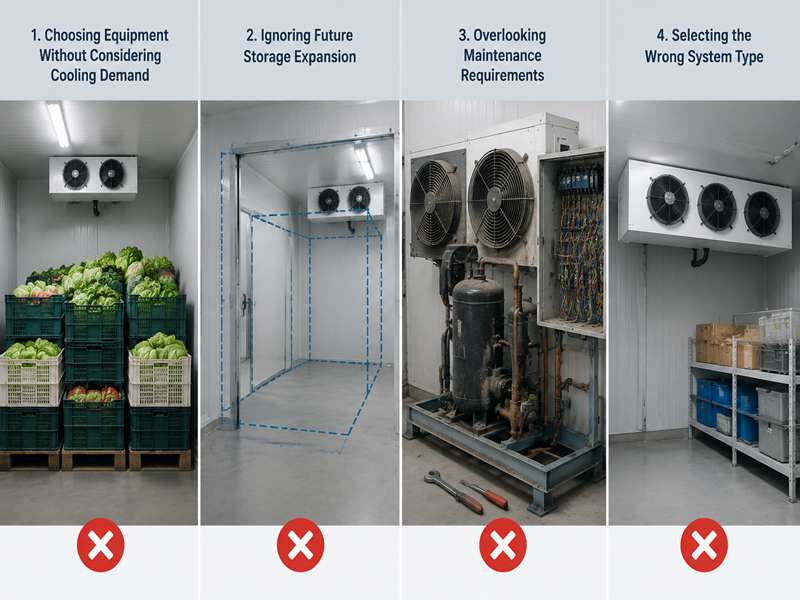
Common Mistakes When Choosing a Chiller Room Refrigeration System
Selecting refrigeration equipment only based on initial cost may create problems during long-term operation. The ideal refrigeration system needs to fit real storage conditions instead of merely prioritizing acquisition costs.
1. Choosing Equipment Without Considering Cooling Demand
The required refrigeration capacity depends on more than room size. Product quantity, loading frequency, insulation performance, and ambient temperature also influence system selection.
2. Ignoring Future Storage Expansion
Systems sized solely to meet present demands will lack adequate cooling capacity as storage needs grow. Considering future growth helps avoid unnecessary replacement costs.
3. Overlooking Maintenance Requirements
Regular maintenance is necessary to keep refrigeration systems operating efficiently. Equipment hard to access for inspection and maintenance can raise ongoing operational costs later on.
4. Selecting the Wrong System Type
Different systems have different application advantages. Choosing a system that does not match the operating environment may result in unstable cooling performance or higher energy consumption.
How to Pick a Suitable Refrigeration System for a Chiller Room?
The best refrigeration system should match the actual operating conditions of the chiller room. Companies need to weigh several key factors before reaching a final decision.
1. Assess Storage Demands
The type and quantity of stored products directly affect refrigeration needs. Meat, vegetables, dairy products, and beverages may require different cooling conditions.
2. Consider Room Size and Layout
Storage volume, available installation space, and equipment placement should be considered together. A suitable system should provide enough cooling capacity while fitting the actual site conditions.
3. Check Operating Frequency
Chiller rooms with frequent door opening or high product movement require stronger temperature recovery performance. Restaurants and supermarkets usually need systems that can handle frequent daily access.
4. Compare Long-Term Operating Costs
Besides initial spending, operators must consider power usage, maintenance intervals and equipment service life. A properly matched refrigeration system usually provides better long-term value.