
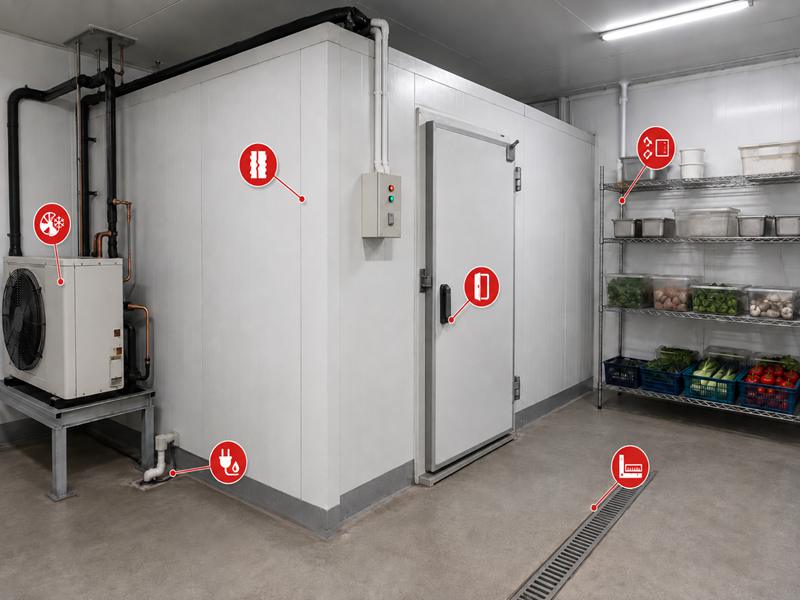
Errors occurring in chiller room installation may impair cooling capacity, energy‑saving effect and long-term operational stability. Most problems can be avoided through careful planning, suitable equipment selection, and attention to installation details.
1. Incorrect Room Size Planning
Mistake
Choosing the chiller room size only based on current storage needs is a common installation mistake. Some businesses focus on immediate requirements and ignore future inventory changes, product growth, and daily operation patterns.
For example, a small restaurant may select a compact chiller room because current ingredient storage is limited. However, when business volume increases, insufficient storage space may affect inventory management and require additional expansion costs.
Possible Impact
An unsuitable room size can create several problems during operation.
| Problem | Possible Impact |
| Room Too Small | Limited storage capacity and difficult product arrangement |
| Room Too Large | Higher construction cost and increased cooling demand |
| Poor Space Planning | Reduced storage efficiency and inconvenient access |
| No Expansion Consideration | Additional modification costs in the future |
A room that is larger than necessary requires more insulation panels, stronger refrigeration capacity, and higher installation costs. A room that is too small may reduce operating flexibility and affect daily workflow.
How to Avoid
Before installation, businesses should evaluate:
- Current Storage Requirements:
Estimate the product quantity that needs refrigeration during normal operation. - Product Turnover Frequency:
Businesses with frequent loading and unloading may require more accessible storage space. - Future Business Growth:
Consider possible increases in inventory volume or product categories. - Available Installation Area:
Ensure the selected room size matches the actual building conditions.
A suitable chiller room size should balance current demand, future expansion, and operating efficiency instead of focusing only on the lowest initial investment.
2. Poor Insulation Selection
Mistake
Selecting insulation panels only based on initial price may reduce upfront costs but create performance problems during long-term operation.
Some businesses choose thinner panels or lower-cost materials without considering storage temperature requirements and environmental conditions.
Possible Impact
Poor insulation performance allows more heat to enter the chiller room, increasing refrigeration workload and reducing temperature stability.
| Insulation Issue | Possible Impact |
| Insufficient Panel Thickness | Faster heat transfer and slower cooling recovery |
| Poor Panel Connection | Warm air leakage through gaps |
| Low-quality Insulation Material | Reduced thermal protection |
| Improper Installation | Moisture and condensation risks |
When insulation performance is insufficient, the refrigeration system needs to operate longer to maintain the required temperature. This may increase energy consumption and reduce equipment efficiency.
How to Avoid
Businesses should consider the following factors when selecting insulation:
- Suitable Panel Thickness:
Choose thickness according to room size, temperature requirements, and operating environment. - Reliable Panel Material: Various material types offer distinct thermal protection effects and wear-resisting performance.
- Professional Installation:
Proper panel connection and sealing help prevent heat leakage.
For chiller rooms operating continuously, investing in suitable insulation specifications usually provides better long-term value than reducing initial costs.
3. Wrong Refrigeration System Selection
Mistake
Selecting refrigeration equipment only based on room size or purchase price is a common mistake. The actual cooling demand depends on more factors than storage volume.
Possible Impact
An unsuitable refrigeration system may cause:
| Selection Problem | Possible Impact |
| Insufficient Cooling Capacity | Longer cooling time and unstable temperature |
| Excessive Capacity | Higher investment and unnecessary energy consumption |
| Poor System Matching | Reduced operating efficiency |
| Ignoring Usage Conditions | Difficulty maintaining required temperature |
For example, a small restaurant storing packaged food has different refrigeration requirements from a food processing facility that loads large quantities of products every day.
How to Avoid
Before selecting refrigeration equipment, businesses should evaluate:
- Storage volume
- Product types
- Product loading frequency
- Required temperature range
- Operating environment
A suitable refrigeration system should match actual application requirements rather than simply choosing the largest capacity option.
4. Improper Door Installation
Mistake
Ignoring door design and installation quality can lead to air leakage problems. Since chiller room doors are frequently used areas, poor sealing performance may directly affect cooling stability.
Possible Impact
| Door Problem | Possible Impact |
| Damaged Door Seal | Increased cold air leakage |
| Incorrect Door Type | Reduced operation efficiency |
| Poor Frame Installation | Difficulty maintaining temperature |
| Frequent Air Exchange | Higher refrigeration workload |
For supermarkets, restaurants, and commercial kitchens, doors may be opened many times every day. Frequent warm air entering the room can increase cooling demand and create condensation problems around door areas.
How to Avoid
Door selection should consider:
- Opening frequency
- Product movement requirements
- Available installation space
- Sealing performance
Suitable door solutions help reduce heat exchange and improve temperature recovery after each opening.
5. Poor Internal Layout Planning
Mistake
Installing shelves, evaporators, and storage areas without considering airflow paths can reduce cooling efficiency.
Some businesses focus only on storage capacity but ignore how product placement affects cold air circulation.
Possible Impact
| Layout Problem | Possible Impact |
| Blocked Airflow Paths | Uneven temperature distribution |
| Products Too Close to Walls | Reduced cooling efficiency |
| Poor Shelf Arrangement | Difficult product access |
| Limited Maintenance Space | Higher service difficulty |
Poor layout may create areas that cool slower than others. This can affect product storage conditions and increase the workload of the refrigeration system.
How to Avoid
A practical layout should consider:
- Keeping enough space around evaporators
- Maintaining distance between products and walls
- Planning shelf positions before installation
- Reserving maintenance access areas
A well-organized layout improves airflow distribution, storage efficiency, and daily operation convenience.
6. Ignoring Electrical and Drainage Requirements
Mistake
Electrical and drainage systems are sometimes overlooked during early planning because they are not the main refrigeration components. However, these supporting systems directly affect installation quality and future operation.
Possible Impact
| Supporting System Issue | Possible Impact |
| Insufficient Power Supply | Equipment operation problems |
| Poor Drainage Design | Water accumulation and moisture issues |
| Limited Maintenance Space | Difficult inspection and repair |
| Incorrect Connection Planning | Installation delays |
Problems with supporting systems may require additional modification after installation, increasing project costs and delaying operation.
How to Avoid
Before construction, businesses should confirm:
- Required power capacity
- Drainage routes
- Equipment connection locations
- Maintenance space requirements
Proper preparation helps ensure smoother installation and reduces unexpected changes during operation.
Installation Planning Helps Avoid Future Problems
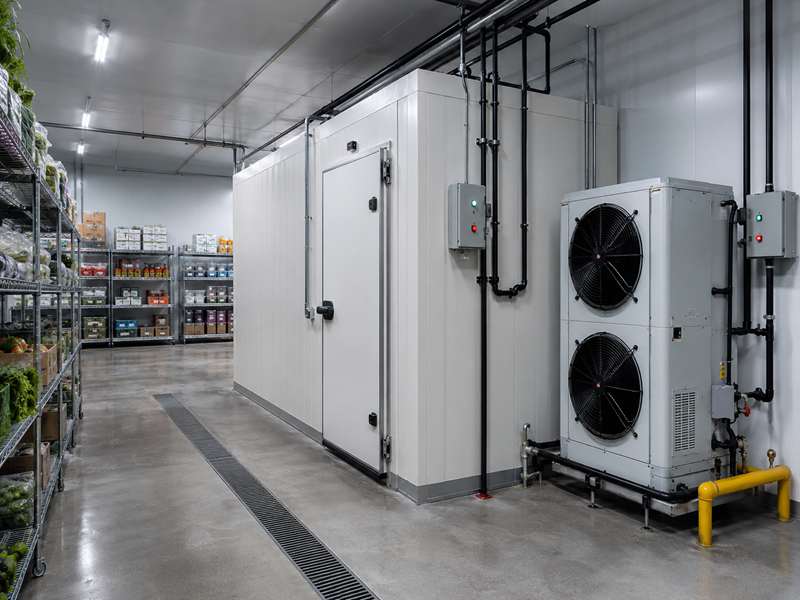
Many chiller room problems appear after operation because some details were not considered during the installation stage. Careful planning before construction helps reduce later adjustments and improves daily operating stability.
Businesses should pay attention to:
- Whether the room design matches actual storage needs
- Whether refrigeration capacity supports daily operation
- Whether insulation, doors, and supporting systems are properly installed
- Whether the layout allows convenient maintenance and future changes
Considering these details before installation helps prevent unnecessary costs and creates a more reliable storage environment.