
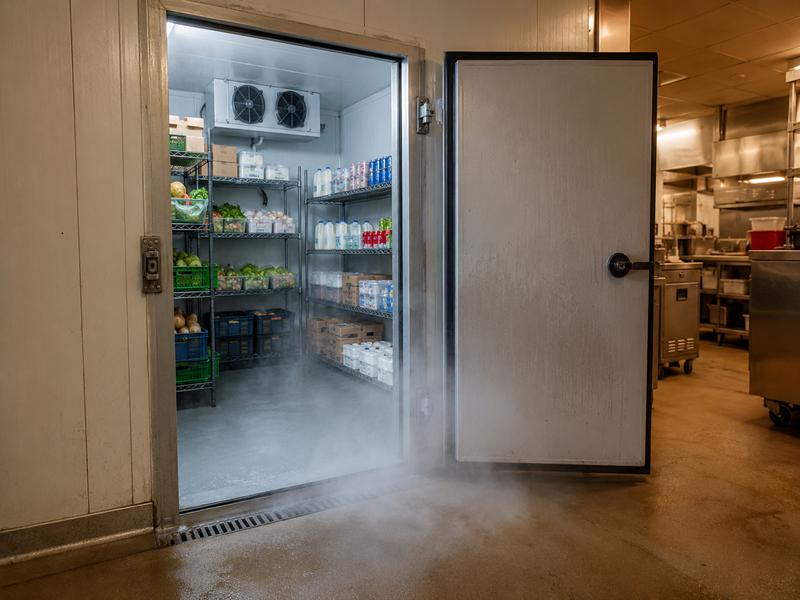
Door opening frequency directly affects chiller room energy consumption by increasing heat infiltration, cooling recovery cycles, and compressor operation. Managing access frequency helps reduce unnecessary energy loss and maintain stable storage conditions.
Why Frequent Door Opening Increases Energy Consumption?
Door opening frequency affects chiller room energy consumption mainly because each opening changes the internal cooling environment. As warm air leaks into the storage zone, the refrigeration system has to eliminate extra heat to recover the designated temperature.
The impact is not caused by a single door opening but by repeated cooling adjustments during daily operation. Frequent access creates continuous heat exchange, increases refrigeration workload, and reduces the time the system can operate under stable conditions.
1. Increased Heat Infiltration from External Air
When a chiller room door opens, cold air escapes while warmer air from outside enters the storage area. This heat exchange increases the internal heat load and requires additional cooling energy to maintain the target temperature.
The amount of heat entering the room is affected by several practical conditions:
- Access Frequency:
More frequent door opening creates more opportunities for external heat to enter the chiller room. - Opening Duration:
A longer opening time allows more warm air to replace the cold air inside the room. - Operating Environment:
The temperature and humidity difference between inside and outside can affect the amount of heat transferred.
| Heat Source Entering the Chiller Room | Effect on Refrigeration System |
| Warm Outside Air | Increases cooling load and requires additional heat removal |
| Moist Air | Increases humidity control demand and condensation risk |
| Heat from Frequent Access Areas | Creates repeated temperature disturbances |
For example, a restaurant may open the chiller room door repeatedly during food preparation and ingredient collection. Although each opening only introduces a small amount of warm air, the accumulated heat gain throughout the day increases total energy consumption.
2. More Frequent Temperature Recovery Cycles
After warm air enters the chiller room, the internal temperature changes and the refrigeration system needs to restore the preset temperature. Frequent door opening increases the number of recovery cycles required during daily operation.
The temperature recovery process mainly includes:
- Warm Air Entering the Room:
Each door opening allows external air to enter and affects the internal cooling condition. - Additional Cooling Requirement:
Extra incoming heat will demand cooling equipment to dissipate surplus thermal energy and return interior temperature to specified standards. - Repeated Recovery Operation:
Frequent door opening causes the system to repeat this process multiple times throughout the day.
When recovery cycles occur repeatedly, the refrigeration system spends more energy correcting temperature changes instead of maintaining stable operation. This situation is common in restaurants, supermarkets, and food storage facilities where products need frequent access.
3. Longer Compressor Operating Time
The compressor consumes energy when removing heat from the chiller room. As door opening frequency increases, the compressor needs to operate for longer periods to handle the additional cooling demand.
The increased operating time mainly affects:
- Daily Running Hours:
Frequent temperature recovery requires the compressor to work for longer periods each day. - Energy Consumption Pattern:
More operating time means higher electricity usage during normal operation. - Equipment Workload:
Continuous cooling demand increases the workload placed on refrigeration components.
| Compressor Operation Situation | Possible Result |
| Frequent Start and Stop | More repeated operation adjustments |
| Extended Running Periods | Higher daily electricity consumption |
| Continuous Cooling Demand | Less time for stable low-energy operation |
For businesses operating chiller rooms throughout the day, frequent door access can gradually increase refrigeration costs even when the equipment capacity is sufficient.
4. Accumulated Energy Loss During Daily Operation
The energy impact of door opening is mainly reflected through accumulation over time. A single opening may create only a small temperature change, but repeated openings throughout the day can create continuous additional cooling demand.
The accumulated effects include:
- More Heat Exchange Events:
Each opening introduces additional heat into the storage environment. - More Recovery Processes:
The refrigeration system is required to repeatedly counteract shifting temperature conditions. - Higher Long-Term Operating Costs:
Continuous cooling adjustments increase overall energy consumption.
| Business Type | Typical Door Access Situation | Energy Impact |
| Restaurant | Frequent ingredient collection during preparation | Multiple small recovery cycles throughout the day |
| Supermarket | Continuous product handling and inventory access | Higher daily cooling demand |
| Food Processing Facility | Regular loading and unloading operations | Increased refrigeration workload during production periods |
For example, a supermarket may access chiller rooms many times during stocking and inventory management. Over time, repeated temperature recovery can create noticeable energy differences compared with a storage room with limited access.
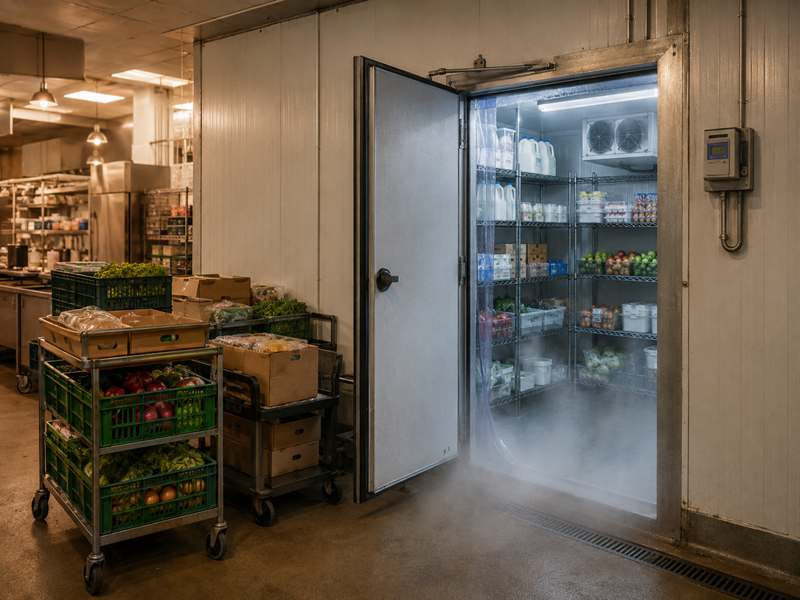
Relationship Between Door Opening Frequency and Energy Consumption
The impact of door opening frequency is not only related to the number of openings but also to how these openings affect daily refrigeration operation. Frequent access can increase the frequency of temperature adjustments and reduce the time available for stable cooling performance.
| Door Opening Situation | Operation Impact | Energy Consumption Effect |
| Short and Occasional Access | Limited temperature changes and fewer cooling adjustments | Small impact on daily energy use |
| Repeated Access During Working Hours | More frequent temperature recovery requirements | Increased refrigeration workload |
| Continuous Access for Product Handling | Continuous heat exchange and repeated cooling adjustments | Higher energy consumption over time |
The actual energy impact depends on how door usage is integrated into daily operations. For example, grouping product collection activities together can reduce repeated cooling recovery, while frequent individual access may create unnecessary energy losses.
How Door Opening Frequency Affects Different Working Environments?
Different businesses have different access patterns, which directly influence how often the refrigeration system needs to recover temperature.
| Application | Door Opening Pattern | Energy Impact |
| Restaurant | Frequent ingredient access during preparation | More repeated cooling recovery cycles |
| Supermarket | Regular product access throughout the day | Higher cooling workload |
| Food Processing Facility | Repeated loading and unloading operations | Increased refrigeration demand during working periods |
A restaurant may create many short door openings, while a food factory may have fewer but longer access periods. Both situations can increase energy consumption if the refrigeration system needs to recover temperature frequently.
Practical Considerations for Managing Door Opening Frequency
Door opening frequency should be considered during chiller room planning and daily management. A storage environment with frequent access requires better operation control to avoid unnecessary energy losses.
Businesses should evaluate:
- Expected daily door opening frequency
- Product handling procedures
- Staff operating habits
- Storage workflow
A practical operation strategy helps reduce cooling losses and allows the refrigeration system to maintain more efficient performance.