
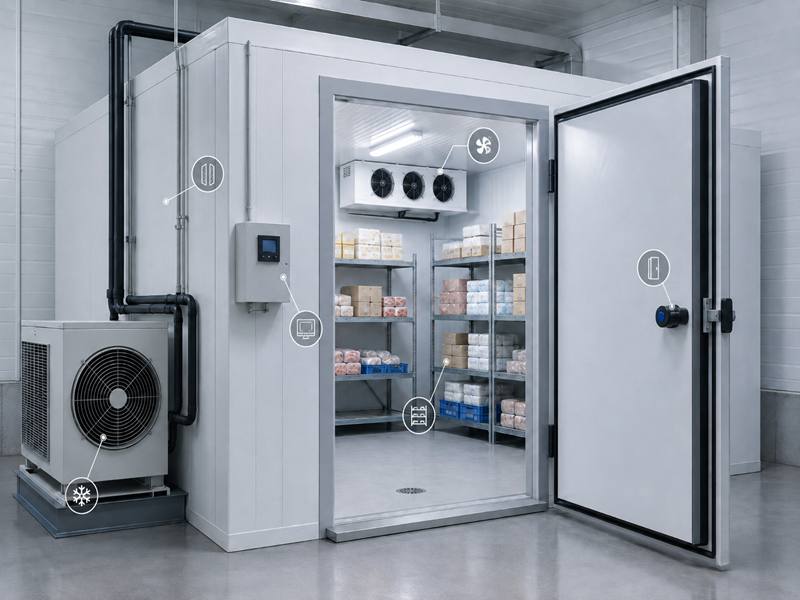
The key components of a freezer room system include insulation panels, refrigeration units, evaporators, door systems, temperature control systems, and supporting accessories. Each component contributes to temperature stability, energy efficiency, and daily operation.
Understanding the Structure of a Freezer Room System
A freezer room is a complete storage solution that combines insulation, refrigeration equipment, temperature control, and supporting accessories. These components work together to maintain the required freezing environment and protect stored products.
When purchasing a freezer room, businesses should evaluate the whole system instead of focusing on one component. A high-performance refrigeration unit may not achieve expected results if insulation, airflow design, or temperature control is not properly matched.
A complete freezer room setup includes the following key parts:
| Core Component | Primary Function |
| Insulation Panels | Reduce heat exchange and keep stable interior temperature |
| Refrigeration Unit | Removes heat and provides cooling capacity |
| Evaporator System | Distributes cold air inside the room |
| Door System | Reduces cold air loss during operation |
| Control and Monitoring System | Manages temperature and operating conditions |
Every single element contributes to how well a freezer room functions. Picking fitting components that fit actual site conditions helps raise equipment dependability and improve energy efficiency over extended service periods.
1. Insulation Panels: The Foundation of Temperature Stability
Insulation panels are the basic structure of a freezer room. They create a barrier between the low-temperature storage area and the external environment, reducing heat entering from outside.
The performance of insulation panels directly affects how easily the freezer room can maintain the target temperature. If heat enters continuously through walls, ceilings, or panel connections, the refrigeration system needs to work harder to compensate.
When selecting insulation panels, businesses should pay attention to:
- Panel Thickness:
Thicker insulation is usually used for applications requiring stronger thermal protection. - Material Performance:
Insulation materials need to offer stable thermal resistance and extended service durability. - Sealing Quality:
Proper panel connections help prevent air leakage and reduce cooling loss. - Installation Accuracy:
Even high grade panels cannot deliver ideal performance if installation gaps or sealing issues take place.
For example, a food processing facility operating in a warm environment may require stronger insulation performance than a small restaurant using a freezer room only for daily ingredient storage.
2. Refrigeration Unit: The Core Cooling Component
The refrigeration unit is the main power source of a freezer room system. It removes heat from inside the storage area and maintains the required freezing temperature.
Its performance directly affects cooling speed, energy consumption, and temperature stability. When selecting a refrigeration unit, businesses should consider freezer room size, product quantity, loading frequency, and operating conditions.
A refrigeration unit contains these major parts:
| Component | Role in System |
| Compressor | Drives refrigerant circulation and provides cooling power |
| Condenser | Releases heat removed from the freezer room |
| Evaporator | Absorbs heat and provides cooling inside the room |
| Controller | Controls temperature settings and system operation |
A common purchasing mistake is selecting a refrigeration unit only according to room size. In practice, a supermarket with frequent product access and a small restaurant with occasional storage may require completely different cooling performance.
A suitable refrigeration unit should provide enough capacity while maintaining efficient operation during daily use.
3. Evaporator and Air Distribution System: Maintaining Even Cooling
The evaporator does more than produce cold air. Its position, capacity, and airflow design determine whether different areas inside the freezer room can maintain consistent temperatures.
Poor air distribution may create uneven cooling conditions. Some areas may become colder while others experience slower temperature recovery, especially in larger freezer rooms with high storage density.
Common problems caused by unsuitable airflow design include:
- Temperature differences between storage areas
- Longer cooling recovery time after door opening
- Increased workload on the refrigeration system
The evaporator installation position should match the room layout and product arrangement. For businesses storing large quantities of frozen products, proper airflow planning helps maintain more stable storage conditions.
4. Freezer Room Door System: Reducing Cooling Loss
The door system is an important part of freezer room performance because it directly affects heat exchange during daily operation.
Warm outside air flows inside and cold internal air leaks out whenever the freezer room door gets opened. For businesses with frequent access requirements, such as supermarkets and food processing facilities, door performance can significantly influence cooling efficiency.
Commercial enterprises should consider the following points while selecting a freezer room door:
- Opening Frequency:
High-frequency access requires doors with better sealing and durability. - Sealing Performance:
Good door seals help reduce unnecessary air leakage. - Door Structure:
Different applications may require sliding doors, hinged doors, or rapid doors. - Daily Operating Conditions:
The door should match the workflow and product handling process.
Appropriate door design lowers avoidable cooling loss, and enables the refrigeration unit to hold consistent working performance.
5. Temperature Control and Monitoring System: Managing Operation Conditions
The control and monitoring system helps operators understand freezer room conditions and manage daily operation more effectively.
Instead of checking temperature manually at different times, a monitoring system provides continuous information about current conditions and helps identify abnormal changes earlier.
Important functions may include:
| Monitoring Function | Practical Value |
| Real-Time Temperature Display | Shows current storage conditions |
| Temperature Alarm | Helps detect abnormal temperature changes |
| Data Recording | Supports operation analysis and management decisions |
For businesses storing valuable frozen products, temperature monitoring provides additional protection by allowing operators to respond quickly when conditions change.
A suitable control system also helps businesses review operating patterns, such as temperature changes during loading periods or frequent door access.
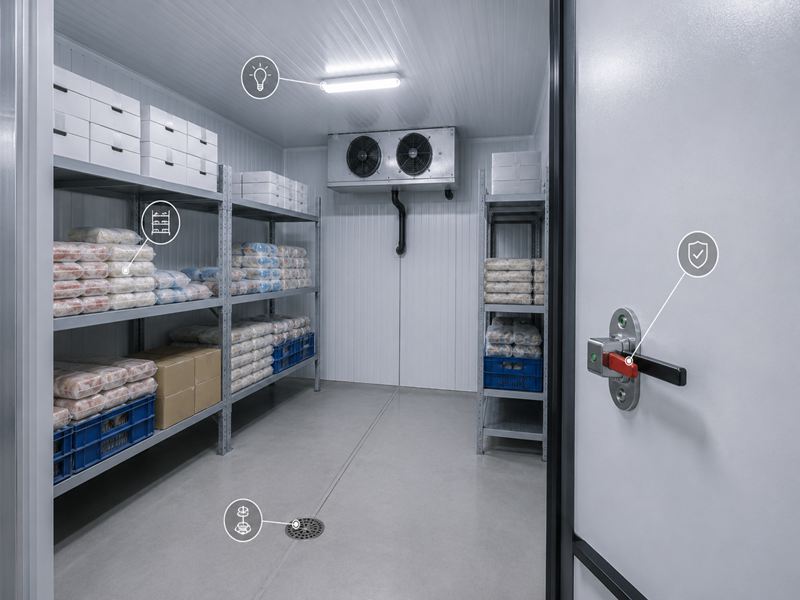
Supporting Components: Improving Daily Operation
Besides the main cooling and insulation components, several supporting parts also influence the overall user experience and operating efficiency.
These components may not directly create cooling, but they improve storage management and daily convenience.
Important supporting components include:
- Shelving System:
Helps organize products and maintain proper spacing for better airflow. - Lighting System:
Provides visibility inside the freezer room while minimizing additional heat generation. - Drainage System:
Helps manage water produced during defrosting and cleaning. - Safety Accessories:
Improves operational safety with features such as emergency release devices.
For businesses planning a freezer room, these details should be considered during the design stage rather than added only after installation.
How Components Work Together in a Freezer Room System?
A freezer room system can achieve good operation only if all components are well matched with one another. Insulation panels reduce heat entering the room, refrigeration equipment removes heat, evaporators distribute cold air, and control systems maintain stable operation.
For example, a freezer room with a powerful refrigeration unit but poor insulation may still experience high energy consumption. Similarly, good insulation without suitable cooling capacity may not maintain the required temperature.
Businesses should consider:
- Storage requirements
- Product characteristics
- Daily access frequency
- Installation environment
- Future expansion needs
A complete system approach helps ensure reliable performance and better long-term value. Instead of selecting individual components separately, businesses should evaluate how each part supports the overall freezer room operation.