
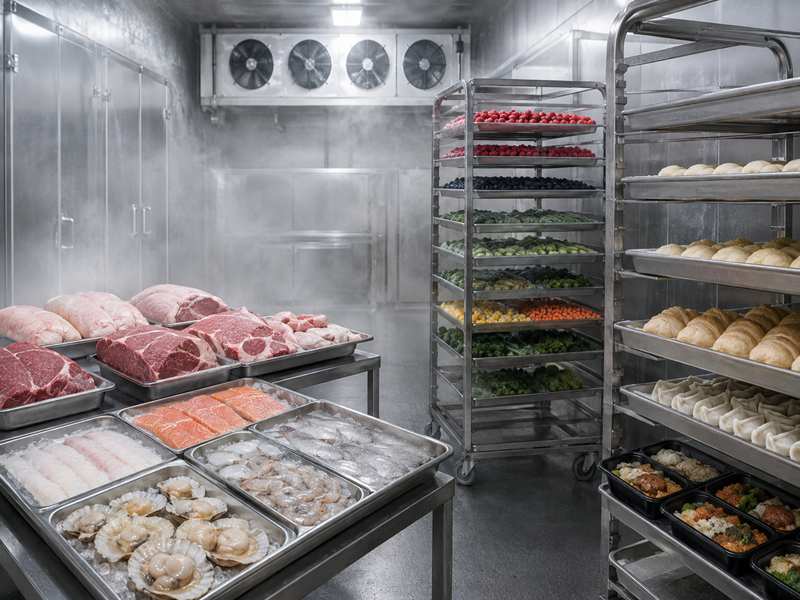
Blast freezing is mainly used for products that require faster temperature reduction and better quality protection. Compared with normal freezing, it is more suitable for products where texture, appearance, freshness, and storage value are important.
Blast Freezing vs Regular Freezing: Where the Difference Counts
The main difference between blast freezing and normal freezing is how quickly heat is removed from products. A blast freezer room is especially valuable for products where slow temperature reduction may affect texture, appearance, or customer acceptance.
| Comparison Factor | Blast Freezing | Normal Freezing |
| Freezing Speed | Rapid temperature reduction | Slower cooling process |
| Product Protection | Better for quality-sensitive products | Suitable for basic storage needs |
| Product Structure | Helps maintain texture and appearance | May cause more quality changes in sensitive products |
| Application | Premium food and quality-focused products | General frozen storage |
| Equipment Requirement | Requires dedicated blast freezing equipment | Uses conventional freezing systems |
Blast freezing is usually selected when product quality after thawing is important. Normal freezing can still be a practical option when storage is the main requirement and product characteristics are less sensitive.
Products That Commonly Require Blast Freezing
Different products have different freezing requirements. Blast freezing is mainly suitable for products where freezing speed affects texture, appearance, freshness, or final product quality.
1. Seafood Products: Protecting Texture and Freshness
Seafood is one of the product categories that commonly benefits from blast freezing. Fish, shrimp, and shellfish contain high moisture levels, making freezing speed important for maintaining texture and freshness.
Blast freezing helps seafood businesses:
- Reduce quality changes during freezing
- Maintain better texture after thawing
- Support longer storage and transportation
For seafood suppliers, rapid freezing is especially useful when fresh products need to enter the cold chain quickly after harvesting or processing.
A seafood processor receiving daily catches may choose a blast freezer room because products need to be frozen quickly after arrival to maintain consistent quality.
2. Meat Products: Maintaining Product Structure
Meat products often require careful freezing control because freezing conditions can influence texture, moisture retention, and overall product appearance.
Blast freezing is commonly used for:
- Beef cuts
- Poultry products
- Processed meat products
- Premium frozen meat
Compared with slower freezing methods, blast freezing reduces the time required for temperature reduction after processing. This helps maintain more consistent product quality during storage and distribution.
For meat suppliers serving supermarkets or restaurants, stable quality after thawing can directly influence customer satisfaction.
3. Dough and Bakery Products: Preserving Processing Quality
Bakery products, especially dough and semi-finished items, often require controlled freezing conditions to maintain their processing performance.
Blast freezing is suitable for:
- Bread dough
- Pastry products
- Frozen bakery items
- Prepared dough portions
Rapid freezing helps bakeries prepare products in advance while maintaining product structure. This is useful for businesses supplying multiple stores or managing centralized production.
For example, a bakery manufacturer can produce frozen dough in batches, quickly freeze it, and distribute products while keeping quality consistent.For bakeries with centralized production models, blast freezing also provides flexibility by allowing products to be prepared in advance and distributed according to market demand.
4. Ready-to-Eat and Prepared Foods: Supporting Production
Prepared foods usually involve multiple ingredients and production stages. After cooking or processing, products may require rapid freezing to maintain quality and support efficient distribution.
Blast freezing is commonly used for:
- Frozen meals
- Dumplings
- Ready-to-eat foods
- Convenience products
For food manufacturers, quick freezing helps stabilize finished products after production. It further helps enterprises handle inventory with higher efficiency, as finished goods can be transferred to storage areas right after production finishes.
A prepared food factory producing different products every day may benefit from blast freezing because each batch can be frozen according to its own production schedule.
5. High-Value Produce: Protecting Product Quality
Not all fruits and vegetables require blast freezing, but high-value produce may benefit from faster freezing when appearance and texture are important.
Suitable examples include:
- Berries
- Cut vegetables
- Specialty fruits
- Premium frozen produce
For these products, freezing speed can influence final appearance and customer acceptance after thawing.
A frozen fruit supplier, for example, may use blast freezing to preserve seasonal products and maintain better quality during longer storage periods.For suppliers targeting premium markets, maintaining product appearance after thawing can be an important factor when choosing between blast freezing and standard freezing methods.
Products That Usually Do Not Require Blast Freezing
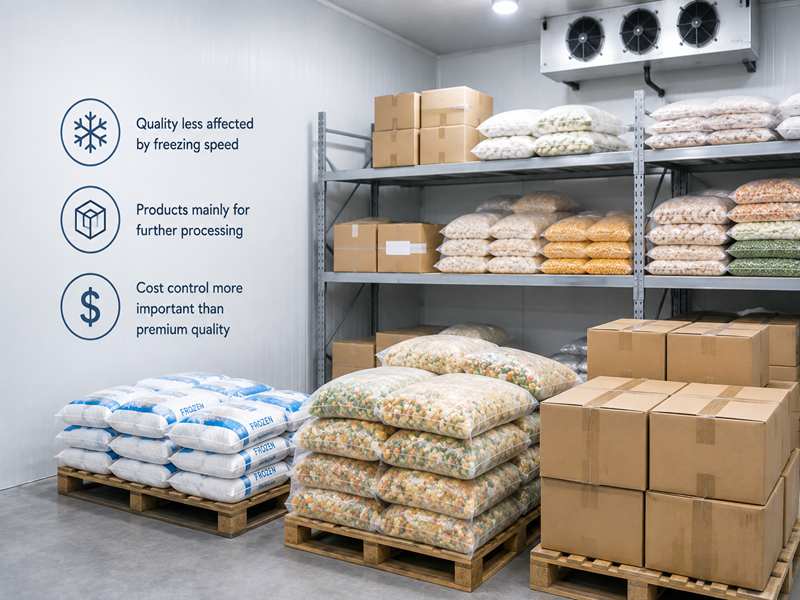
Blast freezing provides quality advantages, but it is not necessary for every frozen product. Some products can meet storage requirements through normal freezing methods.
Normal freezing may be sufficient when:
- Product quality is less affected by freezing speed
- Products are mainly used for further processing
- Storage cost control is more important than premium quality
Examples include:
- Standard packaged ingredients
- Bulk frozen materials
- Lower-value products with simple storage requirements
Businesses should evaluate whether the additional investment in blast freezing creates enough value based on product type and customer expectations.
How to Decide If Your Products Need Blast Freezing?
This selection ought to take product features, operational demands and anticipated storage outcomes into full consideration.
| Evaluation Factor | Questions to Consider |
| Product Type | Does freezing speed affect texture or appearance? |
| Product Value | Is maintaining premium quality important? |
| Storage Period | Will products be stored or transported for a long time? |
| Production Volume | How much product needs freezing daily? |
| Customer Requirements | Do buyers expect consistent frozen quality? |
For example, a seafood exporter usually places more importance on freezing performance because product quality directly affects market value. A business storing standard ingredients may focus more on storage capacity and operating cost.
Finding Your Ideal Blast Freezing Solution
After deciding that blast freezing is suitable, businesses should also select equipment based on actual operation requirements.
Important factors include:
- Required freezing capacity
- Product size and packaging method
- Available installation space
- Daily production schedule
- Future business growth
A small food business may need a compact blast freezer solution for daily production needs. A large food processing facility may require a higher-capacity system to support continuous production and distribution.
Selecting the right blast freezing solution helps businesses avoid unnecessary investment while maintaining reliable freezing performance.
Businesses should also consider whether the equipment can match future production changes. Selecting a system with suitable capacity and operating flexibility helps avoid frequent upgrades as storage or production requirements increase.