
For a U.S. cold-room purchase in 2026, confirm the regulatory category of the proposed refrigeration system before choosing a refrigerant. A retail-food remote condensing system and a cold-storage warehouse system do not necessarily follow the same limit. Ask the supplier and U.S. installation team to document the applicable category, refrigerant, charge, configuration and installation date together.
This purchasing checklist was reviewed on September 20, 2026. It focuses on questions that help a buyer obtain a properly documented proposal; it does not certify a particular LINBLE model or replace the applicable regulatory text and local project review. Requirements should be rechecked when the equipment is ordered and again before installation.
What Changed In 2026?
EPA lists a May 2026 final reconsideration rule covering several Technology Transitions subsectors, including retail-food refrigeration and cold-storage warehouses. Its regulatory-actions page separates the final rule from the earlier proposal. A quotation prepared from an older summary therefore needs a current review.
The EPA sector table, updated August 28, 2026, gives the following selected system requirements. This is a limited orientation table, not a complete compliance determination.
| System category | Interim GWP limit and date | Later limit |
| Retail food: remote condensing units | 1,400 from July 27, 2026 | 150 or 300 from January 1, 2032 |
| Cold storage warehouses | 700 from July 27, 2026 | 150 or 300 from January 1, 2032 |
| Retail food: supermarket systems | 1,400 from January 1, 2027 | 150 or 300 from January 1, 2032 |
The later limits depend on charge size and system configuration. EPA distinguishes new field-assembled installations from components used to repair existing systems and directs readers to 40 CFR Part 84, Subpart B for full requirements. The rules should not be interpreted as a blanket instruction to replace every operating cold room.
Describe The Application Before Asking For A Refrigerant
Begin your enquiry with the facility’s actual purpose. Explain what is stored, whether the room serves retail food activity, how it connects to other equipment and whether the project involves a new installation or work on an existing system. A short description such as “commercial freezer” leaves too much room for different assumptions.
Attach a layout or schematic showing the proposed room and the major refrigeration components. Identify any shared equipment. Ask the supplier to state the category it has used for its proposal and have the U.S. project team verify that classification.
LINBLE supplies cold room solutions, but the general product name does not establish the regulatory category of your installation. A project-specific equipment schedule is the useful starting point for that discussion.
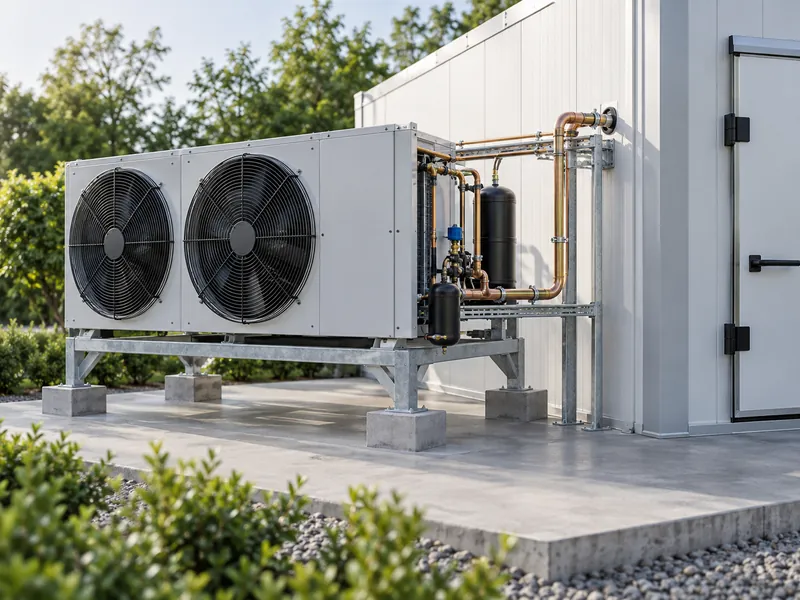
Request A Complete Equipment Schedule
Ask for the exact model identification of the compressor or condensing unit, evaporator and relevant controls. The schedule should identify the proposed refrigerant and the design information needed by the installer. Avoid approving a quotation that leaves the refrigerant as an unspecified later choice.
Record who is responsible for the final charge determination and the assembled system selection. If components will be supplied by different parties, require a coordinated review. Separate items can each have legitimate documentation without proving that the proposed combination is suitable.
The equipment schedule also helps commercial comparisons. When two quotations use different refrigerants or configurations, compare the full installation and support requirements. A headline equipment price alone will not explain the difference.
Separate New Installation From Service Work
A new room, a relocated package and a component replacement present different factual questions. Describe exactly what will remain and what will change. Do not rely on a salesperson’s informal use of “repair,” “retrofit” or “replacement” as the final classification.
For an existing installation, prepare an equipment history and a diagram of the planned work. Ask the contractor to identify the basis for treating the work under the relevant requirements. If the scope changes during diagnosis or procurement, have that assessment revisited before additional equipment is ordered.
This is particularly important when a proposal retains some parts and replaces others. Keeping a pipe run or room enclosure does not, by itself, answer every regulatory question. Obtain a written project-specific explanation rather than attempting to infer the answer from a single retained component.
Put The Project Dates On One Page
Build a timeline showing order, manufacture or import where relevant, shipment, site readiness and intended installation. Ask the reviewer to identify which dates matter for the applicable category. Avoid substituting a deposit date or delivery date for a different event named in a rule.
Keep dated versions of the quotation and equipment schedule. If the installation slips, check whether the original assessment remains valid. This is a procurement control, just as you would recheck a delivery commitment or an expiring quotation.
For long-lead projects, assign a person to the final review rather than leaving it as an unowned note. The buyer, supplier and installer should know who confirms that the ordered equipment still matches the intended installation. Record the result before dispatch where possible.
Do Not Use GWP As A Complete Equipment Specification
A refrigerant’s environmental classification is one input, not the complete design brief. Ask the supplier to confirm the selected equipment’s suitability for the refrigerant and operating duty. Also request the installation and safety documentation applicable to the proposed system.
Keep questions about refrigerant choice separate from unsupported performance promises. A lower number in one environmental metric does not establish the cooling capacity or annual electricity use of a particular installation. Those claims need their own selection data and assumptions.
For a replacement project, do not assume that a refrigerant with a different name can simply be charged into existing equipment. Require a supported proposal covering the intended components and installation. The same discipline applies when discussing LINBLE condensing units for a U.S. project.
Ask What The U.S. Installer Needs Before Delivery
Send the proposed equipment documents to the installation team while changes are still possible. Ask what information they need for local review, installation planning and acceptance. Resolve missing documents before the equipment is on site.
Have the team identify the applicable equipment listings, installation instructions and site-specific requirements. Their review should address the actual proposed configuration. Do not treat a generic brochure, a refrigerant safety data sheet or a component approval as a substitute for the complete project documentation.
Put questions into a short issue register. Each entry should name the document needed, the party responsible and the date for resolution. Close the issue only when the relevant reviewer has accepted the response.
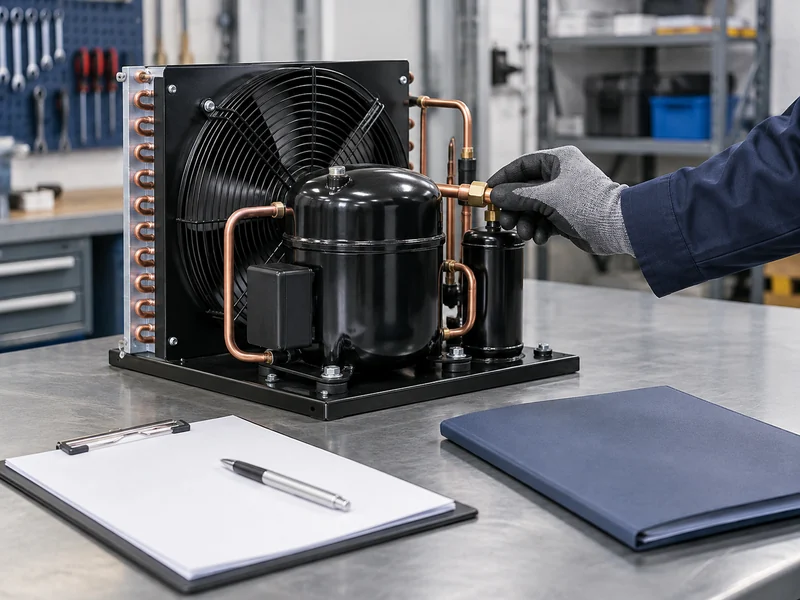
Compare Quotations Using A Compliance-Document Checklist
| Requested item | What the buyer should receive |
| Application description | Facility use, room duty and a system diagram |
| Classification basis | Identified regulatory category and the reviewing party |
| Equipment schedule | Model numbers, refrigerant, configuration and relevant design data |
| Date review | Applicable project milestones and current rule reference |
| Installation package | Required instructions and documentation accepted by the local team |
| Handover package | As-installed equipment record, labels and commissioning information |
This checklist is a proposed purchasing workflow. It is not a list of statutory forms, and it should be adapted to the project. Its purpose is to prevent important assumptions from disappearing between the sales quotation, equipment delivery and installation.
Where an item is unresolved, keep it visible in the comparison. A quote with a complete documentation package and a quote with unanswered classification questions are not equivalent offers. Ask for the missing information before deciding which price is better.
Think Beyond The Installation Deadline
Ask who will service the proposed system and what support is available in the intended location. Discuss refrigerant availability, replacement components and technician familiarity as practical planning questions. Obtain current local information rather than assuming that support in one region will be available everywhere.
Include service access and documentation in the design review. A well-labelled system with an accurate equipment record is easier to hand over between contractors. Keep updates to the installed configuration with the original documents.
If you are comparing repair with renewal, evaluate that decision separately from any assumption that a rule requires immediate replacement. Our guide to upgrading an existing cold room can help structure the wider equipment review, while current official requirements remain the basis for the regulatory assessment.
Three Purchasing Situations That Need Different Questions
A New Retail-Food Cold Room
Describe the retail operation and the proposed refrigeration arrangement. Ask the project team to identify the applicable system category and installation milestone. Require the quotation to name the refrigerant and the exact equipment being supplied.
A Warehouse Expansion
Provide a schematic showing the existing and proposed equipment. Ask whether the expansion changes the relevant configuration or classification and who will make that determination. Avoid assuming that an existing facility’s historical equipment choice automatically applies to the new work.
A Failed Component In An Operating Room
Document the failure and the intended repair scope. Ask the contractor to assess the work against the requirements that apply to that situation. Keep the service decision, equipment compatibility review and any future replacement plan clearly recorded.
Keep The Engineering Brief Complete
Regulatory questions should not displace the normal load and equipment review. Supply the room dimensions, target temperature, daily product load, arrival temperature, door use and site conditions. These remain necessary for a useful proposal.
Our article on choosing a condensing unit provides related selection questions. For the enclosure and assembly stage, also review common chiller-room installation mistakes so responsibilities are coordinated across the project.
Before Approving The Order
Confirm that the quotation, equipment schedule and installation review refer to the same design revision. Check that open questions have named owners and that any conditions affecting shipment or installation are written into the project record. Retain the dated official references used for the assessment.
Send LINBLE your U.S. project location, facility use, operating duty, proposed installation date and local review requirements when requesting a quotation. Ask for a documented equipment proposal that your U.S. installation team can assess before purchase. That creates a clearer path from refrigerant selection to an installation that has been reviewed for its actual application.