
Frozen yogurt keeps a finer texture when its storage history stays steady: the right condition for the particular product, little unnecessary movement between cold and warm spaces, and packaging that remains closed and sound. For a LINBLE project, the useful starting point is therefore a stock-and-handling brief, including whether the room holds finished tubs, frozen soft-serve mix or chilled liquid mix. Those are different jobs, even when the purchase order calls all three “frozen yogurt.”
A room can be cold enough on average and still be awkward to operate. If staff must shift six cartons to reach one flavour, the layout itself creates repeated exposure; adding refrigeration capacity does not remove that extra handling.
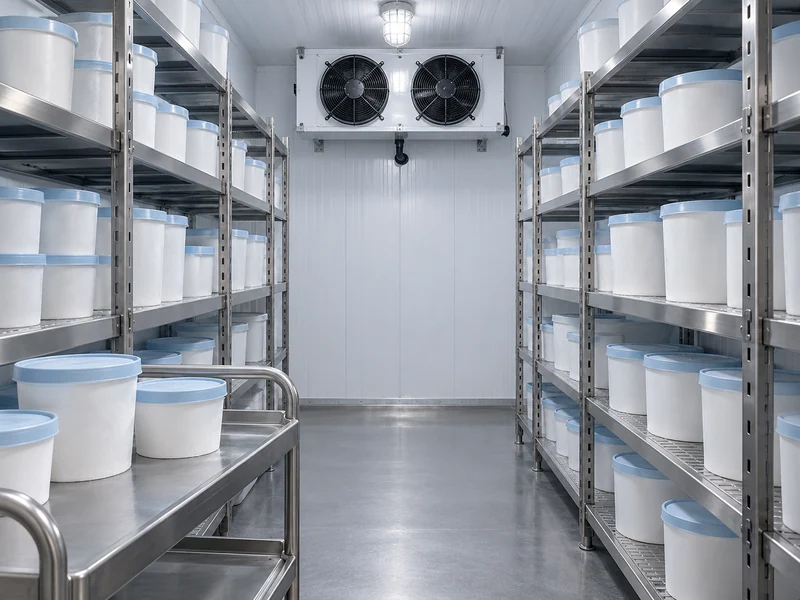
Which Frozen Yogurt Product Will the Room Actually Hold?
Separate finished frozen desserts from ingredients awaiting dispensing. A hard-frozen retail tub needs its specified frozen-storage conditions, while a liquid mix may require refrigeration and a frozen mix may need a controlled thawing step before use.
The GCCF guide to yogurt and frozen yogurt distinguishes hard-frozen products from soft-serve mixes and links texture stability to formulation and temperature history. Its storage examples provide context, rather than a shelf-life promise for every recipe.
Obtain the supplier’s storage instruction for each stock line before choosing the room duty. Record the condition at delivery, intended holding period and onward destination, so the room specification follows the product through a complete operating cycle.
- Finished tubs: document the required holding range and whether they leave as complete cartons or individual tubs.
- Frozen mix: identify where approved thawing happens and how thawed stock is identified.
- Chilled mix: keep its receiving, use-by and opening instructions separate from frozen finished stock.
- Returned stock: provide a defined hold location and a release decision based on its recorded history.
Why Can a Tub Become Icy Without Looking Melted?
Visible collapse is a late and rather crude indicator. A tub may experience enough warming to change its internal ice structure, then feel hard again after returning to storage.
The operational consequence is straightforward: evaluate the journey, not just the condition when somebody complains. Ask which batch arrived, where it waited, how often it was picked and whether the problem follows a particular shelf or delivery route.
Our article on ice cream heat shock explains the related texture mechanism. In a frozen yogurt investigation, keep the formulation and packaging in view rather than assuming two desserts respond identically.
Does a Lower Setpoint Repair Damaged Texture?
It cannot be relied on to rebuild the original structure. Before changing a controller setting, determine whether the stock was supplied in good condition and whether the existing room met the agreed duty.
Lowering the target can also change the refrigeration task and the way staff handle the tubs. Make any change through the approved product and equipment review, with a clear reason and a method for checking the result.
How Should a LINBLE Storage Brief Protect the Busiest Flavours?
Give frequently picked flavours direct access and put reserve stock behind a deliberate replenishment routine. This is a planning recommendation: the objective is fewer interruptions to neighbouring cartons, rather than simply the largest possible number of tubs inside the enclosure.
LINBLE’s ice cream cold room solution is a useful starting point for discussing a frozen dessert store. Supply carton dimensions, peak quantities and the expected picking pattern alongside the product temperature instruction.
For example, a dessert wholesaler holding full cartons and a restaurant removing individual tubs may need the same stock volume but different shelf access. Treat that as a layout question before turning it into a request for a larger compressor.
| Operating Pattern | Layout Choice to Examine | Texture-Related Reason |
| Several small orders per shift | Direct-access positions for active flavours | Reduces repeated movement of unopened reserve stock |
| Large delivery before service | Allocated receiving spaces prepared in advance | Avoids waiting while staff reorganize the room |
| Seasonal flavours held longer | Visible batch separation and a planned review date | Makes ageing stock easier to identify before dispatch |
| Mixed pack sizes | Shelf levels matched to actual containers | Avoids unstable stacking and inaccessible part cartons |
Where Should Part Cartons Go?
A part carton needs a home as soon as it exists. Without one, it tends to migrate to the doorway, the floor or the first free shelf, where nobody is sure whether it is working stock or an uncertain return.
Assign positions by flavour and batch, with a simple replenishment trigger. Count usable positions after allowing access and circulation; an empty-looking gap behind the stock may be serving an essential cooling function.
What Should the Evaporator and Shelves Do Together?
The evaporator arrangement and the loading plan should be reviewed on the same drawing. A clear aisle on a sales rendering is not enough if the real cartons later block the return path or sit inside the service zone.
Ask LINBLE to show the proposed cooler position, discharge direction, required clearances and areas excluded from storage. Keep the contractor’s specified gaps in the loading rules rather than replacing them with a generic spacing number found online.
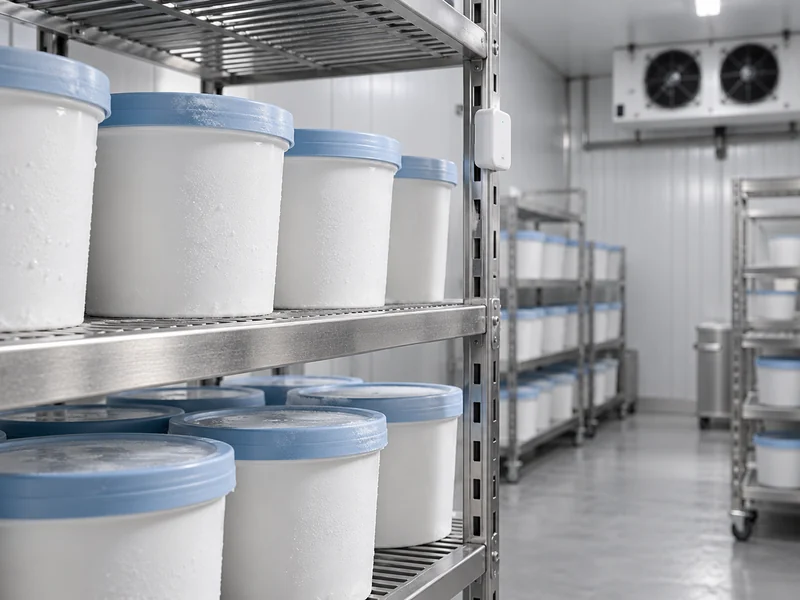
Do not aim for a strong cold jet directly at every tub. The design task is an appropriate environment across the approved stock positions, with access to the evaporator and drain when service is required.
What Does Temperature Mapping Add?
A loaded-room study can test whether the intended shelf positions behave as expected during normal work. Include the busy picking period and relevant defrost events, with the loading pattern documented.
LINBLE’s guide to cold room temperature mapping describes how to distinguish the control reading from conditions elsewhere. For this application, compare door-side working stock with reserve positions and identify what each sensor is actually measuring.
An air logger and a product measurement respond differently. Keep those records separate, and let the responsible product specialist define how excursions will be assessed.
How Much Does Packaging Matter Inside a Cold Room?
Packaging remains part of the protection system after delivery. Inspect lid fit, seals and carton damage before blaming a dry surface or frost inside a tub on the refrigeration plant.
A practical receiving check records a few meaningful observations instead of opening saleable stock unnecessarily. Damaged containers, uncertain exposure and broken batch identification should go through the site’s hold-and-assess procedure.
For the moisture-loss side of the investigation, see freezer burn in cold storage. Surface drying and coarse texture may appear together, but they do not justify assuming one cause or one corrective action.
Should Operators Set Room Humidity Around a Single Published Figure?
Not without checking the product and package. For sealed frozen yogurt, the manufacturer’s packaging specification and storage instruction are more useful than borrowing a humidity target from an unrelated frozen food.
Explain any unpackaged handling or exposed product to the designer. A closed-tub reserve store and an area where containers are routinely opened should not quietly become the same design brief.
What Should Be Demonstrated Before Handover?
Request a demonstration of the agreed storage duty under representative use. That means relevant stock positions, normal door activity and the installed defrost sequence, with acceptance criteria agreed before the measurements begin.
When reviewing a LINBLE freezer room, ask for the operating limits to be translated into everyday instructions: where stock may stand, how high it may be loaded and who responds when a temperature alarm persists. A usable handover record should survive a change of shift.
- Confirm the product list and required conditions against the approved design.
- Mark the approved storage boundary and the evaporator service area.
- Record the monitoring locations and the reason for choosing them.
- Walk through receiving, picking, returns and an abnormal-temperature response.
- Keep the final rack arrangement with the operating and maintenance information.
Bring the actual tub and carton sizes to the project discussion. A frozen yogurt room earns its space when staff can find the right batch, move it once and keep the rest of the stock undisturbed.