
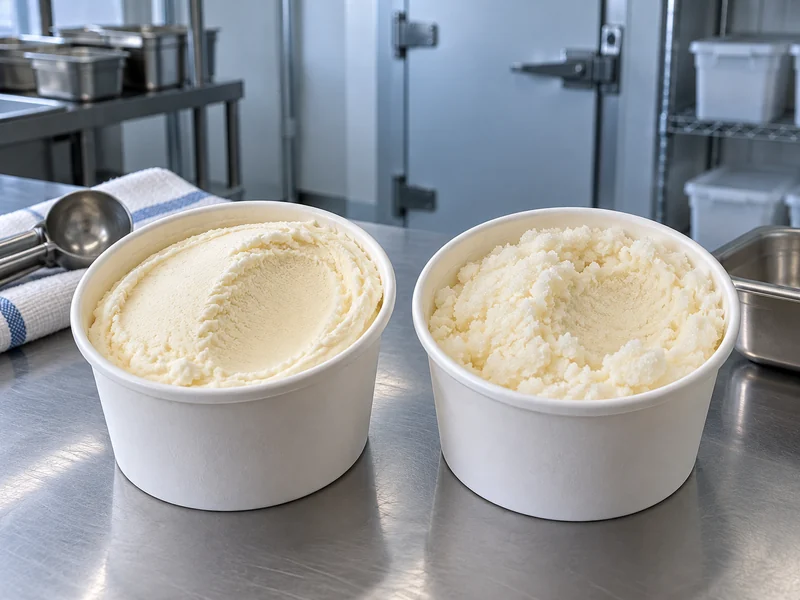
Ice cream heat shock is texture damage associated with temperature fluctuations during frozen storage and handling. Ice crystals can grow as the product warms and cools, leaving a coarse or icy mouthfeel even when the tub is frozen again. Prevention depends on protecting the product throughout its journey, rather than relying on one reassuring freezer reading.
For distributors and food-service operators, the practical question is where a tub experiences avoidable warming. An orderly storage room helps, but receiving, order picking, temporary staging, and returns can undo that protection before anyone notices a change in appearance.
Why Can Frozen Ice Cream Feel Icy?
A frozen product can have different internal structures. Ice cream begins with a carefully developed combination of ice crystals, air, fat, and an unfrozen phase; feeling hard does not prove that this structure has remained unchanged.
The International Institute of Refrigeration’s summary of heat shock in ice cream connects fluctuating storage temperatures with larger crystals and coarse texture. This is a quality mechanism, not a claim that every brief rise in room-air temperature causes the same amount of damage.
The distinction matters when investigating a complaint. A tub that has returned to its normal storage temperature may look acceptable from outside, while the eating texture reveals changes accumulated earlier in distribution.
Is Heat Shock the Same as Freezer Burn?
No: heat shock concerns temperature-related structural change, while freezer burn involves surface moisture loss. They may occur in the same supply chain, but the observations and corrective actions are not identical.
Our explanation of freezer burn in cold storage covers the packaging and exposure side of moisture loss. When investigating ice cream, record whether the complaint is coarse texture throughout, a dried surface, damaged packaging, or a combination.
What Does Recrystallization Tell Us About Temperature History?
Temperature history matters because returning the product to a colder environment does not necessarily restore its original crystal structure. Repeated warm-and-cold exposure can therefore have consequences that are not captured by the temperature measured at the end of the route.
The University of Tennessee describes research into ice recrystallization as an effort to understand and restrict crystal growth associated with freezing-temperature fluctuations. The operational implication is to reduce unnecessary excursions, not to assume that extra cooling afterwards erases them.
Can One Temperature Limit Describe Every Ice Cream?
A storage specification should come from the product manufacturer and the applicable operating requirements. Formulation, package size, distribution duration, and whether the product is being held or served all affect the context.
Do not replace the specified storage condition with a convenient serving temperature. Likewise, a rule written for one frozen dessert should not automatically be applied to every product that shares its shelf.
When planning an ice cream cold room, describe the stock and handling pattern as well as the target environment. The daily movement of small orders can create a different operating task from infrequent movement of complete pallets.
Where Can a Protected Tub Become Exposed?
Follow the tub through the points where people must make decisions. The examples below are illustrative workflows, not measured LINBLE customer results, and are intended to make otherwise invisible waiting time easier to identify.
Scenario One: What Happens During a Delayed Delivery?
A delivery reaches the receiving area before the allocated storage space is ready. Staff leave cartons near the door while rearranging older stock, and the shipment waits even though the freezer itself is operating normally.
The useful improvement is to reserve the destination before unloading begins. Assign a person to receive the batch and resolve paperwork without leaving the product waiting for an unrelated administrative step.
If handling conditions depart from the product procedure, record the event and follow the established hold-and-assess process. Quietly returning the cartons to cold storage removes neither the uncertainty nor the need for a disposition decision.
Scenario Two: Why Can Picking Create Repeated Exposure?
A worker removes several cartons to reach a flavour at the back, then returns the unwanted cartons after completing another order. The same outer cartons may repeat that journey many times during a busy shift.
Place frequently requested lines where they can be reached directly. Prepare the order sequence before opening the door, and use a defined route for partial cartons so that a temporary staging location does not become an unofficial storage area.
Our guide to arranging products inside a freezer room explains the circulation side of layout. For ice cream, combine that requirement with access that reduces unnecessary movement of neighbouring stock.
Scenario Three: What Should Happen to Returned Stock?
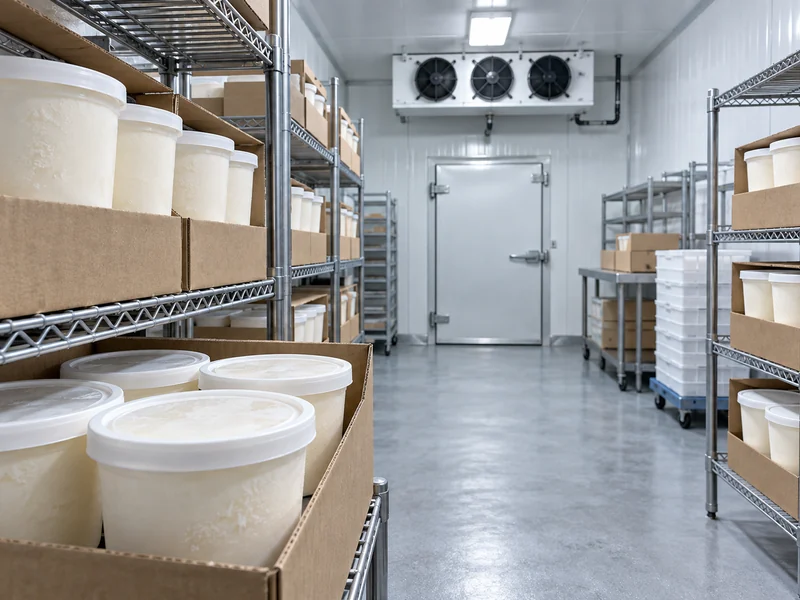
A sealed carton returns from a cancelled dispatch. Its packaging looks undamaged, but staff do not know whether it stayed within the approved conditions while away from the store.
A clearly marked hold location and a responsible reviewer are more useful than judging the carton by touch. Release should depend on the documented history and product procedure, not simply on whether the contents have become hard again.
How Should Operators Read a Temperature Excursion?
Start by identifying what was measured. A room-air sensor, a probe between packages, and a validated product measurement answer different questions and respond at different speeds.
A short air-temperature rise during an operating event does not establish the temperature reached by every tub. Conversely, a satisfactory air reading does not prove that a recently returned carton has already reached its required condition.
Which Records Make the Trend Useful?
Record events alongside the temperature trace so that the trace can be interpreted. A graph with no information about stock movement encourages explanations that may sound plausible but cannot be checked.
- Note receiving and dispatch times for the affected batch.
- Identify the location and purpose of each temperature sensor.
- Record unusual delays, returns, and prolonged door openings.
- Keep product identity and batch information with any quality complaint.
When differences seem tied to shelf position, cold room temperature mapping can describe the environment around the load. It should support the investigation rather than be presented as a substitute for the product’s own history.
What Can the Storage Room Control?
The storage room provides the surrounding conditions needed to hold the stock. A commercial freezer room must work with an organized loading pattern, unobstructed circulation, maintained equipment, and a realistic receiving routine.
Separate the normal storage function from any process intended to cool warmer product. Asking the holding room to recover repeatedly exposed cartons can hide a handling problem behind a refrigeration complaint.
Should Staff Change the Setpoint After Every Complaint?
No: first establish whether the specified conditions were met and where the affected stock travelled. Changing the target without understanding the event can create inconsistent practice while leaving the actual delay or transfer problem untouched.
Keep control changes within the approved operating procedure and involve the responsible refrigeration specialist when equipment performance is in question. A texture complaint alone does not identify a faulty component.
How Can a Team Reduce Heat Shock Without Complicating Every Order?
Choose one recurring transfer problem and make its correct handling easy to repeat. Examples include preparing empty shelf space before receiving, picking directly into the approved dispatch arrangement, or assigning one clearly identified location for uncertain returns.
Review whether the change reduces unnecessary waiting and repeated movement, while maintaining product records. Compare similar batches and routes before attributing a quality improvement to the room or to a new routine.
The aim is a continuous sequence of suitable conditions from arrival to release. Stable storage, purposeful picking, and documented handovers protect the texture more effectively than discovering an avoidable warming event only after the product reaches the customer.