
Frozen berries, peas and corn need a storage plan that protects their frozen condition through receiving, holding and picking. For a LINBLE project, five decisions deserve particular attention: the incoming product state, usable storage positions, temperature stability, packaging protection and handling at the door. A cold room sized only from total tonnes can miss the small daily operations that damage an otherwise sound frozen product.
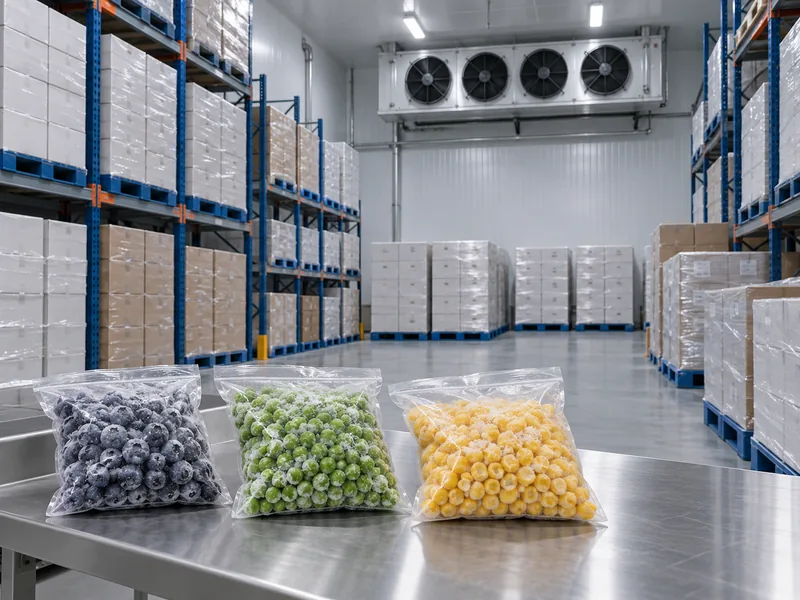
1. Are You Storing Frozen Produce or Freezing a New Batch?
Confirm the incoming product condition before calculating the refrigeration duty. Already frozen cartons arriving from a processing line require a different duty from fresh berries or warm, blanched vegetables awaiting freezing. A storage room should not quietly inherit an uncalculated production-freezing task.
LINBLE’s fruit and vegetable cold room options distinguish frozen storage from precooling and chilled holding. Keep that distinction on the enquiry sheet. State the product temperature at receipt and whether the supplier’s freezing process is complete.
Also identify the product form. Individually frozen peas, loose frozen corn kernels, whole berries and solid fruit blocks create different handling and packing requirements. “Frozen fruit and vegetables” is a useful purchasing category, but it is too broad to define the room’s operating duty.
At receiving, inspect the delivery against the site’s acceptance procedure: product and pack condition, temperature evidence, traceability and any sign of leakage or unusual clumping. Clumps can arise for several reasons, including the original process and physical compression; they are not a precise record of a temperature excursion. Investigate rather than guessing from appearance alone.
Where Does Upstream Processing Still Matter?
The store preserves the condition delivered to it; it cannot repair poor preparation or freezing. For peas and corn, confirm that the processor has applied the appropriate product-specific preparation and blanching process. For berries, review damage, grading and the intended frozen product form.
The University of Georgia’s vegetable freezing guidance explains why starting quality, blanching and moisture-resistant packaging matter. It is a household preservation resource, so its batch instructions should not be copied into an industrial line specification. The underlying distinction remains useful: preparation, freezing and storage are separate control steps.
2. How Many Usable Positions Are Needed at the Busiest Moment?
Calculate positions from the actual cartons, pallets and picking pattern. Include the overlap between a new delivery and the previous lot, stock awaiting release and any retained samples or damaged packs. The highest inventory may occur shortly after receiving rather than at the end of the working day.
Record pallet dimensions, loaded height, weight and whether cases overhang. Then draw the storage arrangement with the specified clearances for airflow, handling and service. Space occupied by the evaporator or a turning trolley is not an available stock position.
For mixed inventory, plan access to each product and lot without repeatedly moving unrelated pallets into the doorway. A small stock of fast-moving peas may need an accessible picking position even when berries dominate the tonnage. First-expiring stock should be physically retrievable without dismantling a dense block of newer cartons.
| Product Form | Storage Question | Layout Consequence |
| Cartons of Frozen Berries | Will complete pallets or individual cases be picked? | Provide access appropriate to the picking unit |
| Bagged Peas and Corn | How will open outer cases and partial pallets be managed? | Allocate protected picking positions |
| Fruit Blocks or Bulk Packs | What are the handling weight and downstream use? | Confirm load support and transfer equipment |
| Mixed Seasonal Lots | Which lots must remain independently accessible? | Reserve identifiable positions and stock records |
LINBLE’s article on product arrangement inside freezer rooms provides useful context for this drawing. Apply the principles to the actual handling system. Avoid making a storage plan that works only when every pallet has exactly the same height.
3. Will Product Temperature Stay Stable Through Daily Operation?
Choose the storage condition from the product specification and intended distribution chain, then allow for realistic operating variation. A commonly used frozen-food reference is around −18°C or colder, but the room control setting and product acceptance limit are different decisions. The designer needs the permitted product conditions, operating schedule and relevant quality requirements.
Repeated warming and cooling can change frozen texture and encourage ice redistribution. Penn State’s vegetable freezing guidance connects rapid freezing and steady low-temperature storage with smaller ice crystals and better texture. In a commercial room, door management and defrost recovery are practical parts of protecting that condition.
Check where the warmest stock sits during receiving and picking. Cartons close to a busy door may experience a different history from reserve stock at the back. Room sensors should support control and alarm functions, while representative product checks establish whether stock is meeting its requirements.
Use temperature mapping to examine distribution under the conditions that matter, including realistic stock and door activity. Keep the mapped positions connected to the current layout. Moving a rack or changing the picking area can alter the significance of an old result.
4. Is the Packaging Protecting the Food from Moisture Loss?
The primary pack needs to protect frozen produce against moisture transfer and the handling it will receive. A sound carton may protect the bags mechanically, but it does not necessarily provide the moisture barrier itself. Check the bag material, seals and closure condition rather than judging only the outer box.
Damage often appears in the picking operation: bags are punctured, outer cases remain open, or loose packs are left where they can be crushed. Provide a clean way to manage part cases and return them promptly to their assigned position. Repacking should follow an approved procedure that maintains identification and the required protection.
Do not use unnecessary direct fan exposure as a substitute for correct receiving temperature. Already frozen packaged stock needs stable holding conditions, while exposed product has a greater drying concern. LINBLE’s explanation of freezer burn in cold storage is useful when moisture loss, pale surfaces or ice deposits prompt a packaging review.
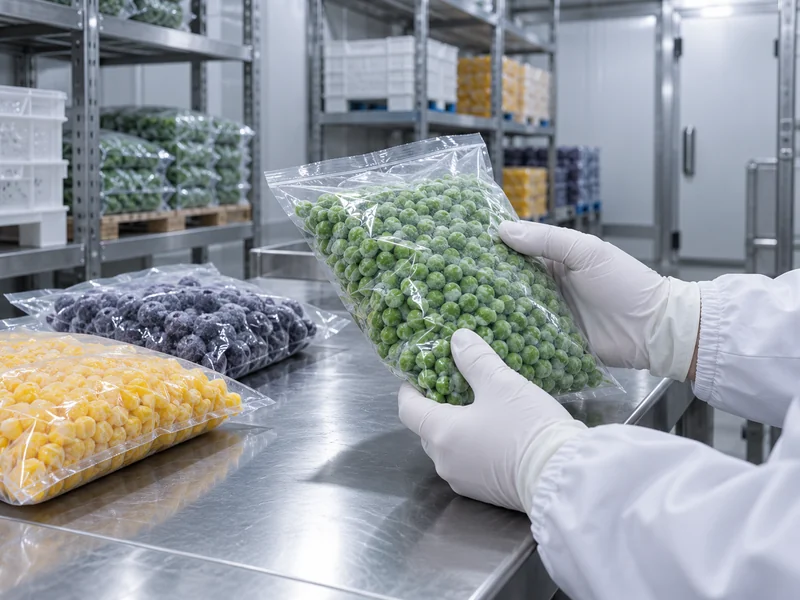
5. Can Receiving, Defrost and Dispatch Work Without Repeated Delays?
Plan the doorway as a working station with a time limit and a destination for each movement. Prepare the receiving records and storage positions before unloading begins. Stock should not wait beside an open door while staff search for an empty location.
A suitable cold room door needs the correct clear opening, traffic arrangement and low-temperature details. Discuss the trolley or pallet handling method, approach angle and opening frequency with LINBLE. A wider opening can improve access but also changes infiltration and the space needed around the entrance.
Coordinate defrost with the actual picking programme and check drainage and recovery. If a dispatch rush routinely coincides with defrost, changing the schedule may help more than making the controller colder. Verify the consequence for stock temperature rather than judging performance from the air-temperature peak alone.
- Assign receiving positions before the vehicle arrives.
- Keep cases identified when pallets are split.
- Use a defined procedure for suspected temperature damage.
- Review door and defrost activity against product checks.
- Reserve a workable transfer route to dispatch.
What If Case Picking Grows Faster Than Reserve Stock?
Consider an illustrative distributor whose total frozen tonnage stays steady while smaller customer orders become more frequent. Reserve pallet capacity may still be sufficient, yet the picking area now sees more open cases, door movements and handling. The room’s original inventory calculation would not reveal that change.
Count picks during the busiest hour and identify how long staff spend finding and splitting cases. A dedicated accessible picking arrangement may reduce repeated pallet movements, provided it preserves the required temperature and hygiene controls. Keep reserve stock away from unnecessary handling where the layout permits.
Review partial cases at the end of each shift. Bags need appropriate protection, and the remaining quantity must retain its lot and expiry identity. A carton that contains several unidentified part bags creates a stock-control problem even if its temperature is satisfactory.
Include this operating change in discussions with LINBLE before adding shelving. More shelves can narrow the working space and move stock into a different air pattern. Compare the revised picking layout, door duty and usable positions as one proposal, then confirm that the existing refrigeration system remains suitable.
Send LINBLE the product list, pack and pallet dimensions, peak inventory, incoming temperatures and hourly door activity. Add the split between reserve storage and case picking. Those details allow the room to be planned around how frozen berries, peas and corn will actually move through the business.