
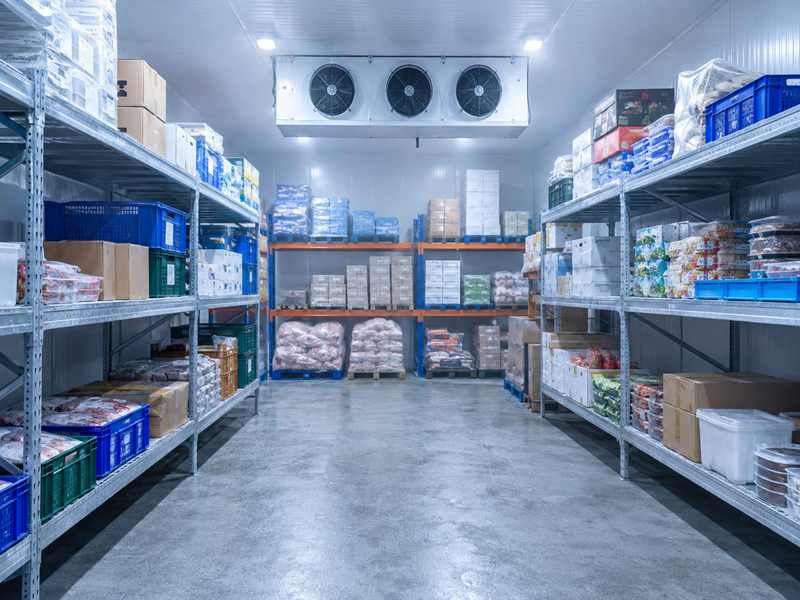
Proper product arrangement inside a freezer room helps maintain better airflow, improve temperature stability, and reduce unnecessary refrigeration workload. A good storage layout should consider product zones, access frequency, storage capacity, and equipment location.
Plan Product Zones Before Storage Arrangement
Before placing products inside a freezer room, businesses should consider how different storage areas will be used. A clear zoning plan helps reduce unnecessary movement, shorten access time, and maintain better cooling conditions.
A practical freezer room layout usually includes:
| Storage Zone | Arrangement Purpose |
| Entrance Area | Convenient access for frequently used products and reduces door opening time |
| Main Storage Area | Organizes regular inventory according to product type and storage needs |
| Long-Term Storage Area | Stores products with lower access frequency to reduce unnecessary movement |
Products that are accessed frequently should not be placed in deep storage areas. Otherwise, employees may spend more time searching for products, increasing door opening frequency and allowing more warm air to enter.
For example, a supermarket freezer room may receive large quantities of frozen products every week. Dividing storage zones in advance helps employees complete loading, checking, and picking tasks more efficiently while reducing temperature fluctuations caused by frequent access.
Step 1: Keep Airflow Paths Clear
Cold air circulation is the foundation of effective freezer room cooling. When products block airflow paths, some areas may receive insufficient cooling, causing uneven temperatures and longer recovery times.
Products should be arranged to maintain clear airflow around important areas.
Businesses should:
- Keep Space Between Products and Walls:
Leaving enough clearance allows cold air to move around products and prevents cold spots near walls. - Avoid Blocking Evaporator Air Outlets:
Products placed directly in front of evaporators may interrupt airflow distribution and reduce cooling efficiency. - Maintain Clear Paths Between Storage Sections:
Proper aisle spacing helps cold air circulate and makes product handling easier. - Prevent Excessive Product Stacking Height:
Overly high stacks may affect airflow direction and create temperature differences inside the freezer room.
The position of products should always consider the airflow direction of the refrigeration system. Storage areas near evaporators usually receive stronger cold air, while areas with poor circulation may experience slower temperature recovery.
A freezer room with good airflow allows the refrigeration system to distribute cold air more evenly. This helps reduce unnecessary operating time and supports more stable storage conditions.
Step 2: Arrange Products Based on Access Frequency
Product access frequency should influence storage location. Frequently handled products and long-term storage products should not be placed in the same areas.
A practical arrangement method includes:
- Frequently used products near accessible locations
- Seasonal or backup inventory in less accessible areas
- Recently loaded products arranged separately for easier management
This approach reduces unnecessary door opening and product movement. For businesses such as restaurants and supermarkets, shorter access time helps maintain a more stable freezer room environment.
For larger facilities, product arrangement can also support inventory management. Clear storage locations make it easier for employees to identify products, reduce handling time, and improve workflow efficiency.
Step 3: Avoid Overloading Storage Areas
Using every available space inside a freezer room may seem efficient, but excessive stacking can reduce cooling performance. Cold air needs enough space to move around products and remove heat effectively.
Overloading may cause:
| Storage Problem | Possible Impact |
| Tight product stacking | Reduced airflow around products |
| Blocked circulation paths | Uneven temperature distribution |
| Excessive storage density | Longer cooling recovery time |
When products are stacked too tightly, the refrigeration system may need to operate longer to restore the required temperature. With ongoing operation, this will boost energy use and result in erratic storage conditions.
For food processing facilities with seasonal production peaks, temporary inventory increases are common. In these situations, maintaining proper spacing becomes especially important to avoid reducing cooling efficiency.
Step 4: Create Different Storage Zones
A well-designed freezer room should separate products according to storage purpose and operation needs. Different zones help businesses manage inventory more efficiently while reducing unnecessary movement.
Useful storage zones may include:
- Daily Access Zone:
Suitable for products frequently removed during normal operation. - Bulk Storage Zone:
Designed for larger quantities that require less frequent access. - Inspection Zone:
Provides easier access for checking inventory conditions.
Defining separate storage zones optimises work flow and cuts down staff time spent locating inventory. It also helps maintain more consistent freezer room conditions by reducing unnecessary door opening.
For businesses with different product categories, zoning also makes inventory rotation easier. Products can be arranged according to usage order, helping employees follow a more organized storage process.
Step 5: Match Product Arrangement with Equipment Layout
Product placement should match the design of the freezer room system. The location of evaporators, air outlets, shelves, and storage areas all influence cooling performance.
When arranging products, businesses should consider:
- Evaporator position
- Air return paths
- Shelf height
- Product stacking height
- Distance from cooling equipment
Products placed directly in front of evaporators may interrupt airflow, while excessively high stacks may prevent cold air from reaching lower areas.
A freezer room layout should be planned together with equipment installation. This allows the refrigeration system and storage arrangement to work together more effectively.
Choose Suitable Shelving for Better Organization
Shelving systems can improve product arrangement and support better airflow inside a freezer room. Compared with random stacking, organized shelving makes storage management easier.
Suitable shelving should provide:
- Stable product support
- Proper spacing between products
- Easy inventory access
- Resistance to low-temperature environments
For businesses storing different types of frozen products, shelving also helps separate product categories and improve daily management efficiency.
Stainless steel or corrosion-resistant materials are often preferred for food storage applications because they are durable and easier to maintain in cold environments.
Regular Management After Storage Arrangement
Product arrangement should be adjusted as inventory changes. A layout that works during normal operation may need modification during seasonal demand increases or changes in product types.
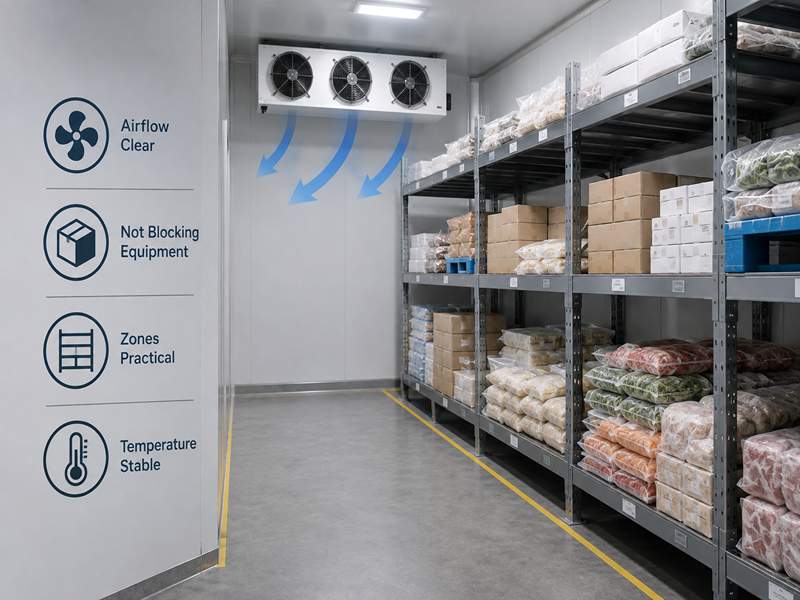
Businesses should regularly check:
- Whether airflow paths remain clear
- Whether products are blocking equipment areas
- Whether storage zones are still practical
- Whether temperature conditions remain stable
Regular adjustment helps maintain the original cooling efficiency of the freezer room and prevents small arrangement problems from affecting long-term performance.
For example, after large product deliveries, employees should review whether new inventory blocks airflow areas or changes the original storage layout.