
A walk-in freezer door heater is needed where the approved door design uses controlled heat to keep vulnerable sealing surfaces free of ice or condensation. Confirm the heated frame sections, any threshold heating and the electrical arrangement for the actual door; a room setpoint alone does not define the complete heater layout.
LINBLE lists integrated door heating among its customization options. Ask for that option to be identified on the door schedule, because a freezer room order and a door-heater order are not automatically the same thing.
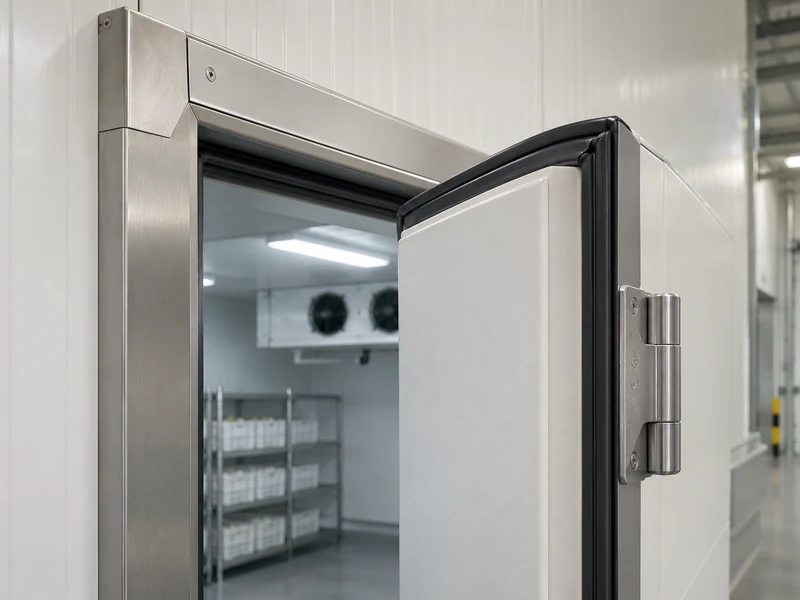
Why Does Ice Appear Around an Insulated Door?
The frame and seal sit at an interface between warm, moisture-bearing air and a cold enclosure. Local surface temperatures, air leakage and humidity influence whether moisture condenses or freezes there.
The most useful investigation starts with the location of the moisture. Ice along one damaged gasket edge suggests a different problem from a broadly cold frame surface in a humid loading corridor.
ASHRAE’s refrigerated-facility design guidance discusses door and moisture-control considerations. Frame heating is one design measure; it should be coordinated with the thermal break, seal and doorway operation.
LINBLE’s cold room door options include different opening formats and heater customization. Use the selected model’s drawing to establish where the heating element runs and which conditions it is intended to address.
Which Parts of the Door May Need Heating?
Check the frame perimeter first, then ask specifically about the sill or threshold. The answer depends on the door type and its approved construction, so a generic statement that the door is “heated” is incomplete.
| Location | Question for the Supplier | Related Check |
| Head and vertical frame sections | Which surfaces and gasket-contact areas are heated? | Continuity of the specified heating path |
| Threshold or sill | Is heating provided here, and how is it protected? | Traffic, cleaning water and floor transition |
| Sliding-door lower sealing area | How does the selected design prevent freezing at the bottom? | Floor condition and lower gasket contact |
| Pressure equalization device | Is it heated separately where required? | This is a different component from frame heating |
Do not add exposed heater cable around a troublesome edge as a purchasing shortcut. The supplier should specify a compatible assembly, protection and service method for that door.
Does Every Freezer Door Use an Identical Heater Circuit?
No. Door size, frame profile and the selected heater system affect the arrangement, and the supply voltage must match the specified component.
Request the installed heater rating, connection diagram and controller requirements. Avoid assuming that a replacement with the same overall length has the same electrical characteristics or fits the same channel.
What Changes at the Threshold?
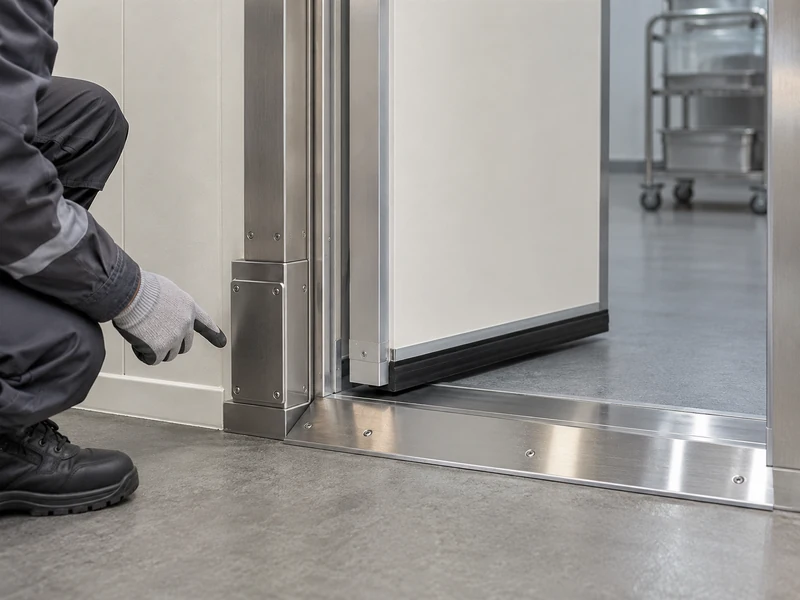
The lower edge has to cope with traffic and often cleaning water as well as temperature. Its design should keep the intended sealing contact without leaving vulnerable electrical parts exposed to wheels, impact or standing water.
Agree the finished floor level before ordering the door. A threshold detail that works on the drawing can fail operationally if the surrounding slab is raised later or cleaning water consistently collects in the opening.
For a LINBLE hinged cold room door, coordinate the opening direction, frame form and floor interface at the same time as the heater requirement. The gasket and bottom clearance should be adjusted according to the selected assembly, not by making an arbitrary site gap.
Where there is repeated lower-edge icing, inspect drainage and door closure before requesting more heat. A heater should not be expected to absorb an uncontrolled washdown flow or compensate for a leaf that no longer seals.
What Electrical Information Belongs in the Order?
Record the heater supply voltage, installed power and connection point, then state who supplies and controls that circuit. The local electrical contractor needs those details before selecting the installation and protection arrangement.
- Heated sections shown on the approved door drawing.
- Heater identification, electrical rating and compatible replacement information.
- Continuous or controlled operating arrangement specified by the supplier.
- Required interlocks, sensors or switching components.
- Field cable, connection and isolation responsibilities.
- Instructions for inspection and safe replacement.
Confirm what happens to the heater circuit when refrigeration is switched off. The site energy-isolation procedure must identify independently supplied circuits; switching a controller to standby is not proof that all electrical parts are safe to touch.
The ASSP hazardous-energy control reference is relevant to that maintenance planning. Electrical testing and replacement belong with qualified personnel following the site’s procedure and the component instructions.
Can Frame Heating Fix a Door That Is Hard to Open?
It can help when freezing at the seal is the cause, but difficult opening has other explanations. Pressure differences, hinge or track alignment, gasket condition and mechanical damage also deserve investigation.
Observe when the resistance occurs: immediately after closing, only at the bottom edge, or throughout the opening movement. That timing helps the service team distinguish pressure behavior from friction or ice bonding.
LINBLE’s article on a freezer door that is hard to open after closing explains the pressure-related issue. Do not respond to every difficult door by increasing heater output.
How Can the Service Team Establish Whether the Frame Heater Has Failed?
Have the service technician establish whether the circuit is being supplied and controlled as intended, then assess the heater using the manufacturer’s method. A cold frame does not, by itself, prove that the heating element has failed.
At the same visit, check gasket contact, frame condition and the location of recurring ice. Record photographs before clearing the ice so the pattern is available for diagnosis.
Review doorway use if icing began after operations changed. LINBLE’s discussion of door-opening frequency helps explain why a busy, humid receiving route may expose a previously adequate doorway to more moisture.
How Should a Heater Replacement Be Specified?
Start with the door identification and the original approved heating arrangement. Provide photographs and the service findings so LINBLE or the responsible supplier can identify the compatible component.
Ask whether replacement requires removal of a cover, seal or trim and whether any associated parts must be renewed. The labor and access needed for the repair can matter as much as the price of the heating element.
Keep the replacement circuit consistent with the selected component’s instructions. A cable with a different rating or control requirement is a design change, even when it can be made to fit physically.
What Should Be Observed After Service?
Check the same locations where icing was recorded before repair. The comparison is more useful when door traffic, corridor humidity and cleaning conditions are reasonably representative of the original complaint.
Record whether the door closes fully and whether moisture reappears at one edge or across a broader area. Continuing localized ice may indicate a remaining seal or alignment problem rather than insufficient heater output.
Do not leave a temporary change undocumented once the doorway appears to work. The final service record should identify the installed part, control arrangement and any remaining operating restrictions.
For a busy distribution opening, include staff feedback after normal loading resumes. A frame that stays clear while the leaf repeatedly drags at the threshold still requires attention to the complete assembly.
What Does a Useful Handover Test Demonstrate?
It demonstrates that the door closes and seals correctly, the specified heating circuits operate, and the threshold remains practical for the intended traffic. Record the test conditions and the observed result using the project acceptance procedure.
A quick empty-room pull-down does not represent every future humidity and loading condition. Continue observation during normal use, especially if the doorway faces a warm, damp space or receives frequent deliveries.
Include the heater checks in LINBLE’s commissioning and handover record. The aim is a door assembly whose insulation, seals, heating and operation work together, with enough documentation to service the correct part later.