
A walk-in freezer door can resist reopening because warm air admitted during access cools after the door closes, lowering the pressure inside the room. A properly selected pressure relief vent allows that difference to dissipate, but an iced vent, failed heater, frozen gasket or misaligned door can turn a brief resistance into a recurring problem. The timing of the resistance is your first useful clue.
Before ordering a stronger handle or replacing the door, record when the problem appears and whether it disappears without intervention. This guide helps owners separate an air-pressure problem from a mechanical obstruction and prepare useful information for a service technician.
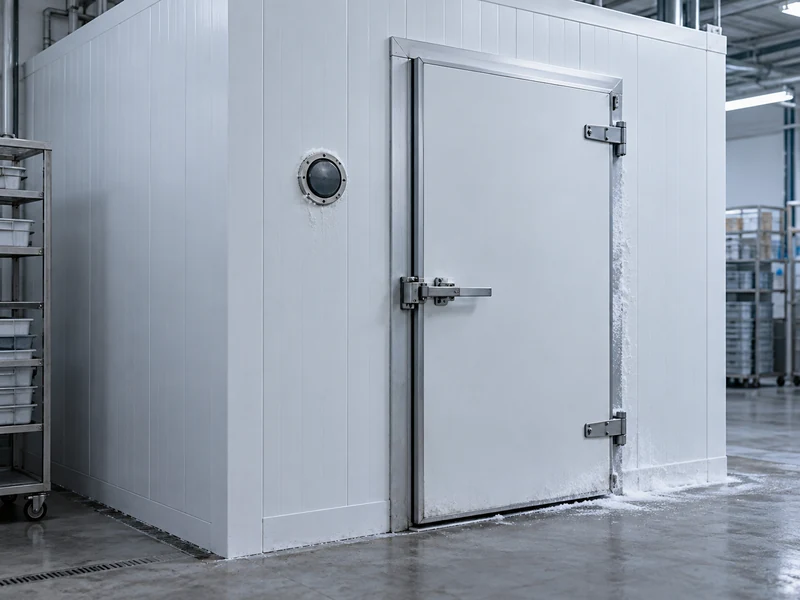
Why Does Closing the Door Create Resistance?
When the door opens, some cold room air escapes and warmer surrounding air enters. After closure, refrigeration cools the incoming air while the insulated enclosure limits replacement airflow. Outside air pressure can then press against an outward-opening door more strongly than the air inside pushes back.
The door is not necessarily locked or defective: pressure acts across its whole surface. A modest pressure difference distributed over a large door can create noticeable resistance, even when the latch has released correctly. Pulling harder does not address the cause and can damage handles or hinges.
Pressure can also change during temperature pull-down and around defrost events. The relevant question is whether the room’s equalization arrangement handles these operating conditions, rather than whether the freezer reaches its thermostat setting.
Our discussion of defrost termination, drip time and fan delay explains the separate control sequence that may help you correlate a door complaint with a cycle event.
What Does a Walk-In Freezer Pressure Relief Vent Do?
A walk-in freezer pressure relief vent provides a designed air path between the room and the surrounding space. Depending on its construction, it opens in response to a pressure difference and closes or restricts flow once pressures move closer together. It is a room-air device, not a safety relief valve in the refrigerant piping.
Low-temperature installations commonly use heated ports to keep the passage functional in freezing conditions. A heater does not cool the room or replace door-frame heating; its purpose is local frost protection around the equalization path. The equipment instructions determine its electrical requirements and inspection method.
Port capacity, mounting position and quantity must suit the enclosure and its operating duty. Room volume is one input, but temperature change, door activity and the selected port’s airflow performance also matter. Do not select an unverified replacement merely because its faceplate fits the existing opening.
For a new installation, include the pressure-equalization arrangement when reviewing LINBLE cold room door options. Confirm which components belong to the door package and which are supplied separately with the room enclosure.
How Can You Distinguish Pressure from Ice or Hardware Problems?
Observe the pattern before dismantling anything. Pressure-related resistance often follows closure and subsequently eases, while a scraping door or frozen seal may remain difficult throughout operation. Use the observed pattern to narrow the inspection; it cannot establish the fault on its own.
| Observed Pattern | Possible Cause | Useful Next Check |
| Resistance starts immediately after closure and later eases | Temporary pressure difference or restricted equalization | Record recovery time and inspect accessible port openings |
| Gasket visibly bonds to frost | Moisture entry or local heating problem | Inspect seal condition and arrange heater checks |
| Door scrapes at the same point every time | Hinge, frame or threshold alignment | Photograph contact marks and measure clearances |
| Latch remains engaged after handle movement | Latch or release mechanism fault | Remove the doorway from normal use until serviced |
| Problem becomes worse after a room extension | Changed pressure duty or enclosure configuration | Review the original port selection and revised room layout |
There is no universal number of seconds that proves every freezer is healthy. Compare the behavior with the manufacturer’s guidance and the room’s previous normal operation. A growing delay deserves attention even if the door eventually opens.
What If the Door Is Difficult Even After a Long Pause?
Look for mechanical clues: a displaced gasket, loose hinge, bent latch, damaged threshold or ice bridging the seal. A door that drags while already partly open points toward alignment or obstruction rather than a sealed-room pressure difference. Keep the inspection external and do not defeat the safety release.
What If There Is Both Frost and Pressure Resistance?
More than one fault may be present. Moist air can freeze around the seal while also blocking the pressure port, so clearing the visible gasket alone may leave the pressure problem unresolved. Read the separate guide to preventing freezer-room ice accumulation when frost extends beyond the doorway.
What Can Staff Check Before a Technician Arrives?
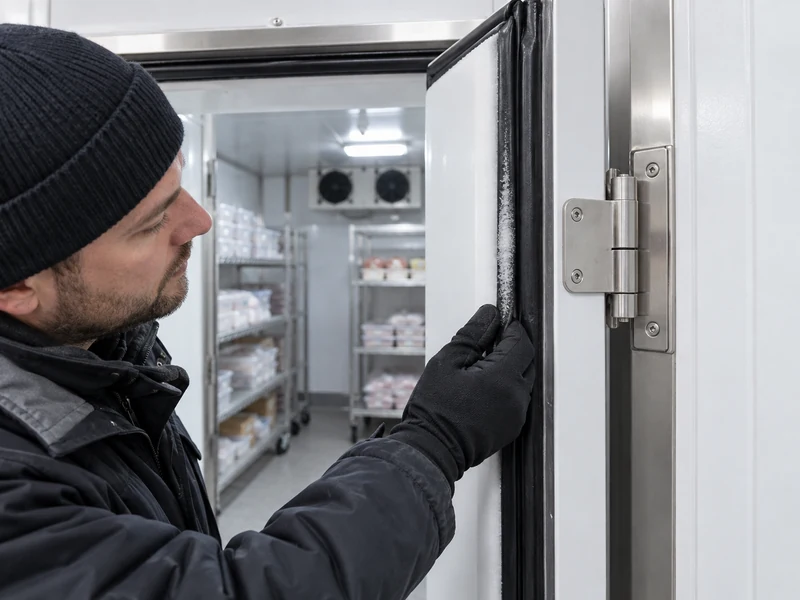
Start with a short, repeatable observation made during normal use. Note the room temperature, time since closure, nearby loading activity and whether a defrost event has just occurred. Photographs of the complete doorway and both accessible sides of the port are more useful than a close-up of the handle alone.
- Check whether cartons, wrapping or stored equipment cover the vent opening.
- Look for visible ice, damaged grilles or displaced covers without inserting objects into the port.
- Inspect the gasket for tears, contamination and uneven contact.
- Record unusual rubbing, latch movement and changes from the previous operating pattern.
- Confirm that the emergency release and access procedures remain usable according to site rules.
An occupant who cannot leave the freezer needs emergency assistance immediately; do not delay the response in the hope that the pressure will equalize. Do not continue using an unreliable doorway while staff are exposed to entrapment. Follow the site’s emergency procedure and arrange qualified assistance.
Electrical tests, heater replacement and internal port repairs belong with a qualified technician following isolation procedures. Do not probe live components, pour boiling water into the port or apply an open flame. A temporary opening improvised through a panel can damage insulation and vapor sealing.
Which Fixes Solve the Cause?
The correct repair follows the diagnosed fault. An obstructed port may need approved cleaning and restoration of its heater, while a correctly functioning but undersized arrangement needs an engineering review. A misaligned door needs adjustment rather than a larger vent.
Why Should You Avoid Leaving a Permanent Gap?
Loosening the gasket or propping the door ajar may make reopening easier, but it introduces uncontrolled warm, moist air. That can increase frost and refrigeration load and create further operating problems. Restore a designed equalization route while maintaining the intended enclosure seal.
AMCA’s discussion of cold-storage air and moisture movement describes the relationship between doorway infiltration, condensation and frost. It supports controlling unwanted air exchange, although an air curtain itself is not a replacement for a pressure relief port in a closed room.
When Should the Complete Door Assembly Be Reviewed?
Review the assembly when seals repeatedly freeze, hardware has been damaged by force, or the door no longer matches current traffic. Check the threshold, frame heating, closure action and escape release as a system. The related article on door design and thermal performance covers insulation and sealing considerations beyond pressure relief.
What Information Helps Specify a Reliable Solution?
Prepare the internal room dimensions, operating temperature, door dimensions, opening frequency and surrounding conditions. Add photographs, port model information and any records of heater faults or recent alterations. Distinguish a new-room specification from a repair request for an existing installation.
Ask the supplier to explain the port selection, frost protection, access for maintenance and commissioning checks. The handover should also identify who tests the door release and how staff report a change in opening effort. An easy-to-ignore complaint becomes much easier to manage when normal behavior has been documented.
You can send the room and doorway details to LINBLE for discussion of a suitable configuration. The objective is a sealed, dependable doorway with effective pressure equalization and safe access under the room’s real operating conditions.