
A vegetable cold storage project cost should include more than the compressor and evaporator. Budget separately for receiving and precooling, the insulated enclosure and floor, compatible storage zones, handling and drainage infrastructure, and commissioning with ongoing monitoring.
LINBLE distinguishes precooling, chilled storage and other produce-room applications. That is a useful starting point: an economical project begins with the actual crop flow, rather than a refrigeration price attached to an unspecified number of tons.
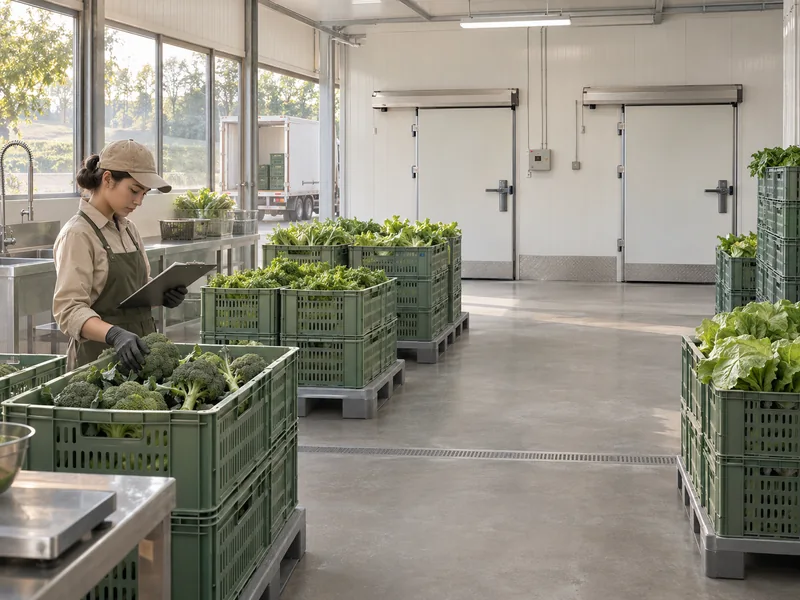
What Operating Brief Should Come Before the Budget?
Define what arrives, when it arrives and how soon it must leave in an acceptable condition. Record crop type, harvest temperature, peak daily intake, packaging, intended storage time and dispatch pattern.
Inventory capacity and cooling throughput are different numbers. A room can have enough space to hold the week’s stock but insufficient cooling performance to handle a concentrated afternoon intake at the required speed.
Use LINBLE’s fruit and vegetable cold room solutions to discuss the required process. Ask the proposal to state its assumptions so later changes in crops or receiving conditions are visible budget decisions.
Budget Item One: Receiving and Precooling
Allow for the work that happens before the crop reaches its storage position. Shaded receipt, short-term staging, inspection and a suitable cooling process can all affect the project’s footprint and equipment needs.
Utah State University’s postharvest guidance explains that vegetables differ in their responses to cooling methods and storage conditions. The budget should therefore follow the crop mix, rather than assuming one cooling approach suits everything.
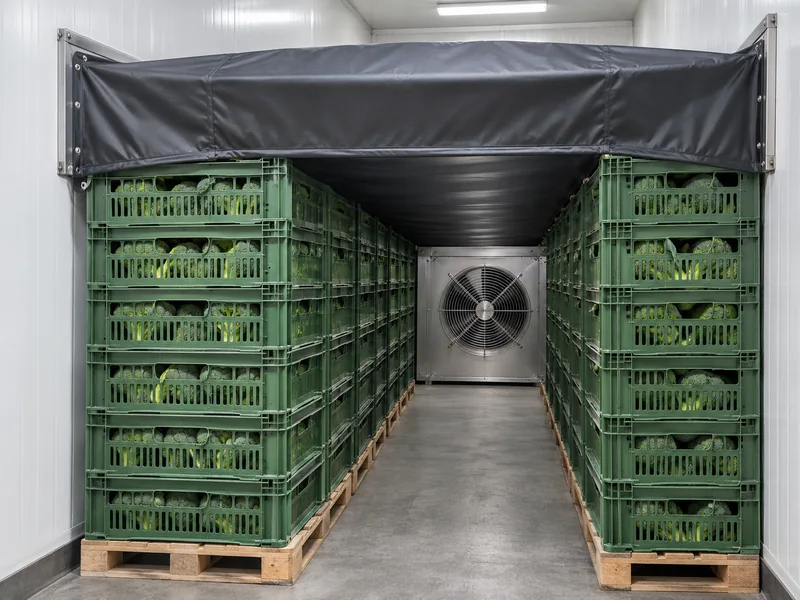
If forced-air precooling is proposed, establish its equipment, packaging and space requirements separately from ordinary holding storage. It is a process arrangement that must move air through the intended product load, not simply a larger fan added to a room.
- Peak crop quantity requiring cooling within the available time.
- Incoming and target product temperatures.
- Crate or carton ventilation and stacking arrangement.
- Cooling-bay footprint, fan arrangement and handling route.
- Water supply and hygiene provisions if a suitable water-based method is selected.
LINBLE’s article on precooling versus cold storage covers the duty distinction. Make the selected process explicit before asking whether the refrigeration package is large enough.
Budget Item Two: Enclosure, Floor and Door Interfaces
Price the room as a buildable assembly, including panels, doors, floor construction and the connection to the existing building. The necessary specification depends on operating temperature, ambient conditions, traffic and cleaning.
LINBLE’s PU and PIR panel options allow different construction choices. Compare the selected core, thickness and cladding alongside corners, ceiling support, sealing materials and openings.
Floor preparation is easy to omit when the project is described as modular. Survey the slab, resolve loading and drainage needs, and confirm finished levels before panel assembly begins.
At the door, allow for the actual pallet or trolley route and the temperature boundary. A narrow opening or awkward threshold can increase handling time throughout every harvest season, even if it reduces the initial equipment price.
Budget Item Three: Compatible Zones and Usable Capacity
Budget for separate zones when the crop mix requires them. Products with incompatible temperature, humidity or ethylene requirements should not be combined merely to fill one larger room.
Each additional compartment can introduce a partition, doorway, controls and refrigeration considerations. Request a clear explanation of the operational need and the associated quantities rather than applying one rate to the total footprint.
| Budget Question | Information to Supply | Potential Scope Change |
| Can the crops share conditions? | Crop list, maturity and intended holding period | Separate rooms or operating schedules |
| How many positions are usable? | Crate or pallet dimensions, stack height and access method | Different layout, room size or storage equipment |
| How fast does stock rotate? | Receipt and dispatch peaks by crop | More access space or additional doors |
| What happens in peak harvest? | Maximum intake and contingency plan | Overflow or staged cooling provision |
Count accessible stock positions after leaving the required air paths and working aisles. Multiplying floor area by an optimistic stacking height tends to produce a capacity number the operation cannot use comfortably.
LINBLE’s guide to mixed-produce storage compatibility provides a useful discussion before the room divisions are fixed. Confirm the final crop-specific conditions with a qualified postharvest adviser where necessary.
Budget Item Four: Handling, Utilities and Drainage
Include crates, pallets, racks, movement equipment and the services needed at the site. These costs often sit outside the refrigeration quotation, yet they determine whether produce can move through the room as planned.
Choose containers that suit both the crop and the cooling method. A well-selected refrigeration system cannot make an unsuitable solid-wall package behave like a ventilated cooling container.
Drainage and cleaning facilities need equal attention. Penn State’s packhouse hygiene guidance calls for cooling-unit condensate to drain appropriately and cold-storage areas to be kept clean; include the necessary installation and access in the project scope.
- Building electrical supply and field wiring, with the actual local capacity confirmed.
- Condensing-unit location, equipment base and installation access.
- Refrigerant piping route, insulation and commissioning materials.
- Condensate drainage, cleaning-water route and applicable plumbing details.
- Crate washing or handling facilities where the process requires them.
- Freight, unloading, lifting and local installation labor.
Ask each contractor to identify its exclusions. This is especially useful when LINBLE supplies the cold room package while a local team completes building services and installation.
Budget Item Five: Commissioning, Monitoring and Seasonal Readiness
Allow time and funding to test the completed room before harvest fills it. Verify controls, alarms, drainage and temperature behavior, then assess the agreed product-cooling duty under defined conditions.
Budget for sensors, calibration and any remote alerts required by the operating plan. A displayed room temperature does not establish the temperature at the center of a newly loaded crate.
Set aside resources for training, cleaning and routine service before the busiest period. Seasonal operations benefit from a planned restart check while repairs and replacement components can still be arranged without interrupting intake.
Use LINBLE’s commissioning checklist to connect the proposal with the acceptance record. If a performance claim depends on packaging, incoming temperature or loading sequence, write those conditions into the test plan.
What Should a Seasonal Expansion Allow For?
Check the whole process before adding another room to an existing produce operation. More storage positions can expose a bottleneck at receiving, precooling, crate handling or dispatch rather than solve it.
Use receipt and dispatch records to draw an hour-by-hour picture of the peak harvest day. Note when incoming warm produce, cooled stock and empty containers occupy the same handling area.
That overlap can influence how LINBLE positions a new doorway or divides storage zones. A room added at the end of a constrained corridor may create more handling movements than a smaller, better-positioned extension.
How Should Running-Cost Estimates Be Compared?
Ask what assumptions the estimate uses for ambient conditions, intake temperature, door use and operating hours. Keep those assumptions consistent before comparing expected energy costs.
Include maintenance, cleaning, monitoring and the labor associated with the proposed handling method. These are operating decisions the grower can evaluate, while electricity tariffs and local service prices should come from the actual site.
Do not attach an invented payback period to the project. If the owner wants an investment comparison, use their recorded losses, selling pattern and operating costs, with uncertainty shown where the evidence is limited.
A staged project can be sensible when crop volume is still developing, provided the first phase has a workable receiving and cooling process. Reserve space and interfaces for expansion deliberately, rather than assuming every spare strip of land can later become cold storage without redesign.
How Can a Grower Compare the Complete Project Cost?
Build one budget with the five categories above and place the refrigeration package within it. Mark each item as included, separately priced or still unresolved, with a responsible party assigned.
For an illustrative comparison, two projects may each hold twenty pallets, yet one receives precooled cartons while the other handles warm harvest crates in a short afternoon window. Their storage counts agree, but the receiving process, cooling duty and handling infrastructure can be quite different.
Give LINBLE that operating difference at the enquiry stage. A credible proposal should show how the chosen room, refrigeration and site arrangements serve the crop flow, with costs that can be traced to that purpose instead of a headline equipment total.