
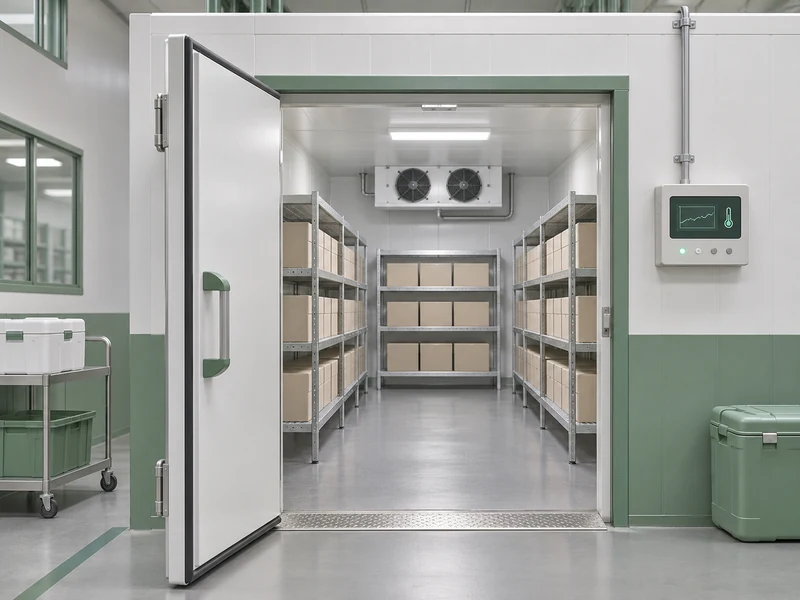
A walk-in cold room for vaccines needs a temperature record the quality team can retrieve and an alarm that reaches someone with the authority to act. Set the sensor positions, who gets called after hours and what the logger retains during an outage while LINBLE is still coordinating the room and control interfaces. Test the chain from a simulated event to a readable incident record before loading stock.
Which Measurements Should Drive the Alarm?
Use the approved storage requirements for the specific stock and the site’s quality procedure to set the monitoring conditions. Refrigeration controls need a measurement to run the equipment, while the quality team needs measurements that document conditions in the storage area. Agree how those readings will be used before a control sensor is specified as the only point in the record.
LINBLE’s walk-in vaccine cold room solution includes refrigerated and frozen configurations. For either room type, include the usable shelf positions and receiving or picking areas on the monitoring plan. The project owner should approve the storage band, alert setpoints, recording interval and response timing for the product and program involved.
Use temperature mapping to decide where routine monitoring can see credible warm and cold risks under the qualified layout. A probe near the evaporator discharge may react sharply during a fan cycle, while a shelf behind dense cartons may recover more slowly. Document the mapping conditions, probe identifiers and mounting heights so maintenance staff can put each sensor back in the right place.
What If the Room Probe and Monitoring Probe Disagree?
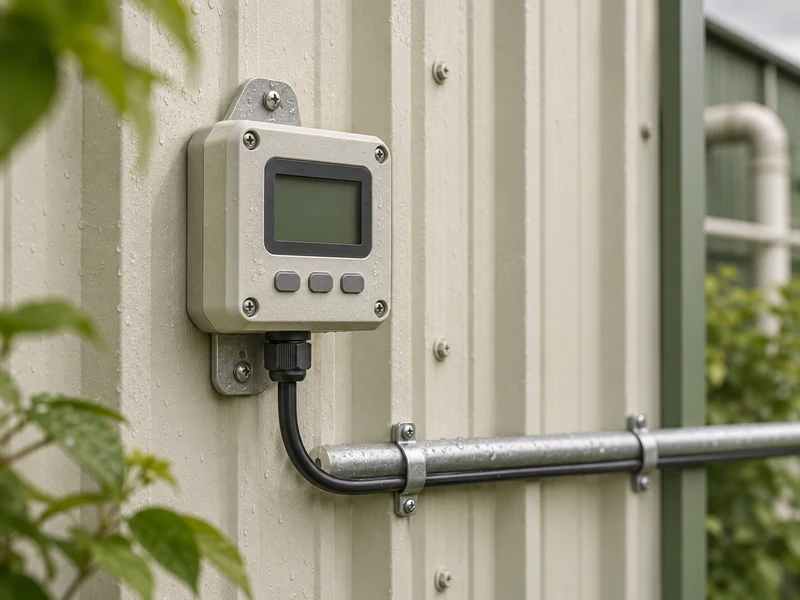
Read the channels against their locations, clocks and calibration records before drawing a conclusion. A probe in moving air and a probe with thermal buffering may respond on different timescales during a door opening. A sustained offset in stable conditions calls for investigation using the site’s procedure and suitable calibrated reference equipment.
Write down which channel triggers which action. A maintenance alarm may help a technician assess a failed refrigeration circuit, while a storage alarm can start a quality investigation. Give each message a room ID and a plain description so the person on call can tell the two events apart.
Who Gets Called After the First Alert?
Assign a primary responder, a backup and an owner for escalation. When the alert arrives, the duty responder records receipt, checks what the room and its equipment are doing, and carries out the steps assigned to that role in the site’s incident procedure. The backup receives the event if acknowledgement fails within the locally approved time or if the primary responder cannot get to the site.
The UNICEF procurement guidance on temperature monitoring devices describes programmable event loggers, alarm options and inputs such as door position and mains voltage for walk-in stores. Treat these as useful inputs to the project scope. The actual event list, notification method and recipient roster belong in the site’s requirements.
| Event to Test | First Notification | Evidence to Retain |
| Approved temperature alarm threshold reached | Duty team receives room, channel and event time | Trend, alarm onset and acknowledgement |
| Primary recipient fails to acknowledge | Backup receives the original event and elapsed time | Delivery attempt and escalation timestamps |
| Mains outage | Facilities receives an outage event through the planned path | Power loss, logger behavior and time restored |
| Communication or sensor failure | Responsible team is told that a monitoring input is unavailable | Missing interval, fault details and recovery check |
One practical test is to ask the daytime team to step out of the rehearsal. Let the night roster receive and acknowledge an agreed simulation using its normal devices and access arrangements. A siren heard by a commissioning crew at noon says little about who can reach a locked stock room at two in the morning.
What Must Survive a Power or Network Interruption?
Specify local recording, backup power and communication as separate functions. An emergency supply that keeps cooling available might leave the logger, gateway or network switch offline. A logger on battery may retain its readings while remote delivery remains unavailable until another link returns.
Ask the electrical and IT teams to mark their respective power feeds and connection points on one drawing. For options such as local alarms and monitoring accessories, compare the controls scope with the LINBLE cold room accessories range and identify who supplies the logger, gateway, subscription or external integration. Have the vendor state exactly what is retained, for how long, and what the system does when the link returns.
How Should the Monitoring System Handle a Missing Reading?
Decide what the operator sees when an expected sample fails to arrive. A chart can look reassuring if the software connects the last good point to the next one with a straight line. The export should give reviewers enough information to identify the missing interval and determine whether a second qualified record is available.
Make time synchronization part of the test. If the refrigeration controller, alarm platform and site call record use different time conventions, establish how they will be reconciled before any excursion is investigated. A test event with a known start time makes it easy to compare the local clock, the notification and the exported record.
Store the current sensor list and alarm configuration with the system records. A probe replacement, rack move or change in network routing can alter what the monitoring system represents, even if every reading still appears within range. Set a change review step that identifies who confirms the configuration and whether the affected parts of the monitoring plan need retesting.
Can Staff Reconstruct an Incident From the Export?
Export a sample and open it outside the monitoring platform. Check for the room and sensor identity, timestamps with an unambiguous time zone, units and visible gaps. Keep alarm transitions, acknowledgements and any manual entries traceable to the underlying event where the system allows.
The quality record also needs human context. Record who attended, the period and lots potentially affected, any movement to approved alternative storage and the assigned person who decides disposition under the applicable procedure. Keep the trend and device calibration evidence together with the incident record so the decision can be reviewed later.

What Is a Useful Acceptance Test for LINBLE and the Site Team?
Walk through one normal trend export, one after-hours escalation and one approved outage simulation. Check the sequence with engineering and quality present so each side can see the boundary between the equipment response and the site’s decision process. Use the cold room commissioning checklist for the wider acceptance items and attach the monitoring test evidence to the room handover.
For an excursion simulation, verify the time and identity of the first alarm, who received it, whether the backup route worked and how the incident was closed. For the outage simulation, compare the local record with the platform export after reconnection. Resolve clock offsets, silent data gaps and duplicated events before routine use.
Finally, agree where affected stock is held pending a decision and how it is identified in inventory. LINBLE’s article on quarantine and released stock covers the layout and segregation side of that decision. The room operator should be able to go from a single alarm ID to the time series, response notes and product decision without relying on an individual’s phone or memory.