
A cold room commissioning checklist should prove that the completed installation can meet its agreed storage duty, recover from normal operating events, and alert the right people when something goes wrong. Before handover, ask for recorded results covering the enclosure, refrigeration equipment, temperature performance, defrost sequence, alarms, and operator training. A controller reaching its setpoint once is only one observation within that process.
For a buyer, the most useful checklist connects every promised function to a test, a result, and a responsible person. This guide offers a practical way to organize that review with your refrigeration contractor, using acceptance limits agreed for your project rather than invented universal targets.
What Should Be Agreed Before Commissioning Starts?
Define the operating conditions and acceptance criteria before the test day. Without them, an apparently successful demonstration may say little about the way your business will actually use the room.
For a new custom cold room, put the following information in the commissioning plan and compare it with the approved design:
- Products, target storage range, maximum stock, and daily incoming load.
- Incoming product temperature and whether the room stores chilled goods or must remove substantial product heat.
- Expected outdoor conditions, surrounding indoor temperature, and operating hours.
- Normal door activity, loading equipment, rack layout, and required clearances.
- Agreed temperature tolerances, recovery expectations, monitoring locations, and test duration.
- Who witnesses the tests, resolves defects, and authorizes operational handover.
The ASHRAE Refrigeration Commissioning Guide describes commissioning as a process extending from planning through installation and operation. That perspective is useful for buyers: evidence collected during construction belongs in the handover package, not just the final day’s temperature readings.
Which Installation Checks Come Before the First Cooling Run?
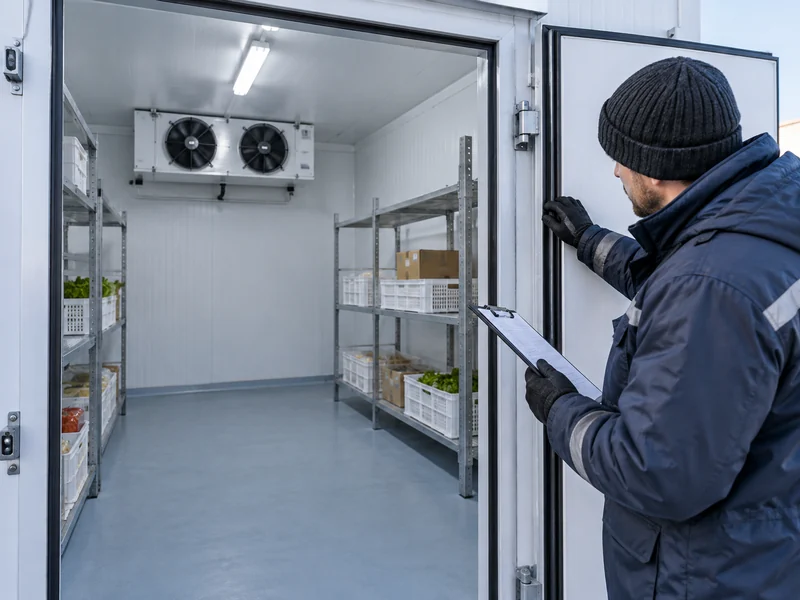
Start with a joint walkthrough of the room and its accessible equipment. Correct visible installation defects before using a performance test to judge a system that is not ready.
Are the Enclosure and Door Ready for Service?
Inspect panel joints, corners, penetrations, and the floor-to-wall connection against the approved drawings. Look for exposed insulation, damaged facing, incomplete sealing, and gaps around pipes or cables.
Ask the installer to demonstrate door closure, gasket contact, and the internal release mechanism. Where the design includes a pressure relief device or door heater, obtain confirmation that it is installed and functions as specified.
Check that racks and stored items cannot obstruct the exit or strike the door hardware. Photograph defects with their locations so a later repair can be checked against the original finding.
Are Equipment Access and Services Complete?
Have qualified personnel verify electrical protection, wiring, refrigerant work, equipment supports, and other specialist checks required by the design and local rules. The owner’s role is to obtain signed evidence and understand outstanding items, rather than make electrical or refrigerant adjustments.
For the cold room condensing unit, confirm service access and an unobstructed route for rejected heat. A location that works while a nearby door is open may perform differently after that door is shut during normal production.
Check the evaporator drain arrangement and confirm that meltwater reaches its intended discharge point. In a freezer, any specified drain heating and insulation should be included in the contractor’s functional checks.
How Should Temperature Performance Be Tested?
Separate the initial empty-room cooling test from verification under representative loading. Record what each test demonstrates so neither is mistaken for evidence of the other.
What Does an Empty-Room Test Show?
An empty run can reveal control problems, installation faults, and the basic cooling response of the completed enclosure. Record the starting temperature, ambient conditions, sensor positions, door status, settings, and elapsed time.
Do not compare the result with a generic promise such as “all cold rooms should cool down within an hour.” The meaningful comparison is with the specified conditions and acceptance criteria for this installation.
If the agreed test conditions cannot be reproduced, record the difference explicitly. A mild-weather demonstration should not silently become proof of performance during the hottest design conditions.
What Should the Loaded Test Include?
Use the agreed representative load or an approved substitute that reflects the purpose of the test. Document its quantity, entry temperature, arrangement, and the events occurring during the run.
Measure at enough locations to understand the usable storage space, rather than relying exclusively on the controller probe. Keep air measurements distinct from product measurements when product cooling is part of the duty.
Our guide to cold room temperature mapping explains how location and loading influence the interpretation of hot and cold spots. A commissioning record should identify the tested arrangement so later rack changes can be assessed against it.
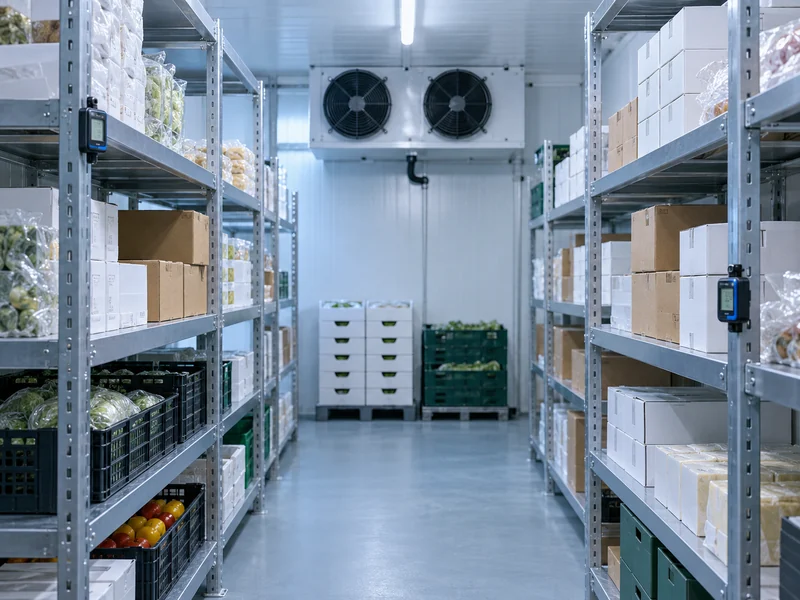
As an illustrative example, a distributor might test the intended shelf layout with a representative delivery and its normal loading routine. If the room passes only after removing half the proposed stock, the layout or operating specification still needs attention.
Agree beforehand how product will be protected if a test fails. Do not make saleable stock the unplanned casualty of a demonstration.
How Do You Verify Defrost, Recovery, and Alarms?
Witness the relevant operating sequences and record the system’s response. A checklist box marked “installed” is insufficient when the requirement concerns behavior.
| Test Area | Evidence to Record | Question for Handover |
| Defrost | Start, termination, drainage, fan restart, recovery | Does the complete sequence match the approved settings? |
| Door Event | Opening duration, load conditions, temperature trend | Does normal access produce acceptable recovery? |
| Temperature Alarm | Trigger, delay, notification, acknowledgement | Does the intended responder receive the alert? |
| Power Interruption | Approved simulation, restart behavior, data continuity | What must the operator do after power returns? |
For defrost, observe whether water drains properly and whether the room returns to its agreed operating range. Investigate residual ice or water rather than simply increasing the scheduled duration.
The distinction between termination, drip time, and fan restart matters when interpreting this test. Refer to cold room defrost controls when reviewing the contractor’s settings sheet.
Alarm tests should follow an approved simulation method that avoids unnecessary exposure of stored goods. Confirm the full notification path, including the person on duty outside normal working hours.
Where backup power or standby refrigeration is included, witness the agreed transfer or changeover sequence. Document any manual action, restart delay, or load limitation that the operating team needs to understand.
What Records Should the Owner Receive?
Request a usable operating package, not merely a folder of equipment brochures. Someone who did not attend commissioning should be able to identify the equipment, find the settings, and understand what was tested.
- As-built layout, equipment identification, and relevant service drawings.
- Approved design duty and completed test sheets with dates and witnesses.
- Temperature records, sensor locations, and instrument calibration information.
- Control settings, alarm contacts, and restart instructions.
- Maintenance requirements, warranty conditions, and service contact details.
- A defect register showing the responsible party and required completion date.
The VeraSol walk-in cold room test protocols include a field protocol intended for commissioning and checking installed performance. Its applicability should be assessed against your equipment and project scope; referencing a protocol does not itself certify an installation.
Keep original trend files where available, alongside readable summaries. A screenshot without dates, sensor identities, or test conditions is difficult to use when a later performance dispute arises.
When Is the Cold Room Ready for Handover?
Handover is appropriate when required tests pass, critical defects are resolved, and operators can perform their routine responsibilities. Any accepted outstanding work should have a clear owner, deadline, and operational restriction where needed.
Ask the team to demonstrate loading limits, door handling, alarm response, and whom to call for service. Turn the completed checklist into the starting point for your cold room maintenance schedule, with baseline observations retained for future comparison.
For a LINBLE project enquiry, share the product duty and proposed acceptance checks alongside the room dimensions. This helps align the supplied system, installation responsibilities, and evidence expected at delivery before the room enters daily use.