
A condensing unit performance table can show three different cooling capacities for the same model. To pick the usable number, match the project’s evaporating temperature to the applicable column and check the catalog’s rating assumptions before carrying that capacity into the selection.
For procurement teams, reading the wrong rating can turn an apparently adequate selection into a capacity shortfall. Electrical input must also be interpreted carefully before comparing equipment efficiency or estimating operating costs.
A Condensing Unit Performance Table: One Model, Three Ratings
Consider the CX-FNL-12MH from LINBLE’s Box L condensing unit performance tables. This model appears in the medium and high temperature scroll series with compressor model ZB88KQ.
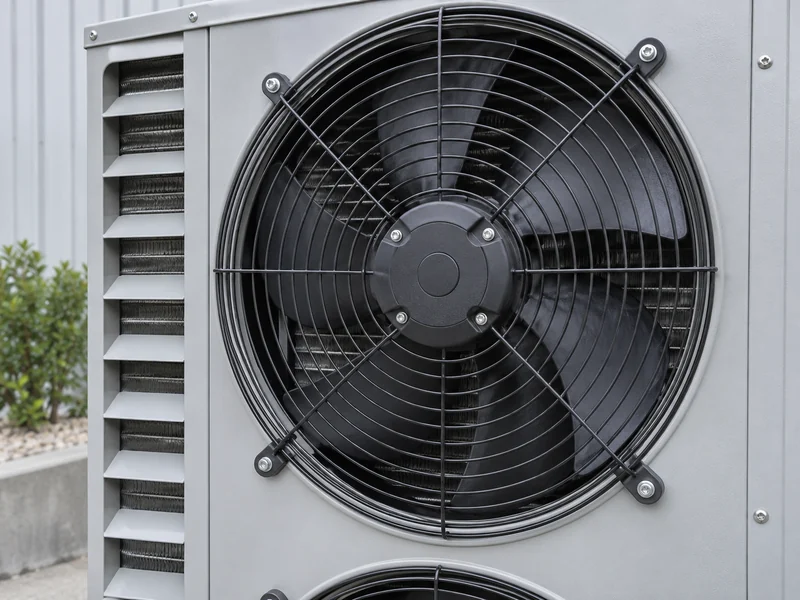
The published table identifies the following reference conditions and configuration:
- Ambient temperature: 32°C.
- Electrical supply: 380 V, 50 Hz.
- Condenser fans: Four, with a listed power of 190 W each.
- Refrigerants listed for the series: R22/R404A.
The series lists both refrigerants, but this particular model has single capacity and power entries. The page does not identify which refrigerant those entries represent. Obtain written confirmation before using them for a project selection.
| Evaporating Temperature | Published Refrigeration Capacity (kW) | Published Power (kW) | Calculated Capacity-to-Power Ratio |
| 0°C | 28.50 | 8.13 | 3.51 |
| −5°C | 23.50 | 8.07 | 2.91 |
| −12°C | 17.55 | 7.97 | 2.20 |
The capacity and power figures are converted from the original catalog entries in watts. The last column is calculated, not a separately published efficiency rating.
At −12°C, the listed refrigeration capacity is 38.4% lower than at 0°C. Yet the corresponding power figure decreases by only about 2.0%. These differences describe the catalog data, not measured electricity savings or losses in an installed cold room.
The Temperature Labels Matter More Than the Model Name
Three temperatures must remain separate when interpreting a cold room condensing unit selection:
- Room air temperature: The controlled storage environment.
- Evaporating temperature: The refrigerant saturation temperature associated with the low-pressure side of the cycle.
- Condenser entering air temperature: The outdoor or machinery-space air reaching the condenser.
A fourth temperature, the refrigerant condensing temperature, is determined by the high-side operating pressure. It is not interchangeable with outdoor ambient temperature.
How Lower Evaporating Temperatures Affect Output
In normal cooling operation, the coil takes up heat from the passing air because the refrigerant is boiling at a lower temperature. The required difference depends on the coil selection, airflow, humidity requirements and other design conditions.
An illustrative room operating at +2°C might be evaluated with a −5°C evaporating condition. Another evaporator selection could require a different saturation temperature for the same room setpoint.
Neither value should be assumed without checking the coil duty.
As evaporating temperature falls, suction pressure generally decreases for a given refrigerant. Lower suction vapor density and changes in compressor performance typically reduce refrigerant mass flow and cooling output in a fixed-speed compressor.
The Box L figures demonstrate this effect. Lower electrical input at a colder evaporating condition does not necessarily mean more efficient cooling, because the available refrigeration capacity also changes.
Confirm Where the Evaporating Temperature Is Referenced
Ask whether the published value represents saturation conditions at the evaporator or the compressor suction reference point. Pressure losses between these locations can create a meaningful difference.
For refrigerant blends with temperature glide, also confirm the saturation convention used in the selection software. Compare values using the same convention rather than treating every displayed saturation temperature as equivalent.
Use the Required Duty to Screen the Available Ratings
Assume a project already has an engineer-approved required capacity of 20 kW. This is an illustrative assumption, not a room load calculation or a LINBLE project example.
At the catalog ambient of 32°C, the comparison is straightforward:
| Operating Point | Capacity Difference Against 20 kW | Preliminary Decision |
| 0°C evaporation | +8.50 kW | Numerically exceeds required duty |
| −5°C evaporation | +3.50 kW | Candidate for detailed evaluation |
| −12°C evaporation | −2.45 kW | Insufficient at this duty point |
If the project requires −12°C evaporation, the 28.50 kW figure from the 0°C rating cannot justify the purchase. The relevant published capacity is 17.55 kW, subject to confirmation of the refrigerant and rating basis.
Conversely, a positive capacity difference is not automatic approval. The selected unit must operate within its permitted envelope, and the matched evaporator must deliver the required duty under the agreed conditions.
The engineer should also consider how the system operates when demand is below the available output. An oversized selection at a warmer operating point may create control difficulties if its capacity cannot be managed appropriately.
For the separate task of establishing the required cooling duty, consult LINBLE’s cold room condensing unit capacity calculation guide. The purpose here is to verify condensing unit capacity at the specified evaporating temperature after that duty has been established.
What Does the Power Column Actually Include?
When comparing refrigeration rated power vs. cooling capacity, remember that both can be expressed in kilowatts without describing the same physical quantity.
- Cooling capacity (kW): The rate at which heat is removed.
- Electrical input (kW): The rate at which electrical energy is consumed.
- Energy consumption (kWh): Electrical energy consumed over a period of operation.
At −5°C, the Box L table gives the following ratio:
23.50 kW cooling ÷ 8.07 kW listed power = 2.91
However, the catalog labels the denominator simply as Power. It lists condenser fan power separately without stating whether those fans are included in the operating power figures.
A procurement review should distinguish three possible measurement boundaries:
- Compressor input alone.
- Total condensing unit input, including operating condenser fans and other relevant auxiliaries.
- Complete refrigeration system input, including the indoor evaporator, defrost equipment and relevant controls.
What Happens If Fan Power Is Excluded?
The published fan power ratings total 760 W. As an illustrative assumption, suppose the 8.07 kW figure excludes the fans and their combined actual input at this point equals 0.76 kW.
The revised calculation would be:
Combined input = 8.07 + 0.76 = 8.83 kW
Capacity-to-input ratio = 23.50 ÷ 8.83 = 2.66
If fan power is already included, adding it again would be incorrect.
This example demonstrates the effect of the measurement boundary. The actual fan draw and unit-level COP still require test data for the applicable operating point, with the electrical loads included in that test clearly identified.
Before accepting a condensing unit COP table, ask for the definition of useful cooling output, the electrical loads included and the test conditions. A component-level ratio cannot establish whole cold room efficiency.
Do Not Convert a Steady Rating Directly Into a Daily Bill
If the listed 8.07 kW were a constant electrical input for ten operating hours, the corresponding energy would be 80.7 kWh. That is an illustrative calculation for the stated boundary only.
An actual daily energy estimate requires operating hours, part-load behavior, cycling, defrost schedules and other auxiliary loads.
Multiplying the catalog power by 24 hours is not a reliable consumption forecast for every installation.
Why the 32°C Ambient Reference Cannot Be Ignored
The published performance points are based on 32°C ambient temperature. They are not a hot-weather performance map.
Suppose the design air temperature entering the condenser is 40°C, an illustrative site condition. The capacity at −5°C evaporation and 40°C ambient is not established by the 23.50 kW catalog entry at 32°C.
Higher condenser inlet temperatures generally increase the required condensing pressure under otherwise comparable conditions. The resulting capacity and power depend on the compressor, condenser and control strategy.
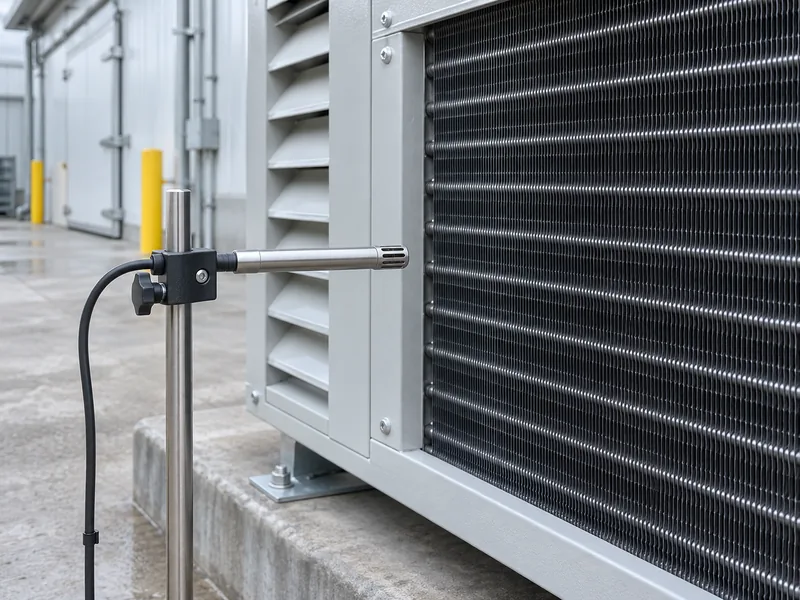
Request a project-specific selection covering these operating points:
- Peak summer operation: Required evaporating temperature at maximum design ambient.
- Normal storage: Expected operating conditions during routine use.
- Room pull-down: Relevant warmer evaporating conditions during initial cooling.
- Cold-weather operation: Minimum expected ambient conditions where low-ambient control is necessary.
Do not assume that the 32°C performance can be adjusted with a universal percentage per degree of outdoor temperature.
Nor should a straight-line extrapolation beyond the published evaporating temperatures be treated as a guaranteed rating.
If the actual design point falls between two catalog entries, request a manufacturer-calculated value. Treat any value calculated between published points as provisional until the equipment maker confirms it for the specified temperatures, refrigerant and rating basis.
Account for the Difference Between Catalog and Installed Conditions
A condensing unit for cold room service can experience different suction conditions after installation because the refrigeration circuit introduces pressure losses.
ASHRAE’s refrigeration system engineering guidance explains how suction and discharge piping pressure losses affect compressor capacity and power requirements. Its discussion supports evaluating the installed circuit rather than relying exclusively on catalog figures.
This is engineering guidance, not a regulatory requirement or a correction factor for the Box L model.
Provide the engineer with the proposed pipe route, equivalent length and vertical elevation differences. Ask for the resulting compressor suction condition and the net useful capacity available at the intended evaporator.
Other assumptions that require explicit confirmation include:
- Suction gas superheat at the rating reference point.
- Liquid refrigerant subcooling.
- Saturation temperature conventions.
- Capacity definition used by the manufacturer.
Do not transfer performance figures between refrigerants merely because the enclosure or compressor designation appears unchanged.
The listed series refrigerants are catalog identifiers, not a recommendation to use either in a new installation. Have qualified specialists confirm that the refrigerant is suitable and permitted for the site, then review the pressure-rated components and the design of the electrical protection.
Turn Catalog Figures Into Contract Data
Instead of accepting a brochure screenshot as the technical specification, request a dated selection sheet for the exact quoted assembly.
LINBLE’s cold room condensing unit configurations include different enclosure arrangements, while the Box L page indicates that configurations can be adapted to customer requirements.
Any change affecting the refrigeration circuit or heat rejection should therefore trigger a review of the corresponding performance data.
| Required Quotation Field | What the Buyer Should Verify |
| Equipment identity | Exact unit model, compressor and refrigerant |
| Design conditions | Evaporating reference, condenser entering air temperature and rating conventions |
| Cooling duty | Capacity at the actual project conditions, not just the catalog reference |
| Electrical input | Explicit inclusion or exclusion of fans and auxiliaries |
| Operating envelope | Permitted operating points and limitations |
| Performance evidence | Selection revision, calculation or test basis, and agreed acceptance tolerances |
During commissioning, record stabilized operating conditions and electrical input using suitable instruments. Compare measurements with the agreed selection basis.
A power measurement alone cannot demonstrate cooling capacity; an approved capacity verification method is needed if contractual output must be demonstrated.
Bring the Missing Rating Point Into Your Quotation
A 32°C rating is useful for selection only when it matches the project conditions. For a customized LINBLE condensing unit, request a review of your required operating point with your evaporator duty, refrigerant, condenser inlet temperature and required electrical input boundary.