
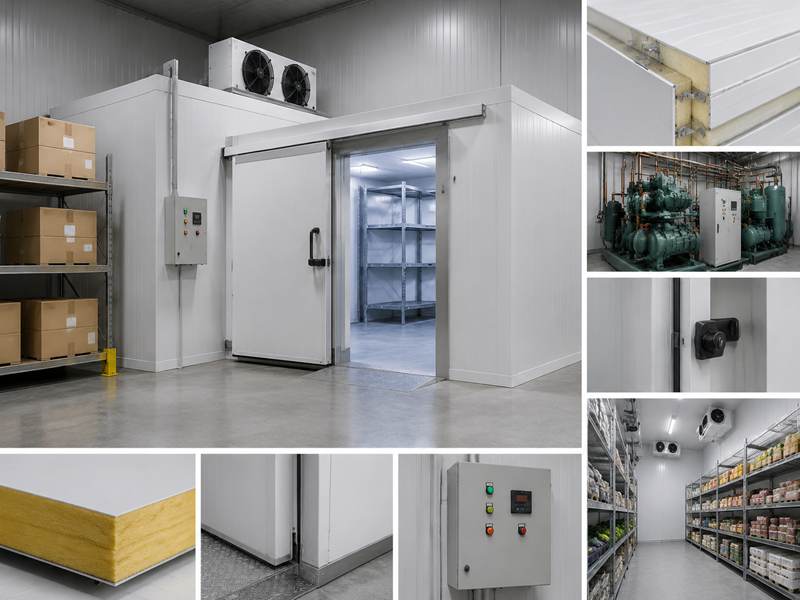
Installing a chiller room requires careful planning because the total investment depends on multiple elements, including room size, insulation design, refrigeration equipment, installation conditions, and additional requirements. system.
Typical Cost Distribution of a Chiller Room Installation
The total installation budget is usually divided among several major components. Although the exact percentage changes depending on project requirements, the following range provides a general reference for cost planning.
| Cost Item | Approximate Budget Share | Main Considerations |
| Refrigeration System | 35–45% | Cooling capacity, equipment type, energy efficiency |
| Insulated Panels and Structure | 25–35% | Panel material, thickness, thermal performance |
| Installation and Electrical Work | 15–20% | Assembly, wiring, testing, commissioning |
| Doors and Accessories | 5–15% | Door design, shelving, monitoring systems |
The refrigeration system usually represents the largest part of the investment because it determines cooling performance and daily energy consumption. Insulation quality and installation accuracy also have a strong influence on long-term operating efficiency.
Key Factors Impacting Chiller Room Installation Costs
The final project budget depends on several important factors. Evaluating these elements before installation helps avoid unexpected expenses and ensures the selected solution matches operational requirements.
| Cost Factor | How It Affects Budget | Potential Cost Impact |
| Room Size | Larger rooms need more materials and cooling capacity | +20–40% with 30–50% capacity increase |
| Insulation Design | Better insulation improves efficiency but raises initial cost | +5–15% for higher-performance materials |
| Refrigeration System | Higher capacity or customized systems cost more | +15–30% for upgraded solutions |
| Door Design | Advanced doors improve sealing and operation | +10–25% for automatic or high-performance doors |
| Installation Conditions | Complex sites require more preparation work | Depends on project complexity |
1. Chiller Room Size and Storage Capacity
Room size is one of the most important factors affecting installation cost. Larger spaces require more insulated panels, higher-capacity refrigeration equipment, and additional installation work.
Increasing storage volume by around 30–50% usually requires additional insulated structures, refrigeration capacity, and installation materials. Depending on the project design, this expansion may increase the overall installation budget by approximately 20–40%.
Selecting the correct room size is important because oversized storage increases unnecessary investment, while insufficient capacity may restrict future business growth.
2. Insulation Material and Panel Thickness
Insulation quality directly affects both installation cost and long-term energy performance. The insulation system reduces heat transfer and helps maintain stable temperatures inside the chiller room.
Important considerations include:
- Panel Material:
Different insulation materials provide different levels of thermal protection, durability, and cost performance. - Panel Thickness:
Thicker panels generally improve insulation performance but may increase initial investment. - Floor Insulation:
Proper floor insulation is especially important for rooms with frequent operation or heavy product storage.
Increasing insulation thickness or selecting higher-performance materials may raise the construction cost by approximately 5–15%. However, better insulation can reduce cooling loss and support more efficient operation over the long term.
For businesses operating chiller rooms continuously, choosing suitable insulation specifications can provide a better balance between installation budget and future energy consumption.
3. Refrigeration System Selection
The refrigeration system is usually one of the largest investment areas in a chiller room project. The required system depends on storage size, product characteristics, temperature requirements, and operating frequency.
| Refrigeration Option | Suitable Applications | Budget Consideration |
| Compact Refrigeration Unit | Small restaurants and storage rooms | Lower initial investment |
| Split Refrigeration System | Medium-sized chiller rooms | Flexible installation |
| Centralized Refrigeration System | Large facilities | Higher investment with stronger capacity |
| Customized Refrigeration Solution | Special applications | Depends on project requirements |
Selecting a higher-capacity refrigeration system or customized solution may increase equipment costs by approximately 15–30% compared with standard configurations. The additional investment is usually related to stronger cooling performance, advanced controls, or special operating requirements.
Choosing equipment only based on the lowest purchase price may increase future electricity and maintenance costs. A properly matched refrigeration system usually provides better long-term value.
4. Chiller Room Door Design
The door system also affects installation cost and daily operating performance. Different working environments require different door solutions based on access frequency, storage conditions, and operational requirements.
Key factors include:
- Door Type:
Sliding doors, hinged doors, and automatic doors have different costs and application advantages. High-frequency access areas often require stronger door structures and better sealing designs. - Opening Frequency:
Chiller rooms used in supermarkets, restaurants, and food processing facilities may experience dozens of door openings every day. Frequent access increases cooling loss and places higher requirements on door performance. - Sealing Quality:
Properly designed cold doors limit cold air loss and boost the system’s overall energy efficiency.
Compared with standard hinged doors, automatic doors or high-performance access doors may increase door-related costs by approximately 10–25%. However, they can improve operating efficiency in environments with frequent product movement.
For businesses with regular loading and unloading activities, investing in a suitable door system can help reduce unnecessary cooling loss and improve daily convenience.
5. Installation Location and Site Conditions
The installation environment can influence the total project budget. A standard indoor installation usually requires less preparation compared with customized projects involving complex site conditions.
Additional costs may come from:
- Limited installation space
- Difficult equipment transportation
- Additional electrical work
- Structural modifications
- Special environmental requirements
For example, installing a chiller room in an existing building may require additional adjustments to power supply, drainage, or supporting structures. These requirements can increase installation complexity and affect the final quotation.
A site assessment before installation helps create a more accurate budget and reduces unexpected changes during construction.
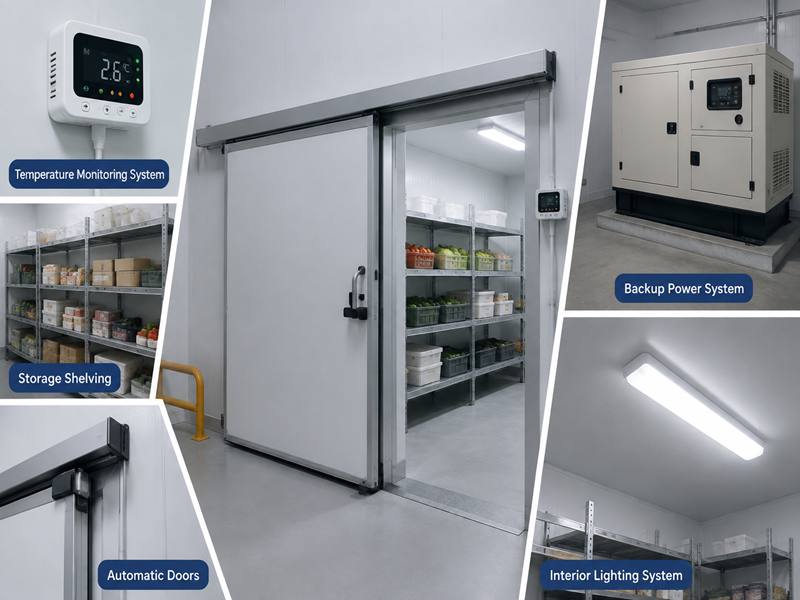
Additional Features That May Increase Installation Cost
Besides basic cooling functions, many businesses add extra features according to their operational requirements. These options can improve management efficiency but may increase the initial investment.
| Additional Feature | Main Function |
| Temperature Monitoring System | Real-time temperature tracking |
| Storage Shelving | Better internal space utilization |
| Automatic Doors | Faster access and reduced cooling loss |
| Backup Power System | Supports operation during power interruptions |
| Interior Lighting System | Improves visibility inside the room |
Additional systems such as monitoring equipment, backup power solutions, and automated access controls may increase the initial budget by approximately 5–20%, depending on the level of customization.
These features should be selected according to actual operating needs. Adding unnecessary equipment may increase costs without creating practical benefits.
How to Prepare a Chiller Room Installation Budget?
A complete budget should include both initial investment and future operating requirements. Thorough advance planning helps businesses avoid unforeseen costs and pick a better-fitting solution.
1. Specify Storage Operational Requirements
Before installation, businesses should confirm storage volume, product types, temperature requirements, and daily operation patterns. Clear requirements help avoid selecting equipment that is too large or insufficient.
2. Separate Initial Cost and Long-Term Cost
The installation budget is only one part of the total investment. Electricity consumption, maintenance requirements, and equipment lifespan should also be considered.
| Cost Type | Examples | Impact |
| Initial Cost | Panels, refrigeration equipment, installation | One-time investment |
| Energy Cost | Compressor operation and cooling demand | Continuous operating expense |
| Maintenance Cost | Inspection and replacement parts | Affects service life |
A solution with a slightly higher initial investment may provide better long-term value if it improves efficiency and reduces operating expenses.
3. Reserve Budget for Additional Requirements
Some projects may require extra components such as monitoring systems, shelving, special doors, or customized layouts. Factoring in all these demands at an early stage supports a more realistic budget plan.
4. Compare Different Solutions
Different suppliers may provide different system configurations and service scopes. Comparing solutions based on performance, reliability, and long-term cost helps businesses make better decisions.
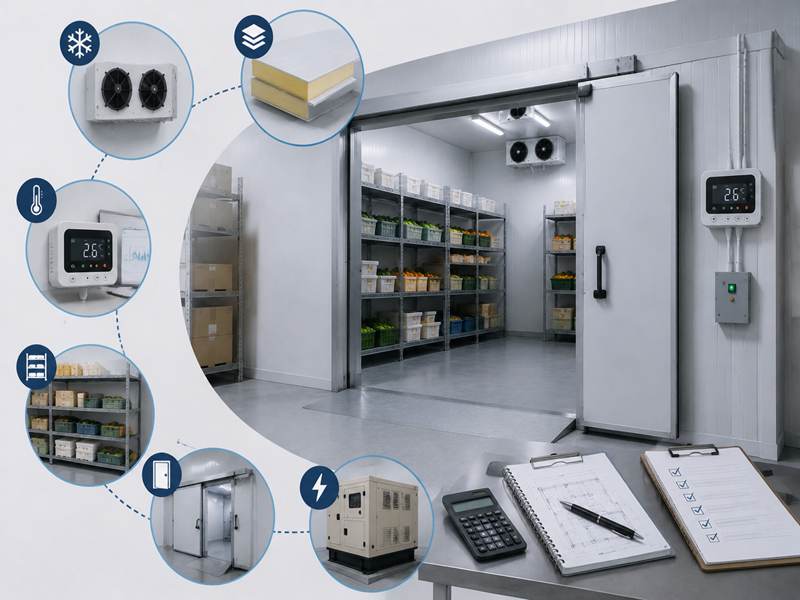
Methods to Cut Unnecessary Costs for Chiller Room Construction
Controlling expenses does not mean opting for the lowest-cost available option. The goal is to avoid unnecessary investment while maintaining reliable cooling performance.
1. Avoid Oversized Refrigeration Systems
Selecting equipment with excessive capacity may increase both purchase cost and energy consumption. The refrigeration system should match actual storage requirements.
2. Choose Suitable Insulation Specifications
High-performance insulation can reduce cooling loss, but excessive specifications may increase unnecessary expenses. The right insulation level should match the operating environment.
3. Plan the Layout Before Installation
A practical layout can reduce construction difficulties and improve storage efficiency. Proper planning also helps avoid future modifications.
4. Select Practical Additional Features
Monitoring systems, automatic doors, and shelving can improve operation efficiency, but businesses should select features based on actual needs.
A balanced design that considers investment, performance, and future requirements usually provides better overall value.