
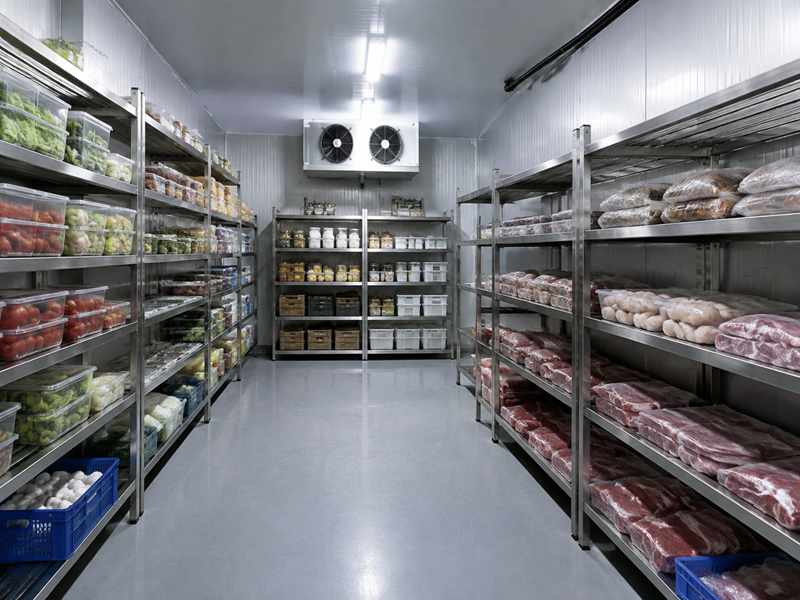
A well-designed shelving system plays an important role in improving chiller room storage efficiency. Proper shelf selection, spacing design, and storage planning help businesses maximize available space while maintaining convenient access and stable cooling conditions.
Common Types of Chiller Room Shelving Systems
Different shelving systems are designed for different storage conditions, product types, and operation methods. Selecting a suitable shelf structure helps businesses improve storage density while maintaining efficient daily operation.
| Shelving Type | Suitable Applications | Main Advantages |
| Stainless Steel Shelving | Restaurants, kitchens, food storage rooms | Hygienic, durable, and easy to clean |
| Mobile Shelving | Limited-space chiller rooms | Improves space utilization |
| Multi-Tier Shelving | Medium and large storage areas | Increases vertical storage capacity |
| Pallet Racking System | Large food storage facilities | Suitable for bulk inventory management |
Stainless steel shelves are commonly used in food-related environments because they provide good corrosion resistance and are easy to maintain. For larger storage facilities, multi-tier shelving and pallet systems are often selected to improve storage capacity.
Key Factors That Improve Chiller Room Storage Efficiency
The efficiency of a shelving system depends on more than the number of shelves installed. A practical design should maximize available space while maintaining product accessibility and proper cold air circulation.
| Storage Efficiency Factor | Impact on Storage |
| Shelf Height Design | Improves vertical space utilization |
| Shelf Spacing Design | Maintains airflow and improves storage density |
| Shelf Material Selection | Ensures durability and long-term use |
| Shelf Load Capacity | Supports safe and stable storage |
1. Optimize Shelf Height for Better Space Utilization
Using vertical space effectively is one of the most practical ways to increase chiller room capacity. Many storage areas have unused space above products because of fixed shelf heights or inefficient planning.
Adjustable racking and multi-tier layouts enable enterprises to hold more goods on the same floor space. For example, a supermarket storage room can increase available storage positions by adding additional shelf levels instead of expanding the room size.
However, shelf height should be planned carefully. Excessive stacking may make products difficult to access and affect proper airflow inside the chiller room.
2. Adjust Shelf Spacing for Better Storage Density
Shelf spacing directly affects how efficiently products can be stored. Proper spacing allows businesses to increase storage density while maintaining necessary air circulation.
Important considerations include:
- Spacing Between Shelves:
Suitable gaps help cold air move around products and reduce uneven temperature distribution. - Distance From Walls:
Leaving proper clearance between shelves and walls improves airflow performance. - Product Placement Space:
Each shelf should provide enough room for loading, unloading, and product arrangement.
A shelving system with insufficient spacing may store more products temporarily, but it can reduce cooling efficiency and affect storage conditions.
3. Select Suitable Shelf Materials for Long-Term Use
Chiller room environments usually involve low temperatures, moisture, and frequent cleaning. Therefore, shelf materials should provide good durability and corrosion resistance.
| Material | Features | Suitable Applications |
| Stainless Steel | Corrosion resistant and hygienic | Food processing and commercial kitchens |
| Aluminum | Lightweight and easy to move | Medium storage areas |
| Coated Steel | Strong structure and cost-effective | General storage applications |
For food-related applications, stainless steel shelving is commonly selected because it provides reliable performance and supports hygiene requirements.
4. Choose the Right Load Capacity for Safe Storage
Shelf load capacity is an important factor when planning storage efficiency. A rack system must bear the weight of goods and stay stable throughout daily operations.
Heavy products such as meat containers, beverage cases, and bulk food materials require stronger shelving structures. Choosing racks with appropriate load rating can avoid product damage and enhance long-term dependability.
Using shelves with insufficient capacity may create safety risks and increase replacement costs in the future.
How to Organize Products Efficiently with Chiller Room Shelving?
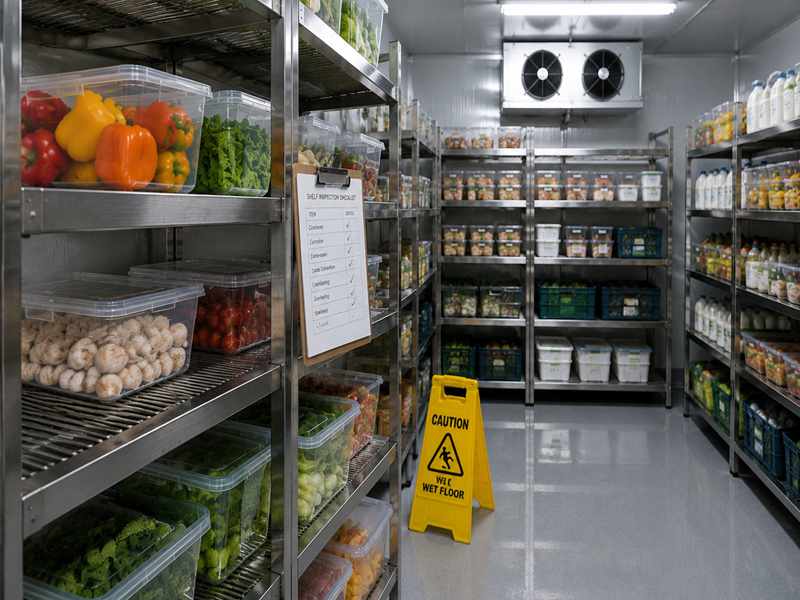
A proper product arrangement helps businesses use shelving space more effectively while improving daily storage management. Good organization makes product access faster and keeps the chiller room easier to operate.
1. Group Products by Category
Storing similar products together makes inventory easier to manage and improves access efficiency. Different food types, such as meat, dairy products, vegetables, and beverages, can be arranged in separate shelf areas based on storage requirements.
2. Position High-Frequency Goods Within Easy Reach
Items picked regularly ought to be arranged at readily accessible locations. This reduces unnecessary movement during daily operations and allows employees to quickly pick required items.
3. Follow FIFO Storage Principles
Arranging older products in front and newer products behind helps improve inventory rotation and reduce product waste. This method is especially useful for food businesses that handle products with different storage periods.
4. Avoid Overloading Shelves
Proper shelf loading keeps products organized while maintaining airflow and convenient access inside the chiller room. Avoiding excessive stacking helps improve cooling efficiency and prevents difficulties during product handling.
Chiller Room Shelving Layout Ideas for Different Applications
Different businesses require different shelving approaches based on storage volume, product types, and operating methods.
| Application | Recommended Shelving Design |
| Restaurants and Commercial Kitchens | Compact stainless steel shelves for frequent ingredient access |
| Supermarkets | Adjustable multi-level shelves for higher storage capacity |
| Food Processing Facilities | Heavy-duty shelving for bulk product storage |
| Distribution Centers | Pallet racking systems for large inventory management |
1. Restaurants and Commercial Kitchens
Restaurants usually require quick access to fresh ingredients. Compact stainless steel shelving with clear product categories helps improve daily workflow.
The shelving layout should prioritize convenience because employees often need to access different ingredients multiple times during daily operations.
2. Supermarkets
Supermarkets usually handle larger inventory volumes and frequent product movement. Adjustable shelving systems help maximize available space while supporting different product sizes.
A flexible design also makes it easier to reorganize storage areas when inventory requirements change.
3. Food Processing Facilities
Food factories typically store larger quantities of raw materials and finished products. Heavy-duty shelving systems provide stronger support for continuous storage operations.
High-capacity designs help improve warehouse organization and make bulk product management more efficient.
4. Distribution Centers
Distribution centers require efficient storage management because products often enter and leave frequently. Pallet racking systems help maximize storage density while supporting larger inventory handling.
How to Maintain Chiller Room Shelving Performance?
A suitable shelving design should not only improve storage efficiency but also maintain reliable performance during long-term use. Regular management helps extend shelf life and keep the storage area organized.
1. Regularly Check Shelf Condition
Inspect shelves regularly for corrosion, deformation, or loose connections. Early detection of problems helps prevent safety risks and unnecessary replacement costs.
2. Keep Shelving Areas Organized
Maintaining clear product categories and proper spacing helps improve storage efficiency. Organized shelves also make product access faster and reduce unnecessary movement.
3. Avoid Overloading Shelves
Each shelving system has a specific load capacity. Overloading or uneven weight distribution may affect shelf stability and reduce service life.
4. Clean Shelves Regularly
Regular cleaning helps maintain hygiene and prevents moisture or residue from affecting shelf performance. This rule matters greatly, particularly for food preservation scenarios.