

Ask cold room suppliers for seven coordinated documents before releasing the order. You need the design basis, coordinated layout, enclosure details, equipment selections, electrical and controls package, scope matrix and acceptance plan. For a LINBLE project, the value is in seeing how those documents agree at the points where the enclosure, refrigeration and local trades meet.
Which Documents Define What the Room Must Do?
Start with the design basis and the layout. Review them together so changes in operating duty are reflected in the room geometry and service requirements. If the approval process produces a fresh plan but leaves the load inputs on an older revision, both documents can look plausible while describing different rooms.
1. What Goes in the Design Basis and Load Schedule?
Ask for a dated sheet showing design conditions, storage setpoints and the assumptions used to select equipment. For product cooling, identify entry temperature, peak batch mass and time allowed to reach the required condition. For holding, record typical occupancy, door traffic and adjacent space conditions.
Give the supplier a credible busy-day case rather than a single weekly average. In a split-temperature project, request a load by zone and note which peaks can overlap. LINBLE’s condensing unit sizing guide provides context for reviewing the inputs behind the selected capacity.
2. What Should the General Arrangement Show?
Ask for a dimensioned plan and enough sections to locate equipment, clear openings, floor buildup and service space. Draw racking, handling equipment and door travel where they affect access or airflow. Mark the connection points the buyer has to coordinate with the building.
On a LINBLE modular cold room, show the net internal dimensions after the panel, divider and floor thicknesses are allowed for. Have the supplier mark where the unit cooler hangs and where a technician can reach its service side. Verify those spaces against the proposed storage layout before accepting the equipment positions.
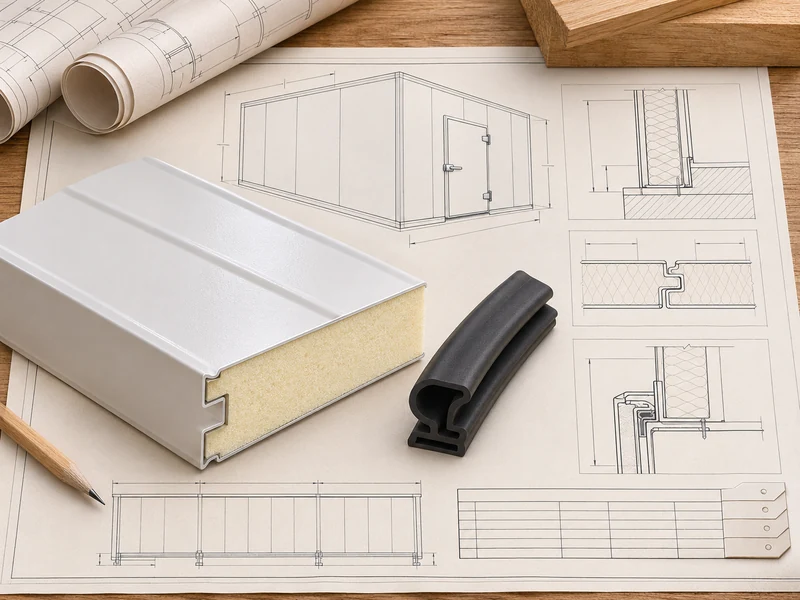
What Shows How the Enclosure and Equipment Will Be Built?
Ask for the enclosure details and model-specific equipment selections. A catalogue can show available products, but the purchase package should identify the exact assemblies chosen for the project. It should also let the site team see which choices depend on the building.
3. What Belongs in the Panel and Door Submittal?
Request panel core and thickness, skin finishes, joining method and the door schedule. Ask for sections at the threshold, floor edge, jamb, roof and any atypical junction. Identify where seals, trims, reinforcement and any heaters are required in the selected assembly.
The LINBLE insulated panel range shows choices in core materials and joining methods. On the project schedule, tie those choices to a room and a location. If one supplier names the panel thickness and another gives you the complete assembly, check that the first bidder has allowed for the same joints and finishes.
4. Which Data Sheets Prove the Refrigeration Selection?
Request the selected condensing unit and evaporator models, with capacity at the stated duty, refrigerant, defrost method and major accessory scope. Check that the model and revision match the load schedule. Ask how performance changes at the project design ambient and whether the proposed pipe route changes the selection.
For a cabinet that is supplied with options, have the vendor distinguish what ships fitted from what is provided loose. The electrician and installer need the configuration that will actually arrive. Put any unresolved selection on a named submittal hold, especially where it could change the panel opening or power feed.
Where Do the Supplier and the Local Trades Hand Over Work?
Read the wiring package beside the scope matrix and follow each site connection until you reach a named trade, including any work needed to make a factory-supplied device operate with local equipment. A working cooling unit still needs the correct branch feed, drainage, pipe support and controls connections. The risk rises when several trades use the same word for different parts of the work.
5. What Does the Electrical and Controls Package Need?
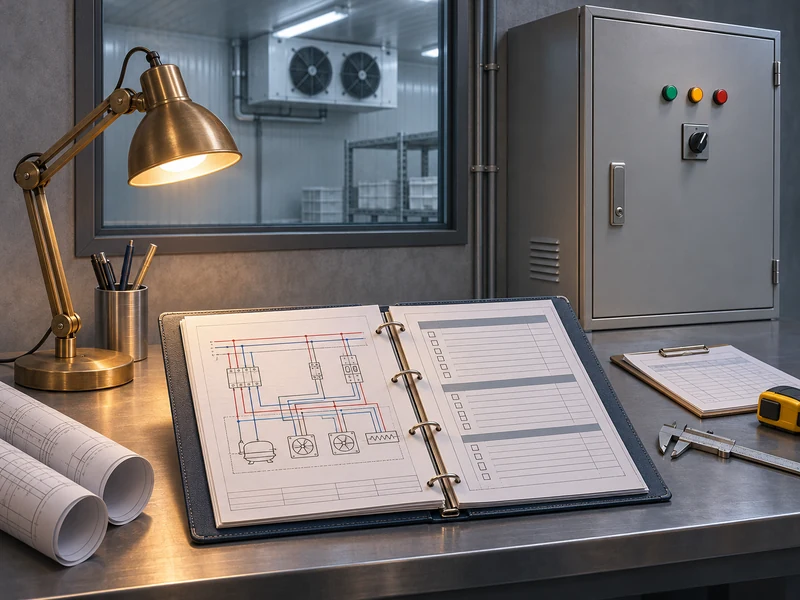
Ask for the incoming power schedule, interconnection drawing and sequence of operations. Confirm which devices are wired at the factory and which the site must connect. If the system has a remote alarm, door switch, heater or standby interface, identify the actual terminals and normal behavior.
LINBLE’s cold room electrical requirements guide covers the data needed by the site electrical designer. Check the units, phases and frequency on every schedule against the project supply. Have the designer review protective devices and circuit arrangements for the local installation.
6. What Is a Useful Supply and Installation Matrix?
List each supply or activity down the left and assign an owner across the right. Start with delivery and unloading, then cover supports, pipework, insulation, refrigerant, drainage, power, assembly and startup. Record exclusions in the same matrix so the commercial team can price the remaining work.
Suppose the layout shows a trench drain near a chiller door. One quote may include the coil drain connection while another includes only the coil outlet. Ask who supplies the pipe, who provides the drain point, and which party verifies that water can reach it without obstructing the passage.
What Evidence Should the Buyer Receive at Handover?
Agree on the acceptance plan before ordering, then require the completed records at handover. This gives the supplier and site team time to coordinate the tests, equipment and operating conditions. Use the NIBS enclosure commissioning guidance for the principle of checking that designed interfaces and installed work agree.
7. What Should the Acceptance Plan Cover?
Ask for a schedule of checks, responsible witnesses and the conditions under which each test is performed. Include physical inspection, door operation, cooling and defrost sequence, alarm tests and any temperature performance test the project requires. Clarify what must be demonstrated before stock is loaded.
Use the checks in LINBLE’s handover guide to decide where a signed test result belongs in the acceptance file and which trade will produce it under the agreed site conditions. For a real handover, collect the signed results along with final drawings, operating instructions and the equipment list with service references. Agree which items will be available at delivery and which can only be completed on site.
How Do You Keep Seven Documents From Becoming Seven Versions of the Project?
Use a one-page register with the document number, revision, status and action owner. Mark what must be approved before manufacture and what will be verified on site. Have the supplier state whether late changes affect cost, lead time or another part of the package.
| Cross-Check | Where to Look | What a Mismatch Can Cost |
| Door size and handing | Room plan, door schedule, opening section | Panel rework or a blocked trolley path |
| Supply voltage and heater duty | Unit data, controls drawing, power schedule | Changed equipment or field electrical work |
| Drain exit and elevation | Unit cooler selection, room section, scope matrix | A new route after the enclosure is closed |
| Required temperature test | Design basis and acceptance plan | Disagreement over when the room is ready for stock |
Close the enquiry with a marked-up document set rather than a general instruction to proceed. A buyer can then compare suppliers by the room they have actually specified, and LINBLE and the local trades have a common reference when work begins.
Which Items Can Stay Open at the Order Date?
Separate decisions that affect manufacture from items that can be verified later. A missing doorway dimension can change the panel cutout and door assembly. A proposed date for the handover test may remain provisional if the method, responsibility and access requirements are already agreed.
Use a condition on the release where a missing detail could affect another trade. For example, the buyer can authorize standard panels while holding a panel with an unresolved service opening, if the supplier confirms the split is practical. List the held drawing and its decision owner so the allowance does not turn into an undocumented field change.
Keep one returned copy of the agreed package with the purchase order. During delivery, compare the packing list with that version. A discrepancy is much easier to resolve at receipt when the selection, drawing and accepted quote share the same reference.