
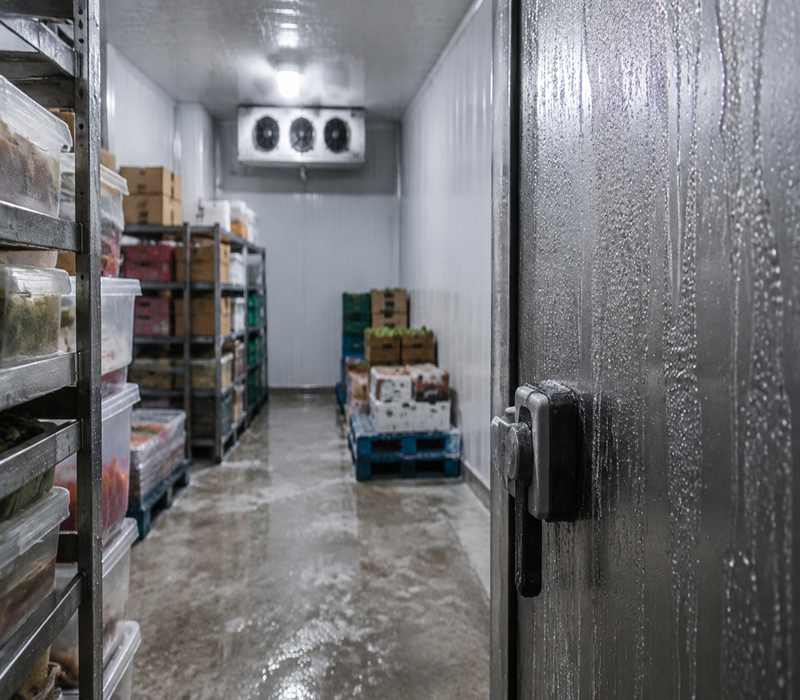
Condensation problems in chiller rooms can affect insulation performance, equipment reliability, and daily storage operations. Proper moisture control, insulation design, and airflow management help reduce water buildup and maintain stable storage conditions.
Main Factors That Cause Condensation Problems
Condensation occurs when warm air containing moisture contacts cold surfaces inside the chiller room. When the surface temperature reaches below the dew point, water vapor turns into liquid droplets.
| Factor | How It Causes Condensation | Common Situation |
| Poor Insulation Performance | Creates cold surfaces where moisture can form | Insufficient insulation thickness or damaged panels |
| Door Air Leakage | Allows warm and humid air to enter | Frequent loading and unloading operations |
| High Indoor Humidity | Increases moisture content inside the room | Wet products or cleaning activities |
| Temperature Difference | Creates conditions for water formation | Hot external environments |
Understanding these causes helps businesses choose suitable prevention methods instead of only removing visible moisture after problems occur.
Effective Ways to Reduce Condensation Problems in Chiller Rooms
Reducing condensation requires controlling heat transfer, limiting moisture entry, and maintaining stable internal conditions. For commercial users, the most effective approach is usually a combination of proper insulation, suitable equipment selection, and regular operation management.
1. Improve Insulation Performance
Proper insulation is one of the most important methods for reducing condensation because it controls the temperature difference between the cold storage area and external environment.
Important considerations include:
- Choose Suitable Insulation Thickness:
Insulation thickness affects heat transfer through walls, ceilings, and floors. Insufficient thickness may create colder surfaces where moisture easily forms. - Ensure Complete Insulation Coverage:
All parts of the chiller room structure, including panels, corners, and connection areas, should maintain consistent insulation performance. - Improve Panel Sealing Quality:
Small gaps between panels may allow warm air and moisture to enter the structure, increasing condensation risks.
For food processing plants and commercial storage facilities operating continuously, better insulation design not only reduces condensation but also helps lower refrigeration workload and improve energy efficiency.
2. Improve Door Sealing and Reduce Air Leakage
Condensation frequently forms on chiller room doors, which are among the typical vulnerable areas. Every door opening allows warmer air with higher humidity to enter the cold environment.
Effective measures include:
- Checking door gaskets regularly
- Selecting door types according to access frequency
- Reducing unnecessary door opening time
- Ensuring proper door frame sealing
For supermarkets, restaurants, and distribution facilities, doors may be opened dozens of times per day. Better sealing performance helps reduce moisture entry and maintain more stable temperature conditions.
3. Control Indoor Humidity Levels
Humidity control is essential because condensation is directly related to moisture content in the air. When humidity levels increase, water droplets are more likely to appear on cold surfaces.
| Humidity Control Method | Main Benefit |
| Proper Air Circulation | Helps maintain balanced air conditions |
| Moisture Control Equipment | Reduces excessive humidity |
| Proper Product Handling | Prevents additional moisture introduction |
| Regular Cleaning Management | Limits water accumulation |
Businesses should avoid placing wet products directly into the chiller room. Water from cleaning operations, unpacked products, or uncovered food items may increase humidity and create condensation issues.
4. Optimize Airflow Distribution
Uneven airflow can create temperature differences inside the chiller room. Areas with insufficient air movement may become colder than surrounding spaces and increase condensation risks.
Good airflow management includes:
- Keeping enough space around evaporators
- Avoiding blocked air circulation paths
- Planning shelf positions properly
- Maintaining clear airflow channels
A well-designed airflow system helps distribute cold air more evenly and reduces localized moisture buildup, especially in larger storage rooms.
5. Maintain Proper Product Arrangement
Product arrangement also influences condensation control because storage layout affects air movement inside the room.
Recommended practices include:
- Keeping distance between products and walls
- Avoiding overloading shelves
- Leaving sufficient space between storage areas
When products are stacked too closely, cold air circulation may become restricted. This can create uneven temperature zones and increase the possibility of condensation on walls or product surfaces.
For businesses managing large inventories, a practical shelving layout improves both storage efficiency and moisture control.
6. Improve Drainage and Defrost Management
Water generated during defrosting, cleaning, or condensation should be removed effectively. Poor drainage may increase internal humidity and create additional moisture problems.
Important considerations include:
- Keeping drainage channels clear
- Checking defrost water discharge
- Preventing water accumulation on floors
A suitable drainage system helps maintain a cleaner operating environment and reduces secondary condensation caused by excessive moisture inside the room.
7. Select Suitable Refrigeration Settings
Refrigeration settings also influence condensation performance. Extremely low temperatures or unstable operation may create larger temperature differences between surfaces and surrounding air.
Proper management includes:
- Setting suitable storage temperatures
- Avoiding unnecessary temperature fluctuations
- Ensuring refrigeration equipment operates normally
A properly matched refrigeration system helps maintain stable conditions and reduces the possibility of condensation forming on equipment surfaces or room structures.
8. Perform Regular Inspection and Maintenance
Regular inspection helps identify potential condensation problems before they affect daily operation. Small issues such as damaged insulation or loose door seals may gradually reduce overall performance.
Maintenance checks should include:
- Inspecting insulation panels and joints
- Checking door sealing conditions
- Monitoring condensation-prone areas
- Cleaning drainage systems
For businesses using chiller rooms throughout the year, preventive maintenance helps maintain stable performance and reduces unexpected repair costs.
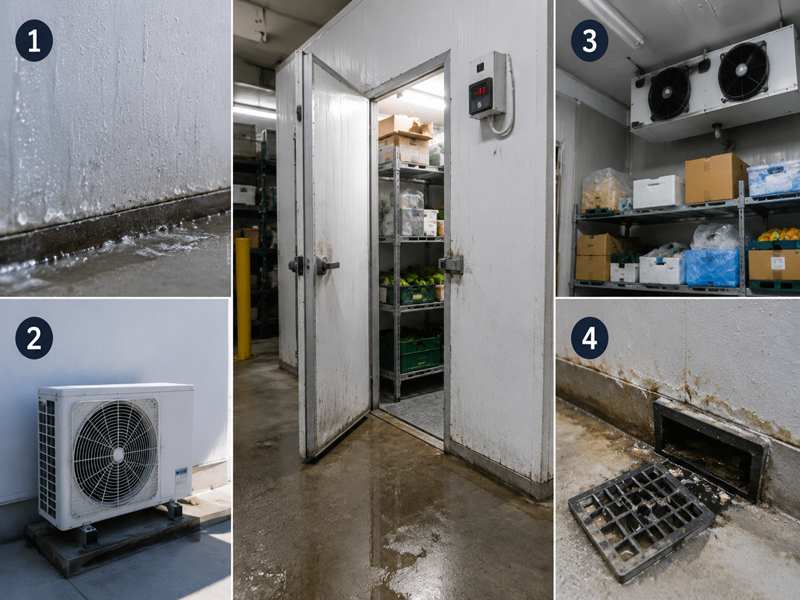
Common Mistakes When Managing Chiller Room Condensation
1. Ignoring Small Moisture Issues
Small water droplets or condensation marks may indicate insulation or sealing problems. Early inspection helps prevent more serious damage.
2. Choosing Equipment Without Considering Environment
A chiller room installed in a hot or humid area may require different insulation and sealing solutions compared with a standard indoor installation.
3. Focusing Only on Refrigeration Capacity
A powerful cooling system cannot completely solve condensation problems caused by poor insulation, air leakage, or improper room design.
4. Neglecting Regular Maintenance
Damaged door seals, insulation gaps, and drainage problems can increase condensation over time. Regular inspection helps maintain long-term performance.
Daily Operation Tips for Better Condensation Control
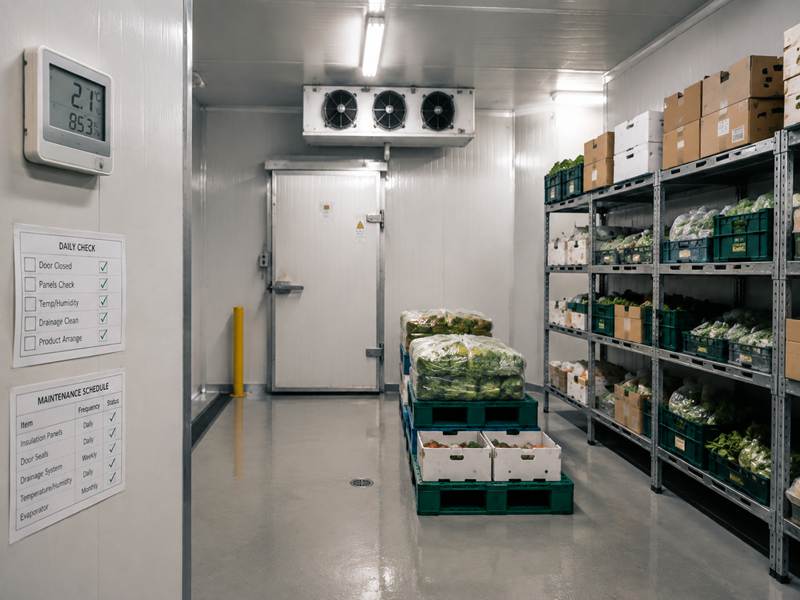
Daily operation habits also influence condensation control after the chiller room is installed. Simple management practices help maintain stable conditions and reduce unnecessary moisture buildup.
- Keep doors closed when not in use
- Check insulation panels regularly
- Monitor temperature and humidity changes
- Clean drainage systems periodically
- Maintain proper product arrangement
These routine practices help maintain a more reliable chiller room environment and support long-term operating performance.