
Cut flower cold storage works best when cooling, hydration, clean handling, and ethylene control are managed together. Refrigeration slows deterioration, but it does not replace the water-management routine or remove every source of damage. The correct method depends on the flower species, its condition on arrival, and the time remaining before use.
The sections below trace the decisions made at receiving, hydration, holding, order assembly, and the final handover to the next handler. What happens before it enters the room can be just as important as the storage period itself, particularly when flowers wait for sorting or leave repeatedly for order preparation.
Before Arrival: What Should Be Ready for the Batch?
Prepare a destination and a handling instruction for the actual flowers being received. Treating every stem as interchangeable makes it difficult for staff to recognize a batch that needs a different temperature, solution, or packing method.
Keep the supplier’s species-specific instructions with the batch information. Where the instructions are incomplete, seek clarification before replacing them with a general rule intended for a different flower.
Why Should Buckets and Work Areas Be Prepared First?
Preparation prevents the flowers from waiting while equipment is cleaned or staff search for space. Set out the required clean containers, identify the work position, and confirm where completed batches will go.
The purpose is to shorten avoidable handling time while keeping clean and used equipment distinct. A small operation can achieve this with clearly allocated positions; an elaborate tracking system is not required to establish who handles the next step.
Our overview of cold rooms in the floral industry describes the wider storage application. This article focuses on the handovers and treatment decisions that determine how the room is actually used.
At Receiving: Does a Wilted Flower Only Need Colder Air?
Not necessarily: a flower can be cool and still have a water-balance problem. Record its arrival condition and apply the approved hydration procedure rather than assuming that refrigeration alone will restore it.
NC State Extension’s postharvest guidance for cut flowers identifies temperature, water stress, microbial contamination, and ethylene among the factors that affect quality. It also distinguishes hydration products from holding solutions and warns that the correct use varies with the flowers and product instructions.
That distinction should appear in the work routine. A container marked only “flower solution” does not tell the next worker whether it is intended for a brief treatment, storage, or a finished arrangement.
What Information Should Follow the Stems?
Keep the information short enough to be used during a busy shift. The most helpful record is the one that lets the next person continue the intended treatment without guessing what has already happened.
- Flower identity, supplier, and batch or arrival reference.
- The arrival time and any unusual condition observed.
- The treatment being used and its required duration.
- The assigned storage location and intended dispatch.
Use the actual product label for mixing and treatment instructions. An extra measure of concentrate or an extended soak changes the prescribed treatment; staff should follow the stated dose and timing instead of improvising either.
During Holding: How Do Wet and Dry Storage Differ?
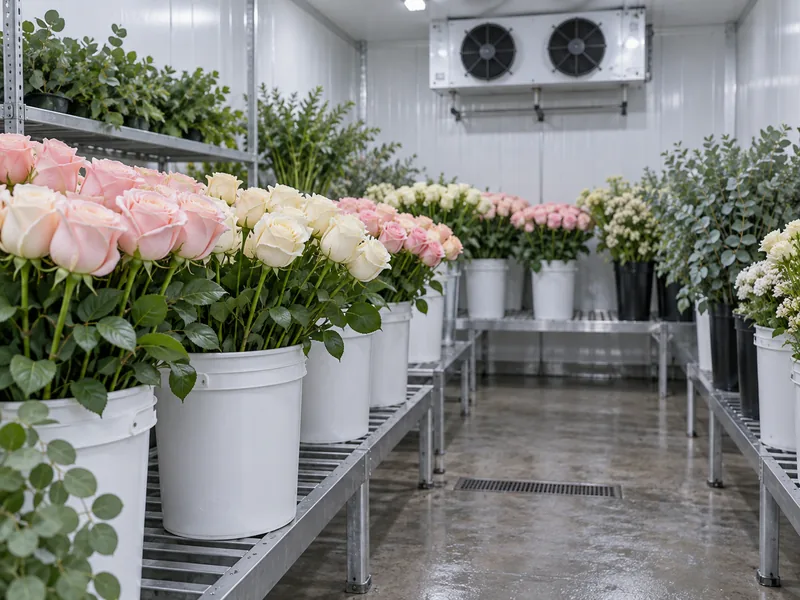
Wet storage holds stems in a suitable water or solution arrangement; dry storage uses an approved packed method without standing the stems in a bucket. Either approach requires a crop-appropriate procedure and control of the surrounding conditions.
The decision should follow the flower, packaging, expected duration, and supplier guidance. Available floor space alone is a poor reason to switch a batch from one method to the other.
| Handling Arrangement | What the Routine Must Address |
| Stems standing in buckets | Clean containers, appropriate solution, stable support, and the specified holding period |
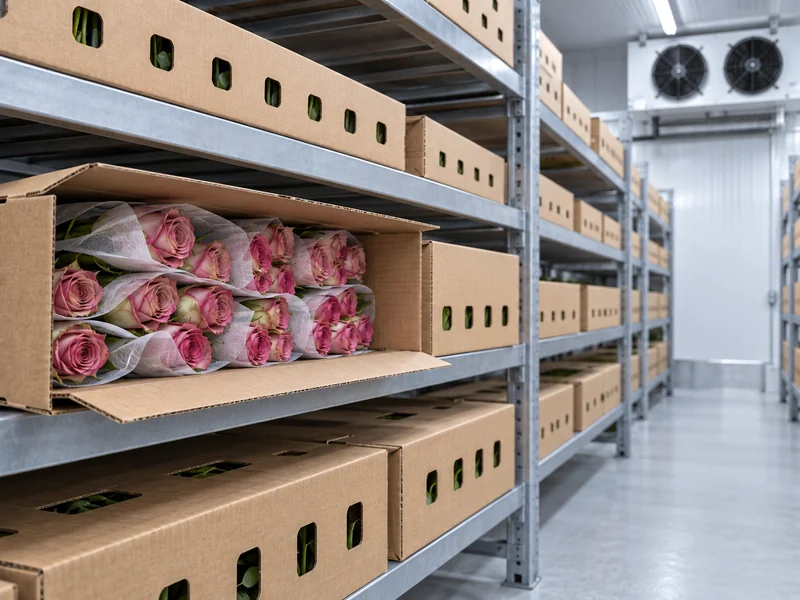
| Flowers packed for dry storage | Suitable crop and packaging, protection from crushing, and the approved hydration sequence |
| Mixed dispatch orders | Compatible conditions and an identified departure time for each component |
Does Higher Humidity Mean Wet Petals Are Desirable?
No: moisture in the air and liquid water on the flower are different conditions. Oklahoma State University’s cut flower handling guidance explains the role of humidity while noting the disease concern when droplets form on flowers and foliage.
The practical aim is to manage moisture loss without creating persistently wet flowers. Avoid improvising a spraying routine merely because a humidity reading seems lower than expected.
Our guide to condensation in chiller rooms gives the broader room context. For a flower batch, record where wetness appears and what happened immediately before it appeared.
Inside the Room: What Does Ethylene Management Involve?
Ethylene is a gas that can accelerate deterioration in sensitive flowers. It may come from plant material or combustion-related sources, so keeping the room cold is not the same as keeping the batch free of exposure.
Start with the materials and activities around the flowers. Ripening produce, deteriorating plant waste, and engine exhaust should not become part of the storage environment simply because they are nearby or temporarily convenient.
Will More Fan Movement Remove the Problem?
Recirculating room air and removing a contaminant source are different actions. Moving the same air around the room should not be treated as proof that ethylene has been controlled.
Keep ventilation and any specialist treatment within the engineered arrangement and the crop procedure. Do not respond by propping open the insulated door, since uncontrolled air exchange changes the storage conditions and introduces other uncertainties.
For a flower cold room, discuss the intended species, packaging, traffic, and nearby activities together. Those details help connect the refrigeration environment to the actual postharvest workflow.
At Order Preparation: How Can One Busy Morning Affect the Batch?
Consider an illustrative florist preparing several deliveries from one room. Buckets are brought out for selection, partly used, and returned while another worker assembles arrangements.
The room may hold its specified condition throughout, yet some stems experience more movement and waiting than others. If the whole delivery later receives one general quality rating, this difference can disappear from the record.
How Could That Workflow Be Improved?
Prepare the order sequence before moving buckets and bring out only the flowers needed for the current step. Give partly used batches an identified return position so that they do not become anonymous leftovers behind newly arrived stock.
Keep stems protected from mechanical damage during selection and make space for completed orders before assembly begins. These are workflow changes that staff can observe directly, without claiming a specific increase in vase life.
A commercial cold room supports that routine by providing a controlled holding space. It cannot compensate for repeated handling that the operation has never measured or assigned to anyone.
Before Dispatch: What Should the Next Handler Know?
Communicate the handling requirements that remain relevant after the flowers leave the room. The next person should know the flower identity, the intended storage arrangement, and any treatment already applied.
Define who takes responsibility during the transfer and where the batch waits if the vehicle or recipient is delayed. A planned handover protects the work already completed instead of creating an unrecorded gap between two well-run locations.
What If Flowers Look Acceptable but Perform Poorly Later?
Appearance at dispatch is only one observation. Use a consistent small vase-life comparison for representative batches, recording the starting condition and the criterion used to decide when the flowers are no longer acceptable.
Keep comparison conditions consistent and change one practice at a time. A different species, maturity, or incoming batch can otherwise make a new storage routine appear responsible for a result it did not cause.
When recurring differences correspond to room position, temperature mapping can help describe the environment. Combine that information with the hydration and movement record before assigning the cause to a single room setting.
What Makes the Routine Repeatable?
The strongest routine tells each worker what the batch needs next: receiving, hydration, holding, assembly, or dispatch. Clear transitions are more useful than a general instruction to keep all flowers cold and hope that the remaining details take care of themselves.
Review the steps whenever the species mix, packaging, or delivery pattern changes. Cold storage preserves quality most effectively when its temperature conditions and the handling method remain matched to the flowers actually passing through it.